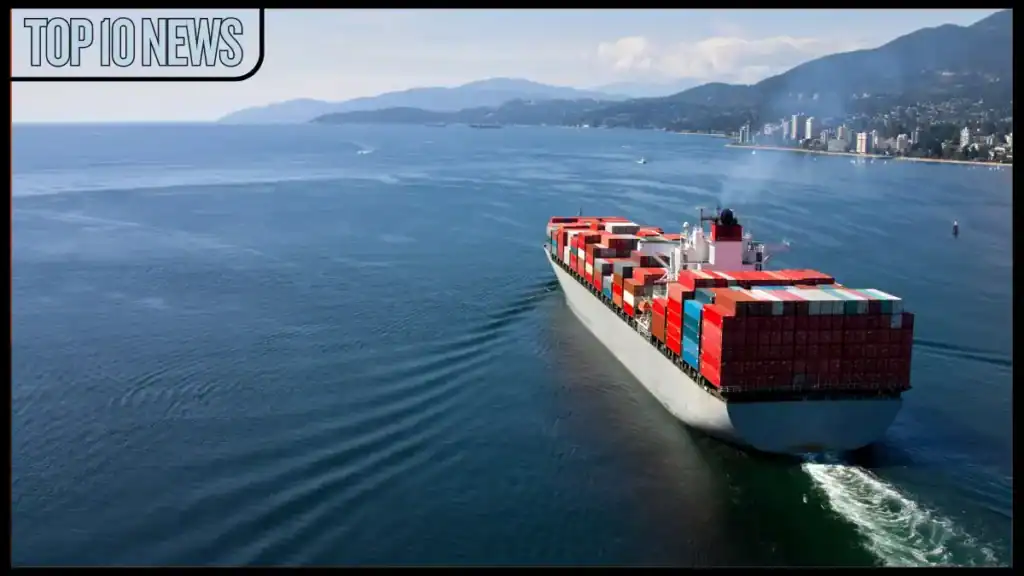
The past 24 hours have brought a sharp reminder of how interconnected and fragile maritime shipping remains. Weather disruptions, sanctions-driven shadow fleets, and new Arctic routes are reshaping how cargo moves across the world’s oceans. At the same time, the industry is pressing ahead with cleaner fuels, green ferries, and regulatory shifts that will influence investment for decades. We’ve seen Canada double down on ice-class capacity, South Korea tighten its green standards, and Brazil assert itself in bulk trades with China. Below is a consolidated snapshot of the most important developments now shaping the shipping world.
Global Shipping Flashpoints – Last 24 Hours
Development
What Happened
Impact on Shipping
Response / Status
Hurricane Erin Disrupts Atlantic Lanes
Outer bands of Hurricane Erin pushed into key East Coast routes, threatening ports and delaying sailings.
Heightened risks for navigation, diversions underway; insurance premiums likely to spike temporarily.
Port authorities on alert; ship operators issuing route advisories and slowing transit speeds.
Churchill Port Eyes Transatlantic Link
Feasibility studies highlight Hudson Bay’s Churchill as a new container hub connecting Canada and Europe.
Would shorten routes from central Canada; could reduce reliance on congested U.S. East Coast gateways.
Regional and federal governments reviewing proposals with private investors.
China Sends Boxship Through Arctic
A Chinese container vessel reached Arkhangelsk using the Northern Sea Route, one of the first transits of 2025.
Signals rising interest in Arctic lanes despite geopolitical risks and ice challenges.
Observers monitoring environmental concerns and seasonal ice coverage closely.
CMA CGM Invests in Renewable LNG
The French carrier struck a supply deal for bio-LNG to power its growing dual-fuel fleet.
Strengthens low-carbon fuel supply chains and boosts the operator’s sustainability profile.
Contracts signed with U.S. renewable energy producers for long-term delivery.
Ammonia and Methanol Declared Market-Ready
Industry assessments now recognize both fuels as viable zero-emission options for shipping.
Positions owners to make near-term investments in dual-fuel vessels and bunkering infrastructure.
Ports and classification societies accelerating readiness programs.
India’s Nayara Turns to Shadow Tankers
Sanctions-hit Nayara Energy began using “dark fleet” tankers to keep oil shipments moving.
Highlights the resilience of shadow shipping networks despite regulatory crackdowns.
Global trackers monitoring AIS gaps and ship-to-ship transfers more closely.
Brazil Pushes Iron Ore to China
Latest figures show Brazilian exporters outpacing rivals in supplying China’s steelmakers.
Strengthens Brazil’s grip on bulk trade while reshaping Cape-size flows.
Charterers locking in capacity; freight rates seeing upward pressure.
Canada Starts Polar Max Icebreaker Build
Davie Shipyard began cutting steel for Canada’s new heavy icebreaker, Polar Max.
Will expand Arctic shipping support and search-and-rescue capacity.
Project underway in Helsinki with Canadian oversight.
Green Light for U.S. Hybrid Ferries
Eastern Shipbuilding received approval to construct three hybrid-electric ferries for Washington State.
Marks a step forward in electrification of North American passenger shipping.
Contract signed; design and build expected over the next five years.
South Korea Tightens Green Rules
Updated certification standards announced for eco-friendly ships and shipyards.
Could accelerate adoption of energy-saving devices and low-carbon designs.
National regulators coordinating with shipbuilders for compliance rollout.
Note: This table is based on verified reports from company press releases, government announcements, and various maritime reports.
Industry Impact Overview
The last 24 hours have highlighted how volatile global shipping can be when weather, sanctions, fuel transitions, and infrastructure all collide at once. What we are seeing is not just isolated headlines, but structural forces that ripple through trade flows, insurance markets, and investment in fleet renewal. Shipping companies, regulators, and suppliers are adapting simultaneously to climate risks, geopolitical maneuvering, and technological shifts.
Key Impacts
Climate Resilience Tested: Hurricane Erin underscores the vulnerability of Atlantic routes and the increasing role of weather forecasting in operational planning.
Arctic Opening Pressure: Renewed Chinese transits and Canada’s icebreaker build show how the Northern Sea Route is re-emerging as a trade frontier.
Fuel Transition Acceleration: With bio-LNG, ammonia, and methanol gaining traction, owners face mounting pressure to place new dual-fuel orders.
Shadow Shipping Grows: The Nayara “dark fleet” reliance shows sanctions are redirecting flows but not halting them.
Regional Leaders Emerge: Brazil’s iron ore dominance, South Korea’s regulatory push, and U.S. hybrid ferries highlight regional differentiation in shipping strategy.
Structural Currents in Global Shipping
Driver
Economic Consequence
Operational Adaptation
Longer-Term Signal
Climate Volatility
Spikes in insurance and fuel costs from diversions; cargo delivery delays ripple through supply chains.
Carriers slow-steaming and rerouting vessels outside storm tracks.
Growing push for advanced weather-routing software and parametric insurance models.
Arctic Re-Entry
Potential reduction of transit times between Asia and Europe; rising investment interest in northern ports.
Ice-class vessels and pilotage services expanding capacity.
Sign of long-term normalization of high-latitude trade, despite geopolitical and environmental risk.
Fuel Diversification
Increased capex for dual-fuel vessels, but hedging risk across LNG, methanol, and ammonia reduces uncertainty.
Operators contracting for bio-LNG while commissioning methanol-ready tonnage.
Early bifurcation between carriers leading in green fuels and laggards delaying investment.
Sanctions Workarounds
Insurance markets exposed to opaque risk; freight volatility for sanctioned commodities.
Shadow fleets using AIS manipulation and ship-to-ship transfers to maintain flows.
Entrenched parallel shipping network likely to persist even if sanctions regimes evolve.
Brazil ramps iron ore flows, South Korea mandates stricter eco-certifications, U.S. invests in hybrid ferries.
Signals fragmentation in global standards and uneven capital allocation across fleets.
Infrastructure Renewal
New builds and hybrid ferries draw public investment, reshaping regional shipbuilding demand.
Shipyards like Davie and Eastern accelerate production pipelines with government backing.
Public-private partnerships set the tone for fleet modernization in North America and Europe.
Note: Table reflects systemic themes derived from verified developments, industry data, and company/government releases reported within the last 24 hours.
Looking across these developments, we see how varied the forces shaping global shipping have become. We’ve tracked weather events, fuel diversification, Arctic openings, and shifting regional strategies all within a single news cycle. Together, they remind us that the maritime sector is constantly adapting, often in unexpected ways.
We’ve observed how each story links back to broader structural changes, whether through new trade corridors, evolving energy choices, or the persistence of shadow fleets. As we continue to follow these shifts, we can better understand not only where shipping stands today but also how the industry is positioning itself for tomorrow.