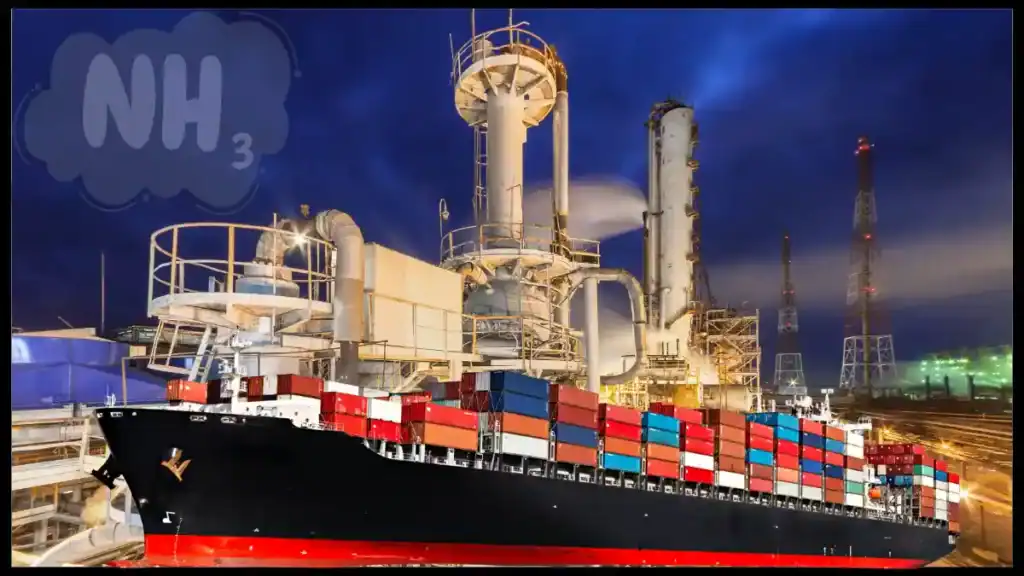
Ammonia is gaining serious traction as a next-generation marine fuel, with key players across the industry making decisive moves to support its adoption. From fleet investments and dual-fuel vessel designs to port bunkering trials and specialized crew training, the maritime sector is laying the groundwork for ammonia to become a central part of its decarbonization strategy.
Recent Ammonia Maritime Developments
Project or Event
Summary
Maritime Impact
Status
Höegh Autoliners to Scale Ammonia
Höegh announced plans to gradually scale ammonia as fuel in its Aurora-class fleet.
Strengthens demand signals and reinforces ammonia’s role in long-term decarbonization.
Active planning; vessels already dual-fuel capable
Amon Bulk Orders Ammonia Bulkers
Amon Maritime launched a new dry bulk unit with two ammonia-fueled ships on order.
Introduces ammonia to the dry bulk segment, expanding vessel type diversity.
Newbuilds scheduled for 2029
Aurora-Class Dual-Fuel Ships
Höegh’s Aurora vessels are built with LNG/ammonia dual-fuel systems and futureproof tank layouts.
Sets a new design standard for flexible, multi-fuel readiness in commercial shipping.
First deliveries underway
Ammonia Bunkering Expansion
COSCO terminal in Dalian successfully completed a small-scale ammonia bunkering operation.
Signals infrastructure readiness at early hubs in Asia and Europe.
Pilot operational
Simulation and Safety Training
Anglo-Eastern Maritime Academy launched a dedicated training facility for ammonia handling and bunkering.
Prepares future crew for safe onboard operations and fuels maritime workforce transition.
Facility live as of July 2025
MIT Study on Ammonia Risks
New research highlights potential health and environmental risks from ammonia slip and NOₓ emissions.
Calls for strict control technologies and emissions regulation to accompany fuel adoption.
Published and peer-reviewed
Note: Table reflects verified industry announcements and reports.
Industry Impact Overview
The growing momentum around ammonia-fueled vessels is creating measurable ripple effects across the maritime sector. It's no longer just about newbuild announcements. We're seeing ports rethink bunkering strategy, training centers race to prepare seafarers, and operators reassess fleet architecture for dual-fuel flexibility. As ammonia moves from theory to early deployment, the industry is pivoting to close critical gaps in infrastructure, safety, and scale readiness.
Key Impacts
Dual-fuel flexibility is becoming standard on newbuilds to hedge against regulatory and fuel supply uncertainty.
Training institutions are prioritizing ammonia handling, driven by safety requirements and charterer expectations.
Bunkering infrastructure development is accelerating, with early pilot programs in Asia and Europe informing global rollout.
Classification societies are updating ammonia guidelines, signaling regulatory alignment is underway.
Engine R&D is expanding beyond propulsion to include auxiliary ammonia-powered systems like generators and boilers.
Strategic Shifts Triggered by Ammonia Fuel Adoption
Trend
What’s Happening
Who’s Leading
Outlook
Ammonia Training Surge
Maritime academies in India, Norway, and Japan have introduced ammonia-specific safety modules and simulators.
Anglo-Eastern, Wartsila Academy, MOL Training Center
Expected to become mandatory for ammonia crew certification by 2026
Port Bunkering Transition Plans
Select ports are adjusting bunkering zones, risk modeling, and investment to accommodate ammonia fueling.
Port of Rotterdam, COSCO Dalian, Singapore MPA
Early rollout sites to expand in 2025–2027 with global alignment lagging
Ammonia-Ready Classification Surge
Vessel builders are increasingly requesting ammonia-ready notations in newbuild specs, even when using other fuels initially.
DNV, Lloyd’s Register, Korean Register
Viewed as a resale and regulatory hedge for futureproofing assets
Auxiliary Ammonia Systems in R&D
Engine makers and universities are testing ammonia-based power for onboard boilers and gensets, not just main propulsion.
MAN Energy Solutions, University of Strathclyde, Korea Maritime University
Broadens ammonia’s viability for hybrid vessel designs
Global Crew Reallocation Planning
Operators are mapping deployment strategies for ammonia-capable seafarers ahead of fleet rollouts.
Höegh Autoliners, Amon Maritime, MOL
Will influence crewing agency priorities and talent pipelines globally
Note: Table reflects verified trends observed through training announcements, ship registry data, and port planning briefings.
We’ve been closely tracking how ammonia is moving from a speculative fuel to a real force reshaping maritime strategy. From what we’re seeing, the investment upstream is just as critical as what’s happening on the water. We’re watching a global web of production hubs, bunkering corridors, and regulatory frameworks take shape and it’s happening fast. We’ll continue following these shifts as they impact shipowners, fuel suppliers, and port operators alike.