15 Things Shipowners Need to Know About Underwater Maintenance (But Usually Don’t)
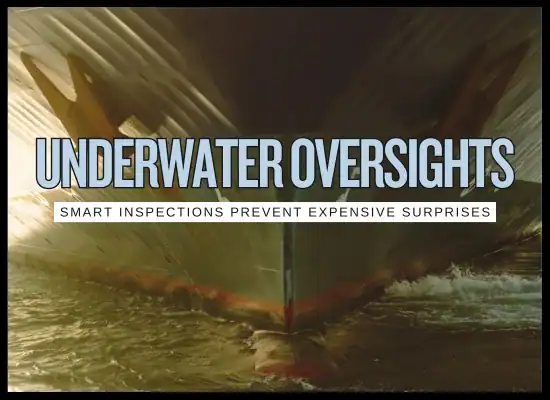
What’s quietly costing shipowners millions in fuel, dragging down CII scores, and slipping past routine inspections? It’s not a failed engine or a missed charter, it’s what’s growing beneath the waterline. From barnacles to biofouling, underwater maintenance is the hidden battleground of shipping efficiency. In an industry obsessed with speed, savings, and compliance, ignoring what’s under the hull isn’t just risky, it’s expensive.

- Even a 20 % increase in resistance can cut your vessel’s speed or burn thousands more per day.
- Regulatory regimes like EEXI and CII penalize inefficient performance—dirty hulls worsen your ship’s rating under these standards.
- Delays due to fouling can multiply port state control scrutiny and potential slow-steaming costs.
- Major operators report fuel uplift post-cleaning at tropical waters of 7–15 % within weeks.
- Underwater cleaning data shows elevated drag losses even with moderate fouling levels.
- Schedule hull cleanings every 60–90 days, more often in tropical climates.
- Use environmentally cautious cleaning tools that preserve antifouling coatings.
- Track AIS data to tie fuel savings to cleaning dates—build ownership support with real numbers.
- Coordinate with the onboard engineer and performance team to verify improvement post-intervention.
- Unseen hull fouling is a silent drain on performance, budget, and regulatory rating—not to mention corporate sustainability goals. A smarter cleaning schedule isn’t a luxury, it’s a business imperative.
- Even minor surface roughness can result in up to 6% loss in propulsion efficiency.
- Fuel savings from propeller polishing often deliver full ROI in a matter of voyages, not years.
- Operators of Aframax and Suezmax tankers report fuel cost reductions of hundreds of thousands of dollars annually from consistent polishing schedules.
- It’s considered one of the most cost-effective methods to lower emissions and improve CII ratings.
- Polish propellers every 4–6 months, especially in warm or biofouling-prone waters.
- Use polishing systems that meet class standards and avoid gouging the blades.
- Track fuel efficiency before and after each polish to validate performance gains.
- Propeller polishing is a fast, low-cost maintenance step that can produce outsized returns. Even small improvements in blade smoothness lead to meaningful savings and improved voyage performance.
- ROVs reduce risk by eliminating the need for diver entry in confined or hazardous areas.
- They also speed up inspections—some class-approved ROV surveys are completed in under 3 hours.
- Using ROVs can help avoid off-hire delays when surveys are required at remote or high-traffic ports.
- Major fleets have started standardizing ROV use for annual inspections, citing both cost and time savings.
- Class societies such as DNV, ABS, Lloyd’s Register, and Bureau Veritas now allow ROV-based hull inspections for certain vessel classes.
- Check your vessel's eligibility for in-water surveys using ROVs under your specific class society's guidelines.
- Partner with certified operators who provide high-resolution video and structured inspection reporting.
- Use ROVs with sonar and camera stabilizers for better clarity in murky conditions.
- Integrate inspection footage into your vessel's maintenance history and digital compliance logs.
- ROVs now offer a safe, efficient, and class-approved alternative to diver-based inspections. For many vessels, they cut costs, reduce risk, and help avoid unnecessary downtime while maintaining full compliance.
- Voiding the warranty could leave you responsible for costly repainting or drydocking if performance degrades prematurely.
- Unauthorized cleaning methods can strip away biocidal coatings, reducing antifouling lifespan and increasing fouling rates.
- Some insurers may decline claims related to performance loss if the paint warranty has been invalidated.
- Shipowners have reported having to repaint hulls within 12–18 months due to unauthorized or overly aggressive underwater cleaning.
- Some paint makers require the use of soft tools, divers certified in specific procedures, and detailed cleaning logs to maintain warranty coverage.
- Review your antifouling paint warranty terms before scheduling any underwater cleaning.
- Use certified service providers who follow OEM-approved procedures.
- Keep documentation of all cleanings, including method, location, and before/after images or footage.
- If in doubt, contact the paint manufacturer before proceeding with an underwater hull cleaning.
- Underwater hull cleanings can help fuel efficiency—but done wrong, they can cost you your paint warranty and create bigger problems. The key is working with the right vendors, tools, and procedures from the start.
- Biofouling transfers invasive species between ecosystems, raising legal scrutiny during port calls in sensitive regions.
- Authorities in places like New Zealand, Australia, and California may refuse entry or fine vessels lacking documented biofouling control plans.
- Non-compliance could delay voyages, incur quarantine measures, or harm ESG reputation.
- The IMO now requires ship-specific biofouling management plans and record books under revised 2023 guidelines (resolution MEPC.378(80)).
- Further work on a binding international biofouling framework is underway, with rollout expected by mid‑2029 following IMO MEPC 83 decisions in early 2025.
- Develop and maintain a documented biofouling management plan and record book per IMO standards.
- Record hull condition, cleaning actions, location, and date in your biofouling record book.
- Ensure cleaning tools and methods meet environmental and AFS manufacturer specifications.
- Train crew on inspection thresholds, contingency plans, and data submission requirements for port authorities.
- Biofouling is no longer cosmetic—it’s regulatory. A documented management approach not only optimizes performance but also protects your vessel’s access to regulated ports, ESG credentials, and compliance status.
- Anodes discharge at a gradual rate over time. If they are depleted the hull becomes exposed to electrochemical corrosion.
- Expensive hull coatings can degrade prematurely if corrosion is not managed, potentially shortening maintenance intervals.
- Non‑functional or missing anodes may lead to increased PSC scrutiny or refusal of vessel certification during inspections.
- Operators report needing to change anodes as often as every six months in warm, highly corrosive waters.
- Failure to replace anodes can result in tiny undercoating blisters that develop into costly structural repairs.
- Inspect all zinc anodes during each underwater clean or inspection dive.
- Replace anodes when mass loss reaches around 50 % of original weight or diameter.
- Log condition, replacement date, and remaining mass in maintenance records.
- Use certified OEM anodes that match the electrochemical specification and size for your vessel.
- Well‑maintained zinc anodes provide critical corrosion protection. Small investment in inspection and replacement prevents long‑term damage and may save thousands in repair costs.
- In remote ports or anchorages, obtaining certified divers may take days and involve significant travel expenses.
- ROVs reduce safety risks related to depth, currents, poor visibility, or marine hazards.
- Using ROVs expedites underwater tasks and helps avoid off-hire delays that impact voyage windows.
- Fleets operating in remote offshore regions or around polar waters increasingly deploy ROV services on demand.
- These operations often complete inspections and light maintenance without waiting for diver teams to arrive.
- Arrange ROV services in advance when planning calls to remote ports or anchorages.
- Choose operators with reliable transit equipment and familiar with logistics in isolated regions.
- Ensure ROV systems include tools for light cleaning, video recording, and structural checks.
- Coordinate live reporting between vessel and operations center to streamline approval and documentation.
- ROVs provide flexible, reliable underwater capability when diver services are impractical or unavailable. They help avoid costly delays, streamline maintenance, and maintain compliance even in the most remote regions.
- Blockages in intake screens reduce cooling efficiency and can lead to overheating or pump failure.
- Marine growth in sea chests can obstruct essential systems like ballast pumps and firefighting equipment.
- Clogging often goes unnoticed until a system fails or performance drops significantly.
- Ships operating in tropical or estuarine environments often see rapid accumulation of biofouling in intakes.
- In some cases, growth in sea chests has led to engine slowdowns due to insufficient cooling water intake.
- Inspect sea chests and intake screens during every underwater cleaning or inspection dive.
- Use ROVs or divers to check for growth or debris inside grates and along the intake passages.
- Flush sea chests regularly from inside the engine room using the designated discharge setup.
- Document growth trends to anticipate cleaning intervals and adjust operating procedures in high-risk areas.
- Clogged sea chests and screens can cause costly mechanical failures and voyage delays. Regular inspection and cleaning keep critical systems flowing and your vessel operating at full capacity.
- In-water repairs help avoid the cost, scheduling delays, and off-hire periods that come with drydock availability.
- Quick fixes below the waterline can resolve problems before they escalate into more serious issues.
- Class societies may approve underwater work as long as it's properly documented and performed to standard.
- Common underwater repairs include propeller polishing, minor welding, anode replacement, crack sealing, and rudder inspections.
- Operators report cost savings of up to 70 percent when using in-water methods over drydocking for minor tasks.
- Coordinate early with your class society to pre-approve certain underwater procedures if needed.
- Use certified service providers with the right dive or ROV equipment for the repair type.
- Record the full process with video or photographic documentation for submission and compliance.
- Only perform temporary repairs underwater if permanent work is scheduled at the next available yard stop.
- Not all hull repairs require drydocking. For many minor issues, in-water work offers a faster, cheaper, and class-compliant alternative to keep your vessel on schedule and within budget.
- Attempting to clean a hull in a restricted port can lead to heavy fines or vessel detainment.
- Cleaning activities that release antifouling particles or biomass may violate local environmental protection rules.
- Even approved ports often require advance notice and certified vendors to perform in-water work.
- Ports in places like Australia, New Zealand, and California enforce strict biofouling and water discharge controls.
- Some allow cleaning only with capture systems that prevent discharge of paint or fouling into the water.
- Check port-specific regulations before scheduling underwater cleaning operations.
- Use vendors familiar with local laws and equipped with compliant cleaning systems.
- Maintain a record of prior hull condition, paint type, and cleaning history in case authorities request documentation.
- Plan cleanings in regions that support in-water hull work with minimal restrictions to avoid delays.
- Underwater cleaning isn’t permitted everywhere. Knowing which ports restrict it can help you avoid regulatory trouble, delays, and added costs during routine maintenance planning.
- Debris and fouling trapped in these sheltered zones increase drag and impair propulsion efficiency over time.
- Accumulated sludge can mask coating damage, accelerate corrosion, and create hidden structural risks.
- Standard visual inspections may miss these areas unless specifically targeted.
- More than 80 % of surveyed rudders exhibited biofouling—even when hulls appeared clean elsewhere. Niche areas are proven hotspots for accumulation.
- Marine niche areas like bilge keels and rudder hinges collect debris most quickly in operations through estuaries, tropical waters, and low-flow zones.
- Instruct divers or ROV pilots to specifically inspect rudder pockets, weld seams, stabilizer interfaces, and bilge keels.
- Use tooling or hopper suction to clear embedded sludge and inspect the underlying surface.
- Log condition and cleaning details for these areas separately in inspection records.
- Cross-reference cleaning data with performance logs to validate drag improvement from targeted cleaning.
- Don't ignore niche areas—residual sludge in rudder pockets, bilge keels, and weld seams can silently degrade your vessel’s performance and coating health. Regular targeted inspection ensures nothing slips through the cracks.
- PSC inspections include verification of the IAFS Certificate and hull condition as part of AFS Convention enforcement.
- Unsightly or excessive fouling can be deemed a deficiency if it presents environmental or safety concerns.
- Detention can result in voyage delays, unexpected costs, and damage to the vessel’s compliance record.
- PSCOs are empowered to detain ships when evidence shows that the anti-fouling system is compromised or undocumented.
- Ports under schemes like Paris MoU or USCG regularly flag hull maintenance issues as grounds for detention.
- Keep your IAFS Certificate and Record of Anti‑Fouling Systems current and aligned with drydock intervals.
- Document hull condition thoroughly before calls in regulated regions, especially after long static periods.
- Ensure regular underwater surveys to verify compliance with AFS requirements.
- Respond quickly to any PSC feedback related to hull or fouling conditions.
- PSC authorities regard poor underwater maintenance and absent anti-fouling documentation as serious deficiencies. Proper compliance isn't optional—it’s essential to avoid detentions, delays, and costly interventions.
- Divers working on hulls, sea chests, or propellers face hazards from currents, limited visibility, sharp structures, and inclement weather.
- Inexperienced personnel or rushed jobs increase the likelihood of injuries or near-miss incidents.
- Safety failures can lead to reputation damage, incident investigations, and increased insurance or P&I scrutiny.
- Operators in busy or remote ports report increased incidents involving unvetted dive teams or vendors operating under pressure.
- Common safety failures include poor equipment maintenance, lack of emergency procedures, and improper dive planning.
- Use only certified dive teams with documented safety protocols and valid training credentials.
- Conduct thorough site assessments before any dive, including risk zones, marine hazards, and weather impacts.
- Establish emergency procedures, communication lines, and support divers on standby.
- Monitor diver depth and bottom time carefully and provide clear decompression support plans.
- Diver-based maintenance isn’t risk-free—safety must be prioritized at every step. Proper preparation, vetted vendors, and clear procedures ensure compliance, prevent injuries, and protect your fleet’s reputation.
- Discharging toxic residues or paint chips can harm marine life and elicit fines or work stoppage by port authorities.
- Improper cleaning methods may spread non-native species or foulant fragments across ecosystems.
- Environmental non-compliance can damage a company’s ESG rating and public reputation.
- Ports in regions like California, New Zealand, and Australia now mandate closed-system hull cleaning that captures debris and paint fragments.
- Operators who fail to adhere to environmental protocols risk inspection refusal and fines.
- Use cleaning systems with containment and filtration to prevent discharge into the water.
- Choose vendors certified in eco-safe cleaning methods and approved by port authorities.
- Keep documentation of cleaning method, filters used, and disposal procedures to support environmental transparency.
- Coordinate with local environmental agencies when planning underwater cleaning operations.
- Underwater cleaning has become an environmental concern. Using containment systems and ensuring eco-compliant methods isn’t optional—it’s essential to avoid fines, protect biodiversity, and uphold regulatory standards.
- Routinely tracking plating thickness and corrosion trends helps forecast maintenance needs and avoid unexpected downtime.
- Early detection of weld cracks or coat damage allows in-water rectification before issues escalate.
- Non-destructive monitoring supports condition-based maintenance and prolongs vessel service life.
- ROV systems with ultrasonic probes achieve sub‑millimetre resolution in UTG readings across hull plates and sea chest structures :contentReference[oaicite:5]{index=5}.
- Advanced subsea NDT inspections—such as phased-array corrosion mapping and eddy-current testing—are now delivered via ROVs in regular condition assessment programs :contentReference[oaicite:6]{index=6}.
- Work with providers offering certified ROVs and sensors for UTG and NDT specific to your hull configuration.
- Integrate inspection results with condition monitoring dashboards to track corrosion metrics over time.
- Schedule follow-up inspections or repairs based on data trends rather than fixed intervals.
- Use 3D sonar mapping and HD visuals along with UTG to create a combined structural report.
- Structural health monitoring using ROVs transforms reactive maintenance into predictive asset care. With real-time thickness data, corrosion mapping, and AI analysis, you're empowered to fix problems early and extend hull life—without costly drydock stops.
Beneath every efficient voyage is a hull that’s been properly maintained. Whether it's propeller polishing, biofouling control, or ROV-based inspections, underwater upkeep is no longer just a technical checkbox. It's a frontline defense against fuel waste, regulatory penalties, and preventable breakdowns.
Shipowners who treat underwater maintenance as a proactive strategy, not a reactive expense, stand to gain the most in efficiency, compliance, and long-term vessel value. The tools are available. The standards are rising. The smartest fleets are already ahead.