
SHIPUNIVERSE
Maritime Intelligence, Tools & Live Industry Radars

One place for live maritime intelligence, practical decision tools, industry events and focused reporting.

17Live Radars 286Maritime Tools
24/7Intelligence Focus
GlobalIndustry Coverage
RADARS
TOOLS
All Tools
Latest 20
Open to load latest items…
NEWS
All News
Latest 20
Open to load latest items…
REPORTS
All Reports
Latest 20
Open to load latest items…
TECH
All Tech
Latest 20
Open to load latest items…
CRUISE
All Cruise
Latest 20
Open to load latest items…
NAVAL
All Naval
Latest 20
Open to load latest items…
SHIPUNIVERSE REPORTING

Company Spotlights

Explore the complete story in the ShipUniverse intelligence layout.

← Back to Company Spotlights ShipUniverse / SPOTLIGHT

Spot Ship: Redefining Maritime Intelligence Through Smart Automation

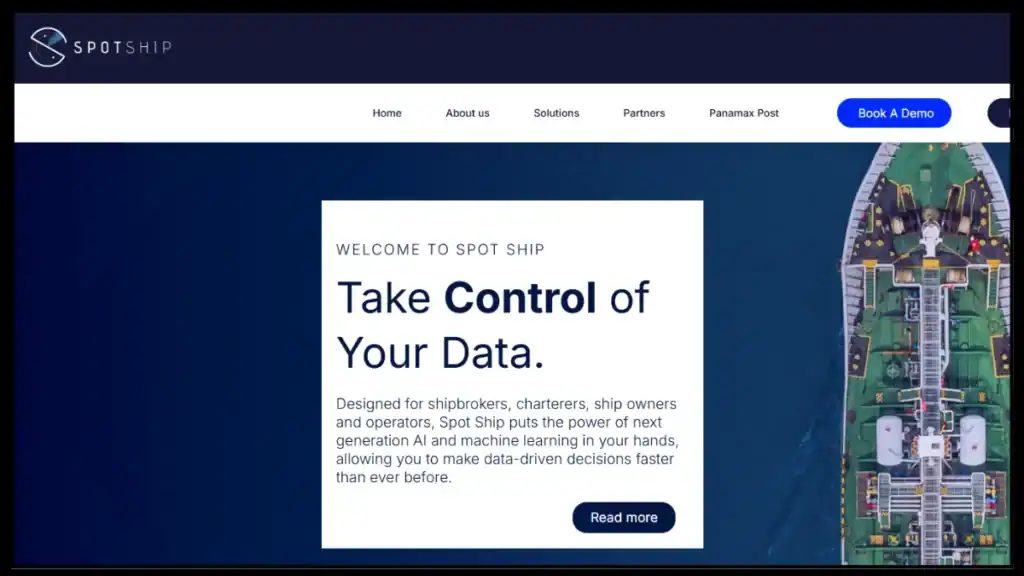
Today, on Ship Universe we spotlight the company, Spot Ship. In a global industry where speed, precision, and information access can mean the difference between profit and loss, Spot Ship offers a smarter way to manage vessel and cargo matching. Designed specifically for shipbrokers, charterers, and operators, Spot Ship is not just another platform, it’s a purpose built tool that transforms how maritime professionals work with data.


Built by Brokers, Not Outsiders

One of Spot Ship’s core strengths is its origin. Unlike generic software platforms trying to enter the maritime space, Spot Ship was created by people who’ve actually worked as shipbrokers. The result is a platform that speaks the language of the industry, understands its challenges, and offers practical tools rather than theoretical solutions.

This broker-led approach ensures that everything in the system, from how emails are parsed to how cargo-vessel matches are displayed, is built for speed, clarity, and real-world utility.

What Happens When Software Is Built by Brokers
Aspect Typical Maritime Tech Vendor Spot Ship (Broker-Built)
Product Vision Often defined by engineers or external consultants with limited maritime experience Created by former shipbrokers who understand what tools are actually needed on the trading floor
Workflow Design Generic features and menus that don't align with broker processes Tailored to the daily reality of broking: inbox-first, vessel-focused, and fast
Feature Prioritization Guided by market trends or investor interests Driven by user feedback and real-world operational needs
Iteration Speed Slow release cycles; new features can take months Rapid development—new tools can go live in days based on broker input
Support Model Often offshore support with generic ticketing systems Each client gets a dedicated account manager and technical lead who know shipping
Commercial Relevance Struggles to stay aligned with market dynamics and chartering urgency Built with direct input from people closing real deals—timing and speed are central
Note: This comparison reflects core design principles, operational models, and end-user experience differences, based on Spot Ship’s public platform features and market positioning.

Turning Raw Emails into Smart Actions

At the heart of Spot Ship’s system is its highly accurate natural language processing engine. While most brokers are still manually scanning thousands of emails a week, Spot Ship automates this process with over 95% parsing accuracy, pulling out vessel positions, cargo specs, and availability data in seconds.

This level of precision allows maritime professionals to act faster, with better information, and with far less manual input. It removes much of the daily administrative burden and opens up more time for high-value strategic work.


Smarter Matching, Less Guesswork

Instead of simply showing what ships are available, Spot Ship actively helps users identify which vessels are best suited for a particular cargo. It does this by factoring in real-time AIS data, vessel speeds, current ballast positions, and distance from load ports.

This approach minimizes idle time and unnecessary ballast movements. The benefit isn’t just operational efficiency, it’s financial and environmental. By reducing wasted fuel and better aligning vessel supply with demand, Spot Ship supports both profitability and sustainability goals.


A Platform That Grows with You

Spot Ship is not a static tool. The team regularly updates the platform based on real user feedback. If brokers ask for a new feature or workflow adjustment, it’s often added within days, not months.

This agility stands in sharp contrast to larger enterprise platforms, where user feedback is often buried under layers of bureaucracy. At Spot Ship, customer needs drive development—and the result is a tool that evolves in step with the people using it.

Practical Results from Spot Ship Adoption
Metric Before Spot Ship After Spot Ship
Time Spent Parsing Emails 8–12 hours per broker per week Less than 1 hour per week (automated)
Cargo-to-Vessel Matching Speed 2–3 hours to build a shortlist manually Instant suggestions using AIS & proximity filters
Email Parsing Accuracy Manual input—subject to human error Over 95% automated extraction accuracy
Ballast Days Reduction Unoptimized; often selected from memory or habits 5–15% average reduction in ballast time through optimal routing
Missed Fixing Opportunities Multiple weekly due to information delays or email overload Significantly reduced—key ships no longer missed in crowded inboxes
New Hire Ramp-Up Time 4–6 months to learn vessel tracking & manual workflows 1–2 months to full efficiency with guided platform
Carbon Emissions per Fixture (Estimate) Higher due to excess ballast miles and late-stage routing Lower by 5–10% through better proximity matching
Note: Based on Spot Ship customer usage data, internal benchmarks, and performance feedback from live deployments in 2024–2025. Actual results may vary depending on company size, workflow, and adoption speed.

Connected to the Ecosystem

Spot Ship is also quietly powering major platforms in the industry. Its parsing technology, for example, supports Sedna’s email workflows and has been integrated into systems run by leading maritime tech firms. This shows a broader confidence in Spot Ship’s core technology and extends its impact well beyond its own dashboard.


Clear Support and Personal Guidance

Every customer is paired with both a technical lead and an account manager, real people who know the product inside and out. Whether onboarding a new team or tweaking a data feed, Spot Ship’s support is hands-on and responsive.

This level of service is rare in maritime tech, and it reflects the company’s focus on relationships, not just transactions.


Spot Ship represents a larger shift in maritime operations, a move away from inbox-driven chaos and toward structured, smart, and automated workflows. It enables brokers to make faster decisions, reduce ballast time, and stay competitive in a market where timing and efficiency are everything.

By the ShipUniverse Editorial Team — About Us | Contact


← Browse more ShipUniverse posts
MARITIME DECISION TOOLS

Practical tools for real vessel and commercial decisions

Browse the latest 24 tools or instantly search every published ShipUniverse maritime tool.

24 latest toolsView all 286 →
TOOL

Port Waste Reception, MARPOL Delivery Notice, Disposal Logistics & Charge Verification Tool

Port Operations · MARPOL Waste Delivery · Reception Logistics · Procurement…

Open →
TOOL

Maritime Crew Recruitment, Retention, Manning Agency Fees & Attrition Cost Tool

ShipUniverse · Fleet Crewing Economics · Agency Evaluation · Retention Planning…

Open →
TOOL

Container Rail Intermodal Connection, Terminal Dwell & Train Slot Tool

Ship-to-Rail · Intermodal Terminal · Train Slots · Container Dwell Container…

Open →
TOOL

Bulk Grain Cargo Quality, Fumigation, Hold Readiness & Rejection Exposure Tool

Cargo quality · Hold inspection · Grain contracts · Port delay…

Open →
TOOL

Marine Equipment OEM Warranty, Service SLA & Repair Claim Tool

Equipment Reliability · OEM Claims · Warranty Terms · Contracted Service…

Open →
TOOL

Freight Forwarder Shipment Quotation, Buy/Sell Rates, Routing & Margin Tool

Freight forwarding · NVOCC pricing · Route selection · Commercial yield…

Open →
TOOL

Ro-Ro Vehicle Terminal Yard Capacity, PDI & Vessel Loading Flow Tool

Vehicle terminals · PCTC & Ro-Ro calls · Gate & rail…

Open →
TOOL

Marine Hull & P&I Renewal, Premium Quote, Deductible & Coverage Comparison Tool

Marine Insurance · Renewal Tender · Hull & Machinery · P&I…

Open →
TOOL

Offshore Support Vessel Charter Bid, Utilization & Campaign Profitability Tool

Offshore commercial operations · PSV · AHTS · MPSV · Construction…

Open →
TOOL

Marine Repair Tender, Shipyard Bid Comparison & Contract Cost Risk Tool

Ship Repair Procurement · Yard Selection · Contract Risk · Technical…

Open →
TOOL

Container Transshipment, Missed Connection, Rollover & Recovery Cost Tool

Container Liner Networks · Feeder-to-Mother Connections · Hub Recovery Container Transshipment,…

Open →
TOOL

Vessel Pre-Purchase Technical Survey, Defect Valuation & Acquisition CAPEX Tool

Vessel S&P · Technical Due Diligence · Class Records · Acquisition…

Open →
TOOL

Contract of Affreightment, Cargo Nomination, Fleet Allocation & Fulfilment Risk Tool

Dry Bulk Contracts · Cargo Nomination · Fleet Assignment · Laycan…

Open →
TOOL

Port Pilotage, Tug Dispatch, Berth Window & Marine Services Coordination Tool

Harbor Operations · Pilotage · Towage · Berth Allocation · Marine…

Open →
TOOL

Offshore Heavy Lift, Crane Spread, Weather Window & Installation Cost Tool

Offshore Construction · Heavy Lifts · Crane Spreads · Weather Windows…

Open →
TOOL

Cruise Embarkation, Terminal Security, Gangway Queue & Passenger Processing Tool

Cruise Operations · Terminal Security · Passenger Processing · Gangway Boarding…

Open →
TOOL

Dangerous Goods Declaration, Booking Acceptance & Documentation Readiness Tool

IMDG Documentation · Dangerous Goods Booking · Carrier Acceptance · Terminal…

Open →
TOOL

Marine Salvage, Wreck Removal, Pollution Response & Casualty Cost Tool

Marine Casualty · Emergency Salvage · Wreck Removal · Pollution Response…

Open →
TOOL

Ferry Route Capacity, Timetable Reliability & Passenger Revenue Tool

Ferry Networks · Route Planning · Vessel Availability · Passenger &…

Open →
TOOL

Inland Barge Tow, Lock Delay, Fleet Utilization & Voyage Profitability Tool

Inland Navigation • Towboat Economics • Lock Scheduling • Fleet Logistics…

Open →
TOOL

Marine Bunker Procurement, Supplier Quote Comparison & Delivered Fuel Cost Tool

Bunker Procurement • Fuel Grades • Supplier Offers • Port Deviation…

Open →
TOOL

Reefer Cargo Temperature Excursion, Cold Chain & Cargo Claim Exposure Tool

Reefer Cargo • Temperature Evidence • Cold Chain • Financial Claims…

Open →
TOOL

Electronic Bill of Lading, Cargo Release & Documentation Discrepancy Tool

Container Shipping • Digital Trade • Freight Documentation • Cargo Release…

Open →
TOOL

Crew Change, Relief Logistics, Port Coordination & Cost Tool

Fleet Crewing • Seafarer Repatriation • Travel Logistics • Port Clearance…

Open →