Sailing Light? Top Strategies to Stay Profitable
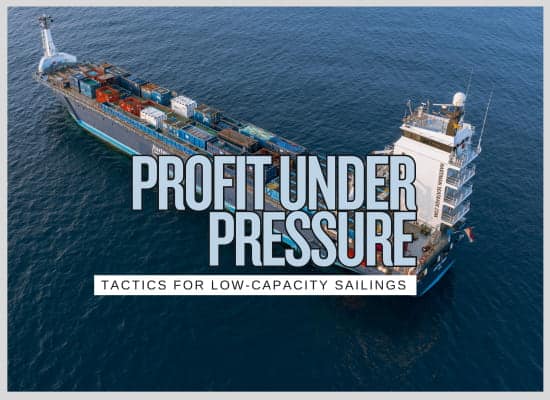
Lighter loads may not be permanent, but they are a clear and present reality for shipowners, operators, and cargo planners across major trade lanes. Whether driven by tariff shifts, reduced exports, or seasonal volatility, the result is the same: more vessels are sailing under capacity, and profit margins are tightening. While many expect a rebound, waiting it out isn't a strategy. This report explores practical steps you can take now — from tactical load optimization to smarter scheduling — to stay efficient, minimize losses, and be ready to scale when volumes return.
📊 Current Trends and Root Causes of Lighter Loads
While the shift to lighter vessel loads may be temporary, it is reshaping operations across global trade routes today. Understanding what’s driving this change is the first step in developing a strategic response. The table below outlines the key trends contributing to underloaded sailings and how they directly impact ship and fleet operations.
- Tariff hikes and trade realignments are reducing cargo flow on traditional lanes.
- Weakened consumer demand is driving a surge in blank sailings.
- Environmental and port regulations are forcing vessels to lighten loads.
- Slot-sharing limitations and supply chain delays are causing missed load opportunities.
Profitability Impact
Sailing light means rising per-unit costs, thinner margins, increased risk per voyage and the list goes on. Even short-term dips in cargo volume can quickly erode profitability if fleet owners don’t adjust fast. Before waiting for volumes to bounce back, it’s critical to understand just how much each underloaded trip is hitting the bottom line.
- Fixed voyage costs (fuel, crew, port fees) remain the same regardless of cargo volume
- Revenue per sailing drops sharply as fewer containers are moved
- Per-unit shipping costs climb, making your rates less competitive
- Idle or underused assets strain ROI across your fleet
Ship Universe Calculator: Lighter Load Profitability Impact
| Vessel Type: | |
| Max TEU Capacity: | |
| Current Load (% full): | |
| Freight Rate per TEU (USD): | |
| Fixed Voyage Cost (USD): | |
| 📊 Profit impact and per-unit cost will appear here | |
| Disclaimer: This calculator provides illustrative estimates only and does not account for route-specific fuel, crew, or insurance fluctuations. | |
Top Strategies to Offset Lighter Loads in 2025
Lighter loads are no longer a rare disruption — they’re a persistent reality for many shipowners across container, bulk, and RoRo sectors. Whether driven by trade imbalances, tariffs, or soft seasonal demand, underutilized voyages eat into margins fast. But with the right playbook, operators can protect profitability even when the decks aren’t full. Below are powerful, real-world strategies used by some of the most resilient fleets today.
Fuel is the single biggest cost per voyage — and when loads are light, every drop matters more. Slow steaming is a proven strategy where ships deliberately reduce speed to cut fuel use. Just-in-time arrivals build on this by syncing with port schedules to avoid waiting at anchor.
🔍 The Logic:- Fuel consumption rises with the cube of speed — a 10% drop in speed can reduce fuel use by up to 27%.
- Slower speeds mean lower engine stress and extended maintenance intervals.
- When paired with port coordination, idle time is minimized, increasing total voyage efficiency.
- One 8,500 TEU ship running at 18 knots vs 24 knots can save $100,000–$200,000 in fuel per round trip.
- Widespread adoption saved the industry an estimated $60 billion in fuel over a decade.
- Reduces GHG emissions — aligning with ESG goals and carbon reduction credits.
- Transoceanic routes with flexible ETAs
- Carriers with port partnerships or digitized scheduling tools
- Vessels operating below 70% capacity where profit margins are tight
- Weather routing software for fuel-optimized courses
- Voyage optimization platforms like Wärtsilä Navi-Port or StormGeo
- Engine load monitoring tools to maintain efficiency at lower RPM
When sailing with lighter loads, every avoided expense helps restore profitability. Rerouting around costly chokepoints, refining port calls, or bypassing inefficient loops can significantly reduce operational costs and fuel burn — especially when paired with smart voyage planning.
🔍 The Logic:- Fuel-efficient routing avoids strong head currents, adverse weather, and unnecessary distances.
- Skirting expensive canals (like Suez or Panama) can save hundreds of thousands per voyage.
- Dropping low-volume port calls reduces time, fuel, port fees, and equipment idle charges.
- One Asia–Europe carrier saved ~$700,000 per voyage by rounding the Cape of Good Hope instead of transiting Suez during low fuel price periods.
- Weather-optimized routing can cut voyage fuel use by 3–10%.
- Selective port skipping during downturns has helped carriers maintain weekly schedules with fewer sailings.
- Long-haul container, bulk, and RoRo routes with flexible arrival windows
- Operators managing vessels with high daily fuel burn
- Voyages passing through high-fee canals or narrow multi-port rotations
- Voyage planning software with canal cost calculators (e.g., Dataloy, SPOS)
- Weather routing platforms like BonVoyage, StormGeo, or MeteoGroup
- Dynamic port call analysis tools to assess ROI on each stop
When cargo loads drop, reducing resistance and maximizing engine efficiency becomes even more critical. A clean hull, tuned propulsion system, and well-chosen upgrades can cut fuel costs significantly — turning every gallon burned into more miles moved per dollar.
🔍 The Logic:- Marine growth (biofouling) on the hull increases drag, which leads to higher fuel use.
- Propeller polishing and trim optimization reduce energy loss and improve flow.
- Retrofits like energy-saving ducts or high-efficiency coatings lower resistance and increase thrust.
- Hull cleaning alone can improve fuel efficiency by 10–16% depending on fouling severity.
- Ships using silicone-based antifouling coatings show up to 8% reduction in fuel burn over time.
- One dry bulk operator saw $450,000 in annual fuel savings after a full eco-upgrade retrofit.
- Older vessels operating at lower load factors
- Ships sailing long distances between cleaning intervals
- Operators seeking immediate OPEX reduction without altering voyage schedules
- Hull performance monitoring tools (e.g., Jotun Hull Skater, Propulsion Analytics)
- Underwater cleaning and inspection services (e.g., Hydrex, Subsea Global)
- Advanced antifouling coatings and fuel-saving retrofits (e.g., Becker Mewis Duct®, air lubrication systems)
When demand drops, staying profitable often means knowing when not to sail. Blank sailings and vessel resizing help match capacity to actual volume — protecting freight rates and eliminating unnecessary operating costs on underfilled voyages.
🔍 The Logic:- Blank sailings remove excess capacity from routes, consolidating demand onto fewer ships.
- Right-sizing replaces ultra-large vessels with smaller, more fuel-efficient ones when volume can’t justify bigger ships.
- Idle or slow-lay-up strategies reduce running costs during soft market windows.
- In early 2025, transpacific lines blanked up to 1 in 4 scheduled sailings to stabilize rates amid a 50% booking drop.
- Carriers using 5,000–8,000 TEU ships instead of 14,000+ TEU vessels reduced voyage costs by up to 35%.
- Blank sailings have helped some alliances maintain 90–100% utilization while keeping revenue per TEU strong.
- Carriers in scheduled liner services with flexible capacity pools
- Trade lanes experiencing volatile or sharply declining demand
- Operators with mixed fleet sizes who can rotate in the most efficient hulls
- Capacity planning software (e.g., BlueYonder, Alphaliner data tools)
- Fleet scheduling systems with cost-per-slot optimization
- Real-time utilization dashboards to trigger blanking decisions early
When demand is uneven, teaming up with other carriers can mean the difference between a half-empty ship and a fully utilized one. Alliances and vessel sharing agreements let operators pool cargo and capacity to fill ships more consistently — spreading risk and cost across partners.
🔍 The Logic:- Multiple carriers share slots on the same vessel, reducing the chance any one ship sails underutilized.
- Alliances coordinate schedules, reduce redundant sailings, and preserve market coverage.
- Bulk and RoRo operators use vessel pools to optimize deployment and ensure fuller voyages.
- Container alliances (2M, Ocean, THE) have consistently achieved higher utilization across weak demand cycles.
- One alliance achieved 100% vessel utilization on Asia–NA routes by consolidating cargo in Q4 2023.
- Bulk vessel pools reduce idle time and boost charter revenue by enabling flexible cargo matching.
- Liner carriers on major trade lanes with alliance frameworks
- Smaller operators seeking to reduce per-voyage cost through shared assets
- Owners looking to improve charter attractiveness through stable, pooled scheduling
- Slot exchange and alliance scheduling platforms
- Digital pooling tools for bulk/tanker fleets (e.g., MarCoPay, Signal Ocean)
- Legal templates and simulation models to evaluate partnership value
When traditional cargo volumes fall short, smart operators find creative ways to fill the gaps. By mixing different cargo types, accepting partial loads, and consolidating multiple shippers' freight, carriers can keep their holds and decks fuller — and reduce the per-unit cost of each voyage.
🔍 The Logic:- Filling unused space with secondary cargo (e.g., breakbulk on RoRo, parcels on bulkers) boosts revenue per voyage.
- Consolidating multiple partial shipments avoids sailing with excess empty space.
- Offering flexible load options attracts smaller shippers or specialty cargo often overlooked by larger lines.
- Modern RoRo ships regularly carry a mix of cars, bulldozers, and palletized equipment to increase deck utilization.
- Bulkers using parcel cargo loading (e.g., grain + steel coils) fill holds for multiple customers in one voyage.
- Container lines that promote LCL (less-than-container-load) services increase TEU slot usage by up to 20%.
- RoRo, bulk, and general cargo operators with configurable space
- Carriers targeting multiple commodity types or small/medium exporters
- Voyages with inconsistent or seasonal primary cargo demand
- Cargo consolidation software and LCL booking platforms (e.g., CargoWise, Cargoflash)
- Flexible stowage and trim planning tools for mixed cargoes
- Cross-sector freight marketplaces to locate odd-lot or niche loads
Sailing back empty is one of the most expensive inefficiencies in global shipping. By capturing backhaul cargo and improving container or space repositioning, operators can turn a cost center into a revenue opportunity — especially when headhaul loads are light.
🔍 The Logic:- Backhaul cargo helps monetize return legs that are often unprofitable or neglected.
- Reducing the movement of empty containers cuts fuel, port fees, and handling costs.
- Balancing imports and exports minimizes roundtrip waste and lifts total voyage yield.
- Targeted backhaul campaigns can increase roundtrip revenue by 10–25% in imbalanced trade lanes.
- Global repositioning of empty containers costs the industry over $20 billion annually — every avoided move saves hundreds.
- Programs like “street turns” allow a container to be reused locally instead of returning empty, saving $200–$400 per turn.
- Carriers operating on highly imbalanced trade routes (e.g., Asia–USA, Europe–Africa)
- Operators managing their own container fleet or space inventory
- Shippers with flexibility to offer non-standard or niche exports on backhaul lanes
- Container triangulation and repositioning platforms (e.g., xChange, Avantida)
- Backhaul cargo matching networks and regional sales outreach tools
- Street turn automation systems integrated with TMS and depot scheduling
Digital tools aren’t just for big tech fleets — they’re now essential to running leaner, smarter voyages. From AI-powered route planning to real-time engine performance dashboards, shipping companies can use digital intelligence to extract more profit per mile, even when ships aren’t full.
🔍 The Logic:- Data-driven voyage planning reduces fuel burn, idle time, and operational friction.
- Predictive analytics and demand forecasting help avoid underfilled sailings before they leave the dock.
- Digitized systems make onboard decisions more precise and port calls more efficient.
- Weather-optimized routing can cut fuel use by 3–10%, especially on long-haul routes.
- Voyage analytics tools helped one bulk operator reduce average port stay by 12% across five terminals.
- AI load forecasting allowed a regional carrier to consolidate sailings, increasing slot utilization by 18% month-over-month.
- Carriers looking to improve decision-making under volatile market conditions
- Fleets operating high-volume or complex routes
- Operators open to SaaS tools or integrating IoT shipboard systems
- Voyage optimization software (e.g., StormGeo, Wärtsilä Fleet Operations)
- Predictive load forecasting and demand AI platforms
- IoT-based fuel and engine monitoring dashboards (e.g., Kongsberg Vessel Insight, NAPA)
When ships are underloaded, high fuel prices hit even harder. Smart financial hedging and precision bunkering can protect your bottom line — helping ensure each voyage is fueled efficiently and predictably, even if revenue is down.
🔍 The Logic:- Fuel hedging locks in bunker prices in advance, insulating operators from short-term price volatility.
- Strategic bunkering — taking fuel at lower-cost ports or minimizing excess — reduces voyage OPEX.
- Accurate voyage planning allows for better fuel load balancing and avoids overbunkering penalties or waste.
- One major line reduced fuel cost exposure by 22% in 2023 through rolling hedges on 30% of its fuel needs.
- Carriers bunkering in low-cost zones like Singapore vs Europe or Japan saved up to $100,000 per voyage.
- Use of bunkering optimization tools has cut uplift errors and tank overcapacity waste by over 15% in some fleets.
- Operators with consistent trade routes and predictable fuel usage
- Companies exposed to volatile bunker fuel markets or shifting regional prices
- Voyages where fuel is a disproportionately high percentage of cost due to light loads
- Fuel hedging services or platforms (e.g., CME bunker futures, shipbroker fuel desks)
- Bunkering optimization tools (e.g., BunkerEx, NSB BunkerTracker)
- Voyage calculators with bunker port comparison and margin forecasting
When markets dip, predictable revenue can make or break a shipping operation. Locking in long-term freight contracts and offering dynamic pricing helps stabilize income — and lets you capture more value even when sailing below capacity.
🔍 The Logic:- Long-term contracts ensure a baseline of cargo volume and price, protecting against rate volatility.
- Flexible pricing models (e.g., premium booking fees, last-minute spot discounts) optimize revenue per slot.
- Dynamic yield management enables carriers to extract the most value from both low- and high-demand sailings.
- Contracted volumes allowed some container lines to maintain 80–90% capacity during major downturns.
- Bulk carriers using multi-year COAs (Contracts of Affreightment) saw 20–30% steadier returns year-over-year.
- Dynamic pricing platforms helped one RoRo carrier increase per-vehicle revenue by 12% using time-sensitive rate options.
- Carriers with repeat customers and trade stability
- Operators offering flexible service levels or customized cargo space
- Companies looking to de-risk rate cycles and balance profitability across high and low seasons
- Contract and COA management systems
- Dynamic pricing engines (e.g., NYSHEX, BlueX)
- CRM-integrated sales platforms to push premium or volume-based booking incentives
Lighter loads may be a temporary disruption — but smart shipowners treat them as a signal to tighten operations, rethink cost structures, and find new efficiencies. The reality is clear: even half-full ships can remain profitable with the right tools and tactics in place.
Here’s what sets successful operators apart:
- They proactively manage capacity — blanking sailings or right-sizing vessels before losses stack up.
- They optimize every mile — from hull efficiency to route planning to smarter bunkering.
- They use data — not guesswork — to forecast demand, adjust pricing, and maximize yields.
- They don’t go it alone — alliances, shared space, and flexible contracts help keep utilization strong.
- They treat lean periods as a chance to upgrade, diversify cargo types, and refine operations.
This isn’t just survival — it’s strategic adaptation. Lighter loads won’t last forever, but those who use this period to refine their shipping economics will come out leaner, smarter, and more competitive than ever.