Qatar LNG Pullback Near Hormuz Signals a Harder Gas Chokepoint
🔔 Subscribe to ShipUniverse Weekly →
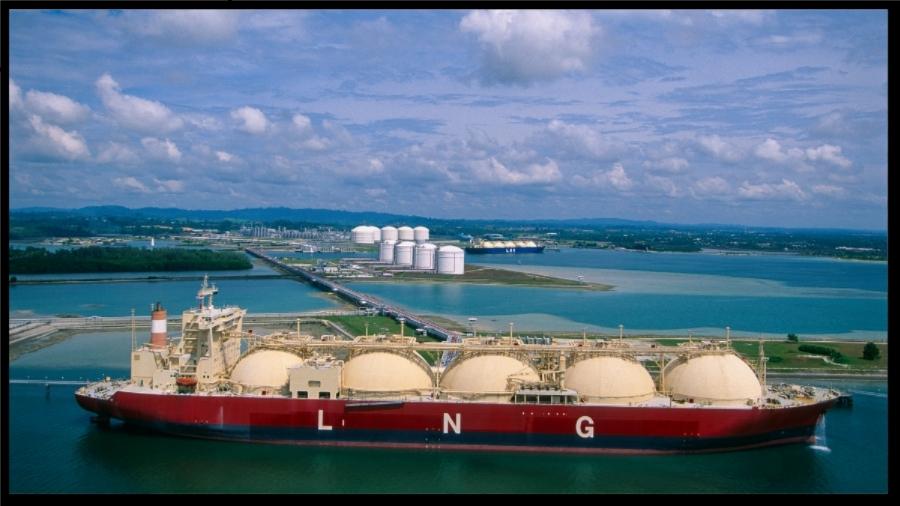
Two loaded Qatar LNG carriers, Al Daayen and Rasheeda, retreated after approaching the Strait of Hormuz, according to ship-tracking data, halting what would have been the first loaded Qatari LNG transits through the chokepoint since the war began on February 28. Both vessels had loaded at Ras Laffan in late February, and Al Daayen had been bound for China. Their reversal is notable because it comes after a partial reopening pattern had allowed some non-hostile or politically acceptable vessels to pass, including an empty Japanese LNG carrier earlier in April, but it shows that loaded Qatari LNG is still facing a much harder operating environment. The move also lands against a broader backdrop of severe Qatari LNG disruption: Iranian strikes have already knocked out about 17% of Qatar’s LNG export capacity, with roughly 12.8 million tonnes per year of output expected to be delayed for years, while Qatar has declared force majeure on LNG exports and some buyers are already lining up replacement supply from the United States and elsewhere.
The reversal turns Hormuz from a reopening story back into a loaded-cargo test
The key signal is not just that ships moved. It is that loaded Qatar LNG still did not make it through.
| Pressure point | Current position | Importance | Commercial effect | Next signal to watch |
|---|---|---|---|---|
| Loaded Qatar LNG carriers | Two loaded vessels turned back after nearing the Strait. That means the most visible test of resumed Qatari LNG exports through Hormuz failed to convert into an actual loaded transit. Loaded transit still blocked in practice | Loaded cargo movement is the real benchmark for whether gas trade is returning, not just symbolic ship crossings. | Buyers cannot treat passage as reliable yet, even if some neutral or empty vessels have moved. | Whether a later QatarEnergy-linked LNG carrier makes a successful outbound run with cargo aboard. |
| Partial reopening narrative | Some vessels have crossed under narrower conditions, but traffic remains selective. Recent successful passages involved politically acceptable or non-hostile-linked ships, and at least one LNG crossing was by an empty tanker. Selective corridor, not normal trade | The retreat shows that limited reopening signals are not the same as broad commercial restoration. | Operators still face a gap between theoretical passage and voyage confidence. | Whether loaded gas carriers begin receiving materially different treatment from empty ships or other cargo classes. |
| Qatar supply base | Qatar’s LNG system is already under strain from direct damage and force majeure. About 17% of capacity has been knocked out, with long-duration loss expectations already shaping buyer behavior. Export system impaired before transit risk is added | Even a cleaner passage environment would not fully restore volumes immediately because supply capability itself has been reduced. | Fewer cargoes available, greater contract stress, and more urgency around replacement sourcing. | Whether Qatar restores additional capacity or shifts more buyers toward substitute supply channels. |
| Asian and European buyer response | Buyers are already sourcing around the disruption. Italy has lined up U.S. cargoes from Golden Pass, while Asian buyers remain on alert for tighter supply and stronger spot pricing. Replacement market already active | The retreat is not only a shipping signal. It feeds directly into procurement strategies in both Europe and Asia. | Contract substitutions, higher spot exposure, and tougher logistics planning for spring deliveries. | Whether more long-term buyers publicly disclose missed Qatari cargoes and replacement arrangements. |
| Global LNG balance | The market remains tight enough that disrupted Qatar cargoes are moving prices and trade patterns. U.S. LNG exports hit a record in March as global buyers reached for alternative supply. Disruption already reshaping flows | Qatar is too large in LNG for repeated failed departures to remain a local story. | Flexible U.S. cargoes gain leverage, Asia pays more attention to spot risk, and Europe keeps leaning on Atlantic supply. | Whether U.S. exports stay elevated and whether Asian imports shift further toward substitute sellers. |
| Shipping confidence | Passage confidence remains fragile even where route clearance may exist. The retreat reinforces the idea that the chokepoint is still governed by practical risk, not just formal permission. Confidence still weaker than policy language | A ship approaching the Strait and then reversing is one of the clearest visible signs of unresolved operating fear. | Higher waiting cost, more routing uncertainty, and tougher decisions for owners, charterers, and insurers. | Whether reversals become a recurring pattern for high-value gas cargoes. |
The failed approach redraws the LNG market’s confidence line
The signal here is bigger than two ships. It tells the market that Qatar’s export lane still lacks a dependable loaded-cargo path.
The retreat matters because the LNG market was already trying to interpret a handful of successful Hormuz crossings as evidence that trade might be inching back. But those earlier movements were not the same as loaded Qatari LNG leaving the Gulf in a routine export pattern. Once two loaded carriers approached the chokepoint and then reversed, the message shifted. The real commercial test is not whether a vessel can transit under narrow political conditions. It is whether a loaded export cargo tied to Qatar’s damaged LNG system can leave with enough certainty to support contract performance, downstream scheduling, and buyer confidence.
This is landing in a market that was already tight before the latest retreat. U.S. LNG exports hit a record 11.7 million metric tons in March as global buyers reached for replacement barrels, Europe remained the dominant destination for U.S. cargoes, and Asian buyers continued to monitor reduced Qatari availability and a lengthy outage risk. Italy has already been told that ten contracted Qatari cargoes scheduled from April to mid-June will not be delivered and will instead be partially replaced by U.S. supply from Golden Pass starting in June.
Loaded cargo movement has become the true restart test
Ships near the Strait are no longer enough as a market signal. A real restart requires loaded Qatar LNG departures that do not reverse course and that are followed by additional cargoes, not isolated exceptions.
Supply risk now comes from both plant damage and transit risk
Qatar is dealing with a double bind. Part of its export capacity is already offline, and the cargoes that are available still face a chokepoint that remains unreliable for loaded gas traffic.
Flexible U.S. LNG keeps gaining strategic value
The more uncertain Hormuz becomes for loaded Qatari cargoes, the more attractive Atlantic-basin and flexible U.S. LNG becomes for buyers trying to plug shortfalls on short notice.
Asia and Europe are now in the same replacement race
China, Japan, South Korea, India, and Europe all watch Qatari LNG differently, but repeated retreat signals can still tighten the same global pool and intensify competition for replacement cargoes.
Signals on the board now
The market is tracking four overlapping tests at once: whether another QatarEnergy-controlled LNG carrier tries again, whether the Strait treats loaded gas cargoes differently from other vessels, whether buyers disclose more missed deliveries, and whether U.S. exports stay elevated enough to keep replacement supply flowing into both Europe and Asia.
LNG Retreat Impact Estimator
Model how a failed or delayed Qatar LNG departure can translate into replacement cost, timing stress, and broader supply exposure.
This model is built for a market where an LNG cargo approaches Hormuz and then does not complete the transit. The cost is not only the missed movement itself. It is the layered effect of replacement buying, delay, balancing pressure, and extra logistics as confidence weakens.
We welcome your feedback, suggestions, corrections, and ideas for enhancements. Please click here to get in touch.