Fire on the Anchorage A Fully Loaded VLCC Is Hit off Dubai
🔔 Subscribe to ShipUniverse Weekly →
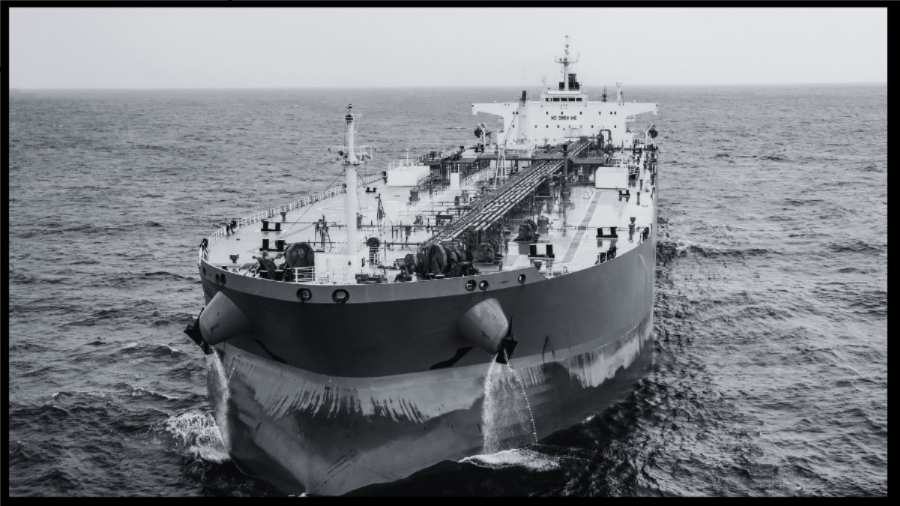
A fully loaded Kuwait-flagged VLCC, Al Salmi, was struck while anchored off Dubai in the early hours of March 31, 2026, setting off a fire and sharply escalating the maritime picture in Gulf waters. Kuwait Petroleum Corporation said the vessel was subjected to a direct Iranian attack while at anchorage, and Dubai authorities said the blaze was brought under control with no injuries to the 24 crew and no oil spill. Reporting on the cargo said the tanker was carrying about 2 million barrels of crude, including roughly 1.2 million barrels of Saudi crude and 800,000 barrels of Kuwaiti crude, and was bound for Qingdao. Iran’s Revolutionary Guards said they had targeted a nearby container ship over alleged Israeli links, creating immediate uncertainty over whether the VLCC was the intended target or was hit while anchored near that vessel. Maritime reporting also said the ship suffered hull damage after the strike, turning the incident into one of the most consequential commercial tanker attacks near Dubai in the current conflict period.
Click here for 30 second summary of the full piece ▶
A loaded supertanker is hit at anchor off Dubai
The latest Gulf shipping shock is not a near-miss story. A fully laden VLCC was struck while anchored off Dubai, caught fire, and suffered hull damage. Authorities later said the blaze was contained, the crew was safe, and no oil leak had been reported, but the incident instantly raised the commercial stakes because the vessel was carrying a very large crude load in one of the world’s most sensitive energy shipping zones.
- Vessel status: fully loaded VLCC at anchorage rather than in open transit.
- Immediate result: fire onboard, structural damage reported, no crew casualties.
- Key uncertainty: whether the tanker was the intended target or was struck while lying near another vessel.
A strike on a loaded VLCC at anchor shifts attention from transit-only risk to waiting-area risk, meaning the commercial danger is no longer limited to ships moving through the chokepoint.
| Fast reader take | Confirmed shipping detail | Changing Picture | Commercial consequence | Shows up first | Closest stakeholders |
|---|---|---|---|---|---|
| The vessel was loaded, large, and stationary |
The tanker was reported as a fully laden VLCC carrying roughly 2 million barrels while anchored off Dubai.
VLCC
fully laden
anchorage
|
Risk is no longer confined to ships actively transiting the chokepoint. Ships waiting for orders or port timing are also exposed. | Operators may become less willing to hold loaded tankers in predictable positions near key commercial hubs. | Shorter anchorage tolerance, more timing pressure, tighter voyage sequencing. | Owners, charterers, cargo sellers, terminal schedulers. |
| Fire and hull damage were reported, but no spill |
The ship caught fire after the strike, sustained hull damage, and authorities later said there were no injuries and no oil leak.
fire onboard
hull damage
no spill
|
The incident was severe enough to underline how close the market came to a much larger environmental and operational crisis. | Even without pollution, insurers and operators must price the consequence of a near-catastrophic loss involving a loaded crude carrier. | More war-risk scrutiny, more internal approvals, harder short-notice decisions. | Insurers, P&I clubs, brokers, flag state and coastal authorities. |
| Target attribution is commercially messy |
Kuwait blamed Iran directly, while Iran said a nearby container ship was the intended target.
direct attribution
claimed alternate target
|
For commercial shipping, mistaken target risk is still shipping risk. Nearby presence alone may not protect uninvolved ships. | Screening expands from destination and ownership questions to proximity, clustering, and adjacent-vessel exposure. | More cargo questions, more AIS pattern review, more concern around mixed anchorages. | Shipmanagers, security teams, compliance desks, chartering departments. |
| Dubai-side anchorage now carries sharper attention |
The incident happened off Dubai rather than in a remote transit area, putting one of the region’s most commercially important offshore operating areas into focus.
Dubai approaches
waiting-area risk
|
This changes the geography of concern from a pure Hormuz narrative to one that includes loaded ships waiting near major UAE commercial zones. | Port call planning, queue management, and anchorage exposure become more commercially sensitive. | Arrival windows tighten, loitering drops, emergency response planning becomes more central. | Port agents, terminals, UAE coastal operators, salvage and emergency responders. |
| The cargo profile made the incident especially serious |
Cargo reporting indicated about 1.2 million barrels of Saudi crude and 800,000 barrels of Kuwaiti crude bound for China.
Saudi crude
Kuwaiti crude
China bound
|
The ship was not carrying a marginal parcel. It was a large commercial energy movement with immediate global market sensitivity. | Freight, oil price reaction, and buyer concern can all move quickly even when the physical cargo is ultimately preserved. | Price spikes, hedging stress, scrutiny on Gulf loading programs. | Refiners, commodity traders, oil buyers, freight desks. |
| The biggest lesson may be about predictability |
A loaded tanker at anchor is easier to locate, track, and approach than a vessel already moving through open water.
predictable position
stationary exposure
|
Commercial shipping now has to weigh not only route choice, but whether waiting behavior itself has become a primary hazard. | Operational discipline around holding patterns, clustering, and exposure duration becomes much more important. | Reduced waiting tolerance and more conservative movement planning. | Masters, operations teams, chartering desks, marine assurance teams. |
Anchorage Exposure Monitor
Use this scorecard to estimate how severe a loaded-tanker waiting situation looks under current Gulf conditions. It is built for voyages where the central question is not just transit safety, but whether staying still has become the bigger commercial hazard.
Signals that push anchorage risk higher
- Loaded crude onboard with large pollution and cargo value exposure.
- Stationary or slow operating profile that makes the ship easier to track.
- Nearby vessel clustering that raises mistaken-target or collateral-hit exposure.
- Port timing delays that extend waiting time in exposed waters.
- Elevated strike or drone posture in surrounding waters or approaches.
Risk scorecard
Check the conditions that apply. The tool estimates whether the waiting pattern is commercially manageable or moving toward a severe exposure profile.
The lesson from this incident is that a loaded tanker does not have to be mid-transit to become a major risk event. When ships are fully laden and waiting in a predictable position, time itself becomes a larger part of the exposure.
We welcome your feedback, suggestions, corrections, and ideas for enhancements. Please click here to get in touch.