Hormuz Is Not Reopened, But a Narrow Passage Is Reappearing
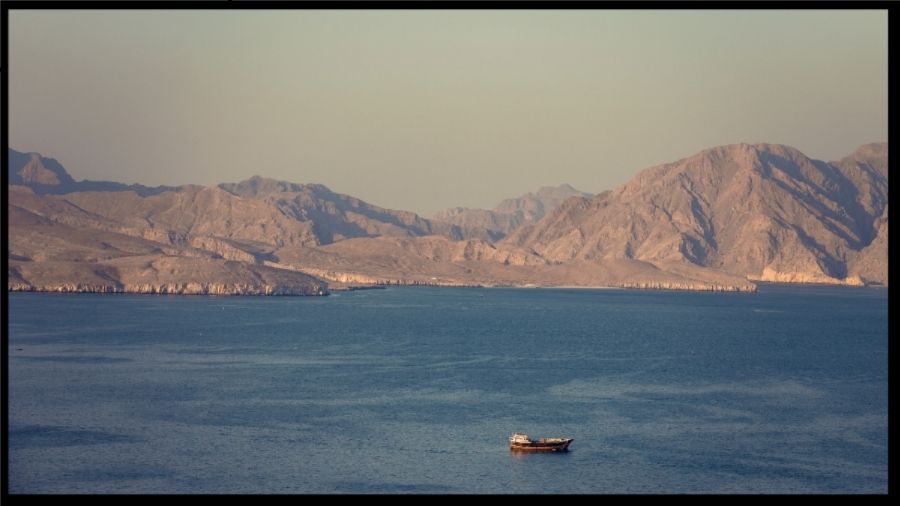
The latest picture in and around the Strait of Hormuz is not a return to normal shipping, but a partial and tightly constrained trickle of movement. Official maritime advisories still describe the threat environment across the Arabian Gulf, Strait of Hormuz, and Gulf of Oman as critical, with persistent navigation interference, congestion risk around anchorages and ports, and continued caution against predictable patterns or time spent stationary in exposed areas. At the same time, a small number of commercial vessels have recently made it through, including India-bound LPG cargoes and some Iran-linked movements, showing that passage is possible for selected ships under certain conditions, even while mainstream commercial traffic remains far below normal and most large operators still treat the corridor as commercially restricted rather than functionally reopened.

Subscribe to the Ship Universe Weekly Newsletter

Hormuz passage status, selected ships are moving, but the corridor still behaves like a controlled bottleneck
This is a live operational picture, not a normal trade lane. Some ships are getting through, but the region still combines high kinetic risk, navigation interference, waiting behavior, and carrier-level commercial restrictions.
Historic daily baseline
138
Approximate historical daily vessel transits through the Strait used in official traffic assessments.
Recent official traffic pulse
4 to 6
Recent confirmed daily commercial transits in the latest official update, still far below normal.
Market traffic drop
95%
Market reporting still describes passage volumes as dramatically below pre-crisis patterns.
Threat posture
Critical
The official regional risk label remains at the highest level in current maritime security notes.
Development lane Latest read Operational Meaning More likely to move Who still holds back Cost and schedule transmission Operators watching
Official traffic count Official monitoring still describes traffic as extremely limited, even though the most recent count improved from almost frozen levels to a small number of confirmed transits.
Not reopened, only partial movement
Passage is possible, but only in a narrow operating envelope. This is still a constrained corridor, not a routine one. Ships with urgent cargoes, strong state coordination, or a very specific commercial rationale. Owners that do not want to expose crew, hull, or schedules to a corridor still carrying critical threat warnings. Even a handful of successful passages can lower panic, but they do not restore network reliability or normalize chartering behavior. Whether confirmed daily transits keep rising across several consecutive days, rather than appearing as isolated exceptions.
India-linked movement India-bound LPG cargoes recently passed through, and additional India-bound energy movement was also reported.
Proof that selected transit still happens
This shows the strait is not physically sealed to every commercial vessel. Transit can still occur when the operating profile is judged acceptable. Essential energy cargoes with strong receiving-side urgency and clearer voyage identity. Operators without a clear passage strategy, or those waiting for broader coordination, escorts, or lower insurance friction. Selective movement relieves some immediate cargo pressure, but not enough to unlock the larger backlog of trapped ships and cargo. Whether more non-Iran-linked tankers begin repeating successful passages over multiple days.
Iran-linked shipping Iran-linked ships have continued moving more consistently than broader international traffic.
Asymmetric access remains a core issue
The corridor is functioning unevenly. Risk is not distributed evenly across all flags, cargoes, and commercial affiliations. Ships aligned with, tolerated by, or less exposed to the current threat filters shaping passage decisions. Western-linked or commercially sensitive voyages that face higher targeting, compliance, or insurance concerns. Uneven access distorts freight pricing and can shift cargo arbitrage, inventory planning, and charter negotiations. Whether that asymmetry persists or broadens into a more openly tiered passage environment.
Carrier posture Major container operators still treat the region as commercially abnormal, with reduced operations, route changes, surcharges, storage solutions, and alternative cargo plans.
Transit success does not equal service restoration
Even if some tankers move, liner networks still need schedule integrity, berth confidence, insurance continuity, and a predictable recovery path. Short-cycle niche moves, ad hoc solutions, and cargo handled outside standard mainline patterns. Mainline carriers seeking to protect network stability across multiple loops and customer contracts. Emergency freight, war-related charges, storage-in-transit, detention adjustments, and longer end-to-end transit times keep spreading outward. Carrier notices on booking restarts, port windows, end-of-voyage decisions, and Gulf feeder or landbridge workarounds.
Navigation environment GNSS interference, spoofing, jamming, VHF hails, congestion, and the instruction to avoid predictable patterns remain active parts of the operating picture.
Transit is not only about weapons risk
A ship can avoid direct attack and still face severe navigation, situational awareness, and misidentification hazards. Crews and operators with stronger bridge discipline, reporting links, and redundancy in navigation methods. Vessels forced to drift, anchor, or wait in exposed areas while decisions or instructions catch up. Waiting time becomes a hidden freight shock because it reduces effective vessel supply and triggers arrival bunching later. Changes in advisory language on GNSS, anchorage exposure, port congestion, and eastbound or westbound routing guidance.
International coordination A safe-passage or safe-corridor concept is being worked on internationally, but there is still no firm timeline for a broader restoration framework.
Planning exists, full release does not
The market can see the outline of a future stabilization mechanism, but it does not yet have a durable operating timetable. Ships with enough time, state support, or commercial flexibility to wait for more structured passage arrangements. Operators that need predictable repeatability now, not just one-off transit success. Uncertainty keeps war-risk pricing and contingency costs elevated longer than direct physical damage alone would suggest. Any announced corridor rules, reporting protocols, convoy logic, or deconfliction mechanism that applies beyond a few selected ships.
Transit is happening again, but through a much narrower gate
The latest movement shows selected ships crossing, selective national access, and a corridor still running far below normal commercial flow.
The latest movement through Hormuz points to a partial reopening rather than a return to routine passage. Some vessels are now getting through, including several LPG movements tied to India and certain ships identified as acceptable by Iranian authorities, but the flow remains highly selective and uneven. Official maritime security reporting still describes the broader threat picture as severe, and the most useful operational read is that passage has shifted from near-standstill conditions toward controlled, limited transit rather than open commercial normalization.
Daily transit low point
1
AIS-derived monitoring showed just one confirmed commercial transit in a 24 hour period around March 19.
Daily transit rebound
6
By March 24, monitored transits had improved to roughly six ships in a day, still a very restricted flow.
Historic daily norm
138
That recent movement remains far below the historical average daily level cited in current advisory tracking.
Current operating read
Tight
Passage exists, but it is selective, conditional, and still vulnerable to reversals or aborted attempts.
The clearest changes in the lane right now
Traffic has moved off the absolute floor, but only modestly. The best current read is that some ships are being allowed through while normal multi-segment commercial flow is still not restored.
Passage is increasingly tied to approval, identity, and coordination. Iranian messaging has indicated that non-hostile vessels may transit if they coordinate with authorities, which has turned nationality and commercial alignment into an immediate operating variable.
India-linked LPG movements are one of the strongest signs that real transits are occurring again. Several ships have moved or started moving, even though a large number of Indian-flagged vessels still remain stranded in or near the Gulf system.
Not every attempted move is completing. A recent case involving Chinese container ships turning back after starting an exit run showed that permission or diplomatic assurances do not automatically remove on-water hesitation or tactical interference.
The official advisory picture remains restrictive. Security guidance continues to tell mariners to use extreme caution in the Arabian Gulf, Strait of Hormuz, and Gulf of Oman, which means the lane is functioning under hazard-management conditions, not open-market confidence.
Getting through
Yes, some ships are crossing. The lane is no longer frozen at the lowest point seen earlier in March.
Broad normalization
No. Current movement remains far below historic flow and still depends on vessel profile, coordination, and timing.
Strongest live signal
Selective energy and gas movements are the best proof that passage is possible, but container and general commercial confidence remain much thinner.
Practical lane behavior
Operators are still treating the strait as a controlled-risk corridor with a high chance of holding, delay, or turnback rather than a standard transit lane.
Which segments are moving first
LPG cargos are one of the clearest active lanes
Approved national fleets appear to have better odds
Tanker decisions remain highly conditional
Container confidence still looks fragile
Energy and gas
Energy-linked cargoes are providing some of the earliest proof of workable passage because the commercial pressure to move them is intense and the ships involved can be prioritized more explicitly.
Container flows
Container shipping still looks more cautious because one aborted attempt can distort schedule integrity, customer commitments, port rotation, and equipment positioning much faster than a single tanker decision.
Flag and political alignment
The corridor is behaving less like an open neutral lane and more like a filtered passage environment, with access conditions shaped by perceived hostility, coordination, and real-time tactical control.
Bottom-Line Operating Picture
The latest development is not a clean reopening. It is a fragile reopening at the edges, with passage available to some ships under some conditions while the overall corridor still runs dramatically below normal commercial scale.
Hormuz passage pressure monitor
A live-style directional tool for estimating how difficult a transit looks under the current mix of traffic scarcity, selective access, delay risk, and vessel profile.
The key question for operators right now is not simply whether ships can get through. It is whether a given ship can get through without being held up, turned back, delayed by approvals, or caught in a stop-start corridor that still behaves far below normal commercial rhythm. This tool turns those live lane conditions into a practical transit pressure score and a cleaner internal briefing line.
Build your transit profile
Transit Pressure Score
74
Restricted passage. Transit is possible, but the lane still behaves like a controlled-risk corridor rather than a normal commercial gateway.
Transit outlook
Narrow
Expect a selective, conditional window rather than routine passage.
Delay profile
4 Days
Delay remains one of the fastest ways this corridor removes effective fleet supply.
Best fit lane
Priority Cargo
The latest successful moves still cluster around high-pressure energy and gas needs.
Recommended stance
Cautious
Treat passage planning as a timing and approval problem, not a normal routing problem.
Internal brief
Current settings point to a transit that may be physically possible but commercially constrained. This profile should be planned around approval timing, stop-start movement, and the possibility that passage conditions can improve for one vessel class while remaining weak for others.
0 to 35
Open enough for a more standard operating mindset. That is not the current broad market condition.
36 to 60
Limited but improving. Useful for selected cargos and better-positioned vessels, though still below normal confidence.
61 to 80
Restricted passage. Ships can get through, but the lane is still defined by scarce traffic, selectivity, and meaningful turnback or delay risk.
81 to 100
Severe constraint. Expect corridor behavior closer to exception handling than standard transit planning.
Current market read
The latest live picture sits in restricted-passage territory: better than the early-March near-floor, still nowhere near normal commercial rhythm.
This planner is directional and built for commercial interpretation. It reflects the current reality that some ships are moving, some are still stranded, and official caution remains elevated across the wider Arabian Gulf, Strait of Hormuz, and Gulf of Oman environment.
We welcome your feedback, suggestions, corrections, and ideas for enhancements. Please click here to get in touch.
By the ShipUniverse Editorial Team — About Us | Contact