War-Driven Congestion Starts Infecting Container Networks
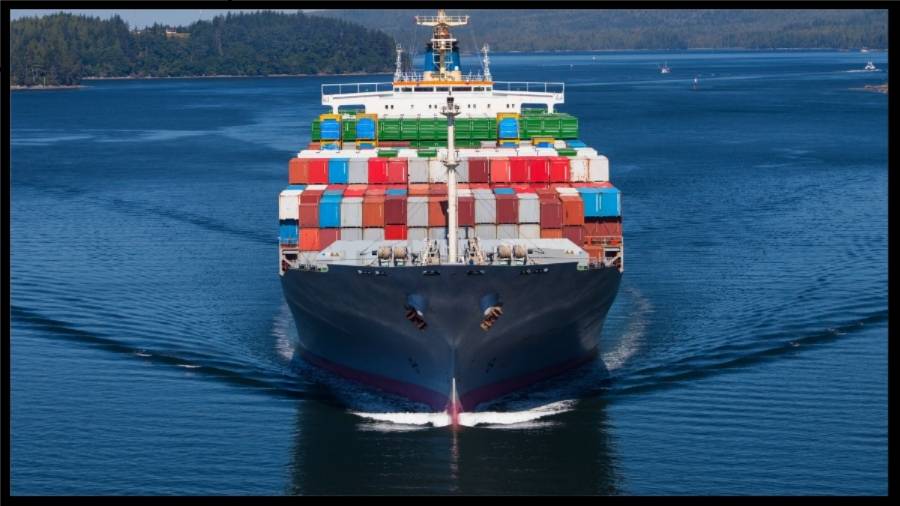
Container disruption tied to the Gulf conflict is no longer limited to suspended calls, emergency surcharges, or isolated reroutings. Current carrier updates and market data show a broader network effect taking shape across liner schedules and port operations. Since early March, carriers have suspended or reduced direct Gulf operations, reopened selected cargo flows through contingency corridors, and added emergency bunker or fuel surcharges while shifting boxes through Oman, outer UAE ports, Jeddah, and inland bridge links. At the same time, analyst reporting says cargo discharged at contingency gateways has begun building congestion across ports in the Arabian Sea, the Indian subcontinent, and Southeast Asia, while broader schedule reliability has deteriorated sharply. Xeneta’s latest scorecard says global schedule reliability fell to 27% in February 2026, the lowest since January 2025, and identified the Middle East and Far East-Europe trades among the hardest hit, while Linerlytica says Gulf closures are forcing carriers to rebuild feeder networks and alternative gateway structures as delays compound across the system.
Click here for 30 second summary of the full piece ▶
Container delay is now spreading through substitute ports and weakened schedules
The latest carrier notices and market tracking show Gulf war disruption spreading into the wider container network through weaker reliability, displaced ships, contingency discharge ports, and growing pressure on alternate gateways. Xeneta says global schedule reliability fell to 27% in February 2026, the lowest since January 2025, while Linerlytica says 132 active containerships with 458,000 teu were trapped in the Persian Gulf in early March and that congestion began building across ports in the Arabian Sea, the Indian subcontinent, and Southeast Asia as cargo was rerouted through contingency ports.
- Reliability warning: Xeneta puts global schedule reliability at 27% in February, with the Middle East among the hardest-hit trades.
- Displaced capacity: Linerlytica said 132 active containerships with 458,000 teu were trapped in the Gulf in early March.
- Contagion pattern: congestion is building in substitute ports and feeder systems rather than staying confined to the original chokepoint.
| Pressure point | Confirmed development | Current scale signal | Practical network effect | Signals to watch next |
|---|---|---|---|---|
| Global schedule reliability |
Xeneta’s February 2026 scorecard says global schedule reliability fell to 27%, the lowest since January 2025.
The scorecard said the Middle East and Far East-Europe trades were among the hardest hit as reliability weakened across all major lanes.
Reliability deterioration
|
27% global schedule reliability in February 2026. | Once reliability falls this low, carriers lose buffer time quickly and each additional port delay spreads more aggressively through rotation strings and onward connections. | March reliability readings, average late-arrival duration, and whether the drop broadens into transpacific and intra-Asia schedules with greater intensity. |
| Gulf closure shock |
Linerlytica said 132 active containerships with 458,000 teu were trapped in the Persian Gulf as of March 2, representing 1.4% of the global fleet, while 3.4m teu operated on routes that normally pass Hormuz.
Its later market updates say traffic is being redirected through rebuilt intra-Gulf feeders and alternative gateways.
Fleet displacement
|
132 active containerships trapped; 458,000 teu directly affected; 3.4m teu on routes tied to Hormuz exposure. | A trapped or re-routed fleet does not just delay Gulf cargo. It also pulls ships, boxes, and feeder logic out of normal global patterns. | Whether trapped tonnage falls steadily, whether feeder substitutions stabilize, and whether empty repositioning becomes the next weak point. |
| Contingency discharge and rerouting |
Linerlytica said cargo in transit has been discharged at contingency ports and congestion began building across ports in the Arabian Sea, Indian subcontinent, and Southeast Asia. CMA CGM and Maersk have both published Middle East contingency structures involving alternate gateways, reopened bookings on selected corridors, and new surcharges.
The system is clearly moving from cancellation logic into workaround logic.
Backlog migration
|
Multiple carriers using Oman, outer UAE ports, Jeddah, and inland or feeder alternatives. | Congestion is no longer confined to the closed chokepoint. It is being exported into the substitute ports and inland links now carrying displaced cargo. | Dwell times at Jebel Ali, Sohar, Khor Fakkan, Jeddah and other contingency gateways, plus feeder turnaround reliability. |
| Carrier cost pass-through |
CMA CGM has implemented emergency fuel surcharges and later land transportation surcharges, while Maersk has published emergency bunker surcharge and Middle East operational update notices tied to the disruption.
Those measures point to longer-lived network stress rather than a brief tactical deviation.
Cost escalation
|
Fuel and bunker emergency surcharges published in March 2026. | Surcharges usually appear after carriers have concluded that disruption is durable enough to affect operating economics across more than one leg of the network. | Further surcharge revisions, inland add-ons, port congestion surcharges, and whether emergency pricing spreads beyond Middle East-linked strings. |
| Blank sailing and buffer loss |
Drewry’s latest cancelled sailings tracker showed 43 blank sailings over five weeks from March 23 to April 26 out of 708 scheduled departures, a 6% cancellation rate.
Separately, industry reporting has warned that carriers are cutting buffer capacity just as multi-front schedule risk is rising again.
Less slack in the system
|
43 blank sailings over five weeks; 6% cancellation rate. | Even if blank sailings are not concentrated in the Gulf alone, reduced slack makes it harder for global liner networks to absorb new disruptions without cascading ETA damage. | Additional blank sailing announcements, rotation omissions, and whether carriers start trimming more marginal strings to protect core services. |
| Port-level warning signs |
Current congestion monitoring says Middle East corridor disruption remains the biggest network risk, with rising wait times at Jebel Ali showing the knock-on effects are becoming visible inside port operations as well as route design.
This is a port symptom of a network disease, not just a local terminal issue.
Backlog becoming physical
|
Visible wait-time pressure now appearing at major Gulf-linked hubs. | Once port delay and weak schedule reliability reinforce each other, recovery tends to slow because late vessels arrive in bunches and yard, berth, and feeder windows all narrow together. | Queue growth, berth windows missed, transshipment rollover rates, and whether neighboring relief ports start to show the same pattern. |
Container systems rarely fail because of a single missed call. They fail when several stress points connect at once: weak on-time performance, displaced ships, crowded contingency gateways, and too little spare capacity to absorb the shock. This tool converts that pattern into a practical network-pressure score.
When schedule reliability is already weak, every fresh disruption spreads faster through loops, feeder links, and inland appointments.
Ships trapped or re-routed around Hormuz drag equipment, sailing windows, and transshipment plans out of alignment even beyond the Gulf region.
Congestion rarely stays where the original shock started. It moves to the substitute ports and inland corridors now forced to take the overflow.
We welcome your feedback, suggestions, corrections, and ideas for enhancements. Please click here to get in touch.