Ras Laffan and Gulf Energy Hubs Move Into the Strike Zone
🔔 Subscribe to ShipUniverse Weekly →
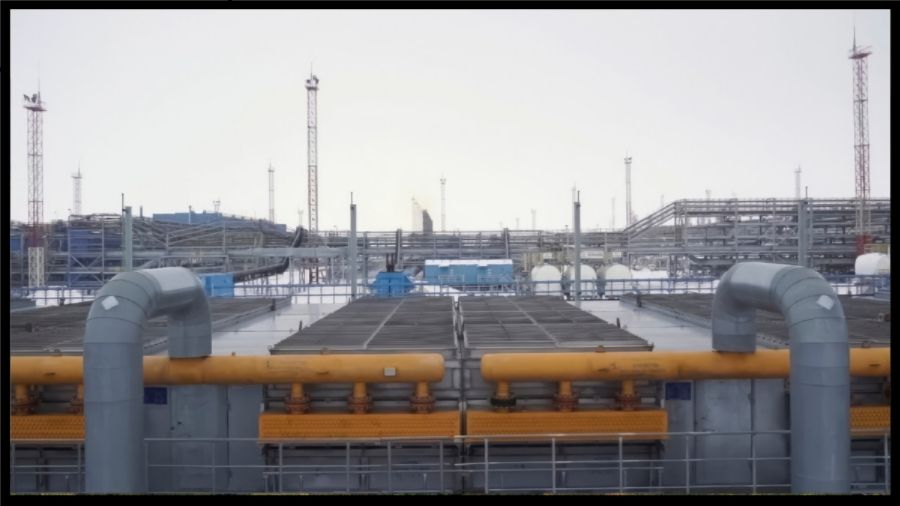
Over the past several days, Gulf energy infrastructure has been directly targeted in a way that goes beyond tanker risk or general regional instability. In Qatar, official statements and diplomatic filings say Ras Laffan Industrial City was hit by missile and drone attacks, with QatarEnergy later reporting additional missile attacks on its LNG facilities and extensive damage to the Pearl GTL plant. Qatar’s government also told the United Nations that attacks struck an energy facility in Ras Laffan and water tanks owned by Mesaieed Power Plant, while QatarEnergy said earlier this month that military attacks on facilities in Ras Laffan and Mesaieed forced it to stop LNG production and later declare force majeure to affected buyers. At the same time, regional reporting indicates other major energy assets in Saudi Arabia, the UAE, and Kuwait have also been hit or disrupted, turning the current episode into a wider attack pattern against core Gulf oil and gas infrastructure rather than an isolated incident at sea.
Click here for 30 second summary of the full piece ▶
Ras Laffan is no longer just exposed. It has been directly hit.
Official Qatari statements say attacks have struck Ras Laffan Industrial City and an energy facility there, while QatarEnergy has also reported additional missile attacks on its LNG facilities and extensive damage to the Pearl GTL plant. Earlier this month, QatarEnergy said military attacks on facilities in Ras Laffan and Mesaieed forced it to stop LNG production and later declare force majeure to affected buyers. Current regional reporting also points to energy-sector hits or shutdowns in Saudi Arabia, the UAE, and Kuwait.
- Qatar impact: Ras Laffan and Mesaieed-linked facilities have been attacked, with LNG production halted and force majeure declared earlier in the month.
- High-value asset damage: QatarEnergy says the Pearl GTL facility suffered extensive damage.
- Regional pattern: the strike map now reaches major Gulf energy sites in more than one country.
| Target bucket | Confirmed development | Current scale signal | Operational effect | Signals to watch next |
|---|---|---|---|---|
| Ras Laffan Industrial City |
Qatari official statements say Ras Laffan Industrial City was struck, and QatarEnergy later said its LNG facilities were hit again.
The company has separately reported missile attacks on Ras Laffan and additional damage after a previous strike.
Direct infrastructure hit
|
Repeated strike pattern against Qatar’s main LNG industrial hub. | The focus moves from route risk to production-site risk, emergency response, and downstream customer disruption. | Damage assessments, restart timing, buyer notifications, and whether specific trains or loading systems remain unavailable. |
| Pearl GTL |
QatarEnergy said the previous attack on Ras Laffan resulted in extensive damage to the Pearl gas-to-liquids facility.
This adds a major conversion complex to the list of affected assets inside the Ras Laffan cluster.
High-value plant damage
|
Extensive damage reported. | Any outage here affects more than LNG optics. It touches liquids production, associated industrial logistics, and repair timelines for a specialized facility. | Repair sequencing, partner statements, and whether related feedstock or product flows are curtailed longer than expected. |
| Mesaieed industrial and power-linked assets |
Qatar’s filing to the United Nations says a drone attack targeted water tanks owned by Mesaieed Power Plant. QatarEnergy had already said attacks on facilities in Ras Laffan and Mesaieed forced it to stop LNG and associated product output.
This broadens the target set from one city to a wider national industrial system.
Support infrastructure exposed
|
Power and industrial-support elements now in the strike picture. | The operational issue is no longer only export cargo. Utilities, site resilience, and industrial continuity now matter directly. | Utility restoration, downstream restart sequencing, and any further pressure on chemical or petrochemical production. |
| Qatar LNG production status |
QatarEnergy announced on March 2 that it had ceased LNG production due to military attacks on operating facilities in Ras Laffan and Mesaieed, and on March 4 it declared force majeure to affected buyers.
That sequence moved the story from site damage into contractual market impact.
Production and contract disruption
|
LNG production halted with force majeure declared to affected customers. | Buyers, shippers, charterers, and receiving terminals must shift from delay management to supply-gap management. | Restart notices, revised loading schedules, force majeure duration, and replacement sourcing patterns. |
| Other Gulf energy hubs |
Current reporting indicates attacks, damage, or shutdowns linked to facilities in Saudi Arabia, the UAE, and Kuwait, including refining and gas assets.
The wider pattern shows Gulf energy infrastructure itself becoming an active target set across multiple states.
Regional strike pattern
|
Multi-country impact across core oil and gas systems. | Market risk spreads beyond one exporter and increases pressure on alternative routes, replacement barrels, and buyer contingency planning. | Whether more sites are hit, whether outages deepen, and whether operators shift toward longer structural bypass strategies. |
This tool is built for the kind of disruption now showing up in the Gulf. Market stress rises sharply when damage is not confined to a single site, when production is already halted or restricted, when multiple states are affected at once, and when replacement routing options remain narrow. Change those assumptions and the system can move from acute shock toward partial resilience. Leave them high and the disruption behaves more like a structural supply event.
A strike on a major industrial cluster carries more weight than a hit on a marginal asset because export, processing, utilities, and repair logistics are often concentrated together.
Stress deepens when attacks or shutdowns appear across more than one Gulf state, because replacement barrels or molecules become harder to source from nearby neighbors.
If infrastructure damage arrives on top of chokepoint dependency and limited bypass capacity, supply chains lose both production flexibility and transport flexibility at the same time.
We welcome your feedback, suggestions, corrections, and ideas for enhancements. Please click here to get in touch.