Kite Propulsion Systems on Ships in 2026: Pros, Cons and Savings
February 12, 2026
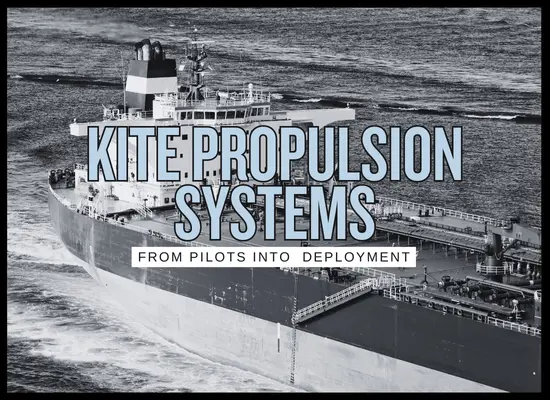
Wind kite propulsion systems are wind assisted propulsion setups that fly a large, automated kite ahead of the ship to generate towing force. When winds are favorable, the kite contributes measurable thrust, letting the main engine back off and cutting fuel burn and emissions without changing the ship’s primary propulsion plant. In 2026, the technology is moving from pilots into more routine commercial deployment on selected routes, helped by better automation, class approvals, and the fact that operators can pair it with voyage planning and CII fuel and speed discipline.
Wind Kite Propulsion Systems for Ships: Pros
Scroll up and down with a frozen header. Each row is one specific pro with the details operators care about.
| Pro (specific benefit) | In practice | Savings and impact you can expect | Where it fits best | What to verify before buying |
|---|---|---|---|---|
|
Fuel reduction lever Auxiliary thrust when wind is usable |
The kite generates towing force ahead of the ship, letting the main engine back off while maintaining the same speed target or holding speed with lower shaft power. | Realized savings are utilization-driven: the value comes from how many hours per sea day the system is flying in the usable envelope. If utilization is consistent, it can create a meaningful fuel-per-mile delta on long legs. | Long open-ocean legs with recurring wind patterns and some schedule flexibility to exploit wind windows. | Verify: usable wind envelope by season on your lane, expected kite-hours per sea day, and how performance is measured and normalized. |
|
Bridge tech No fuel switch required |
Decarbonization benefit arrives without changing bunkers, engines, or onboard fuel handling procedures. It stacks with speed discipline and other efficiency projects. | Reduction shows up as lower fuel per nautical mile when the kite is used. The biggest “felt” effect is often a steadier efficiency improvement on windy legs, not a headline peak number. | Owners that want intensity improvement now, but are not ready to commit to alternative fuel supply chain constraints. | Confirm how savings are reported, how “kite-on” time is defined, and how the system treats partially usable conditions. |
|
Retrofit friendly Efficiency upgrade path for existing tonnage |
Adds an additional propulsion assist system without re-engineering the main propulsion plant. Typical work is deck equipment, structural reinforcement, power, control cabinet, and commissioning. | Economics depend on remaining vessel life and utilization. A moderate but repeatable fuel delta can outperform a bigger claimed delta that only happens a few times per year. | Mid-age vessels with steady trades where you can replicate kite use patterns and standardize training. | Confirm structural load paths, clearances, deck operations conflicts, class approval steps, and realistic install timeline. |
|
Operational control Stowable system with “use it when it helps” flexibility |
The kite can be deployed for open-water legs and stowed for traffic, restricted waters, port approaches, and rough windows where crew prefers a clean deck and simpler watch routine. | The flexibility protects schedule and reduces operational friction. Savings come from consistent open-water usage rather than trying to force usage everywhere. | Trades with clear ocean segments and predictable restrictions where stow rules are obvious. | Verify launch, recovery, and abort workflows, and how long a full cycle takes in typical sea states. |
|
Better utilization Pairs well with weather routing and speed planning |
When voyage planning accounts for wind windows, the ship spends more time in conditions where the kite can fly usefully. This often matters more than chasing the strongest gusts. | Expect better realized savings when the company already runs voyage optimization and can accept small timing shifts. Utilization uplift is often the hidden ROI driver. | Operators with some arrival window elasticity and an existing routing discipline. | Verify how routing advice is delivered, how decisions are logged, and how performance is compared against a baseline. |
|
Program discipline Works well with a “pilot then scale” rollout |
The system lends itself to a controlled trial on one vessel class and one lane with a short KPI list. That locks realistic operating patterns before expanding. | ROI is easier to prove when you can show repeatability: same route, same season, similar loading, same speed policy. This reduces “weather noise” arguments internally and with charterers. | Fleets with lane segmentation and consistent operating profiles by vessel class. | Pilot KPIs: kite-hours per sea day, fuel per mile delta, abort causes, crew workload feedback, and downtime reasons. |
|
Commercial leverage Evidence-friendly decarbonization story for customers |
When the data is clean, it supports shipper conversations and sustainability reporting with a tangible action tied to measured performance. | The commercial value may show up as stronger customer retention, contract positioning, or easier emissions reporting rather than direct freight-rate uplift. | Contract-heavy trades where cargo owners care about verifiable emission reductions and require reporting. | Verify data ownership, export formats, and whether counterparties accept the measurement method. |
|
Less drydock coupling Limited underwater modification compared with some retrofits |
Kite propulsion assist is primarily a deck and control system project. It can reduce dependency on propeller or hull appendage changes that may force tighter drydock coupling. | Schedule risk can be lower than underwater-heavy retrofits, though deck work and commissioning still need planning. | Vessels where deck geometry supports safe equipment placement and the operator can manage inspection routines. | Verify maintenance intervals, consumables, inspection responsibilities, spares, and service response coverage. |
|
Crew acceptance trend Automation reduces manual complexity |
Newer systems emphasize automated flight control plus controlled depower and recovery sequences, which helps avoid “high-touch” operation that kills adoption after the first month. | Higher adoption usually translates into higher utilization, which is the real driver of realized savings. | Fleets that can standardize training, assign ownership, and keep consistent procedures across crew rotations. | Verify training plan, refresher cadence, and what the system expects from crew during abnormal events. |
If you want, the next step is a matching Cons Table with the same layout and the most common failure modes that reduce utilization.
Wind Kite Propulsion Systems for Ships: Cons
The real limitations that reduce utilization, savings, and crew confidence. Scrollable with a frozen header.
| Con (specific limitation) | Onboard | Savings Impact | Where it shows up most | Mitigations that actually help |
|---|---|---|---|---|
|
Utilization killer Wind is not available when you need it |
The system is stowed for long stretches because winds are light, from the wrong direction, too gusty, or the ship is constantly maneuvering. | Low kite-hours per sea day collapses ROI even if peak thrust is impressive during the few “good days”. | Seasonal routes, trades with frequent course changes, and short legs where the window to deploy is brief. | Route-by-route feasibility before purchase, seasonal utilization assumptions, and pairing with routing so you do not miss the best windows. |
|
Operational constraint High traffic and restricted waters limit use |
Watchkeepers keep it stowed through congested areas, TSS lanes, pilotage waters, and approaches where attention is already saturated. | You lose the exact hours that may be operationally “busy” but still fuel-heavy, so realized savings fall below modelled savings. | Asia coastal congestion, canal approaches, dense offshore zones, and arrival sequences with tight pilot and tug coordination. | Hard rules for where the kite is allowed, “deploy zones” on each lane, and an SOP that does not depend on individual comfort levels. |
|
Human factor Added mode increases workload if UX is weak |
Alerts are noisy, displays are confusing, or the system demands frequent operator interventions, leading crews to avoid using it. | Utilization drops and the system becomes “parked tech”. Savings become sporadic and hard to prove. | Mixed-crewing fleets, frequent crew rotation, and vessels where bridge teams already fight alarm fatigue. | Tight alert set, simple deployment checklist, short type-specific training, and a clear “who owns kite operation” role onboard. |
|
Reliability risk Maintenance and service response can make it idle |
Minor faults or wear issues linger because spares are not onboard or service support is slow, so crews stop trusting the system. | Downtime during windy seasons is especially damaging because it wipes out the best-performing periods. | Remote trades, high-humidity and high-UV environments, and fleets without disciplined inspection routines. | Spares kit strategy, defined inspection cadence, clear fault triage, and service SLA that matches your trading pattern. |
|
Deck reality Deck layout conflicts and operational interference |
Equipment placement competes with mooring, cargo work, visibility, or safety zones. Some vessels have limited safe working space forward. | If the system forces operational compromises, crews default to stowing it, and savings disappear. | Vessels with busy foredecks, frequent mooring operations, or structural and clearance constraints. | Do a real deck walkthrough design review, not just a drawing review. Validate safe working clearances and line-of-sight impacts. |
|
Verification Savings are hard to prove without a clean baseline |
Teams argue about whether fuel changes came from wind, routing, speed policy, draft, or weather, so the program loses internal support. | If savings cannot be defended, future scaling stalls and commercial value with charterers or cargo owners weakens. | Fleets without strong performance analytics, or routes where conditions vary wildly voyage to voyage. | A structured pilot plan: same lane window, same speed policy, comparable load, and a defined method for normalizing results. |
|
Commercial Misaligned incentives reduce adoption |
The owner pays, but the charterer receives most fuel benefit, or the operator has no reason to accept extra workload. | The system is underused, and ROI assumptions fail despite technically good performance. | Spot-heavy business, short time charters, and arrangements where savings are not shared. | Charter clauses that share savings, define reporting, and establish how performance is credited and verified. |
|
Safety envelope Weather edge cases and recovery rules limit confidence |
Crews stow early when squalls, rapid wind shifts, or sea state changes make them uncertain about recovery behavior. | Conservative stowing shortens “kite-on” hours and reduces realized savings on marginal days. | Monsoon seasons, squall-prone zones, and routes where weather changes faster than watch teams can comfortably manage. | Clear go/no-go thresholds, practiced recovery drills, and an incident log review loop that improves SOPs quickly. |
|
Program maturity Results decay after the first month if governance is weak |
Early enthusiasm fades, utilization drops, and no one reviews why. The system becomes “optional” rather than routine. | Savings become inconsistent and unbankable, which is the fastest path to losing internal support. | Fleets without a designated owner onshore and onboard, or without a review cadence tied to KPIs. | Assign a program owner, review monthly utilization and downtime causes, and publish a short lane-specific best-practice playbook. |
A simple truth: most “kite ROI failures” are utilization failures. If the lane cannot support repeatable kite-hours, no amount of peak performance fixes it.
Wind Kite Propulsion Savings Tool
A sensitivity calculator. It converts your route, fuel, and a conservative savings assumption into fuel, cash, and CO2 deltas.
Voyage Inputs
Total days at sea where a kite could be used on open legs.
Use main consumption when steaming, not port or idle.
Set to your effective blended bunker cost for the trade.
Used to annualize. If seasonal, adjust down.
Kite Assumptions
This is the incremental saving during periods the kite is actually producing useful pull.
Weather reality by lane and season. This is the first utilization gate.
Accounts for traffic, watch comfort, stow rules, downtime, and procedures.
Editable so you can match the fuel you are modeling.
Effective kite-on share of sea time
Usable wind share multiplied by realization factor.
Fuel saved per voyage
0 mt
Based on sea days, daily consumption, and effective kite-on share.
Cash saved per voyage
$0
Fuel saved multiplied by fuel price.
Fuel saved per year
0 mt
Voyage savings multiplied by voyages per year.
Cash saved per year
$0
Annual fuel saved multiplied by fuel price.
CO2 avoided per year
0 tCO2
Uses your editable CO2 factor.
Reality check that keeps this honest
The savings percent matters less than utilization. A project with modest savings but high kite-on hours often beats a project with flashy peak savings and low hours.
We welcome your feedback, suggestions, corrections, and ideas for enhancements. Please click here to get in touch.