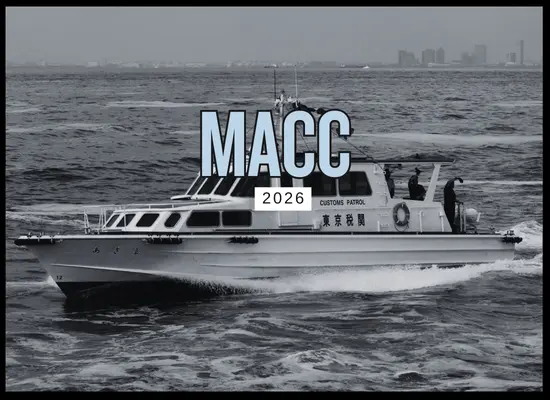
MACC is a practical small-craft week where operators, acquirers, and builders compare what is working on the water right now. If you support patrol, expeditionary, security, rescue, or mission craft, this is one of the few forums that mixes technical talks, agency and industry displays, and in-water demonstrations in the same program.
This venue sits on the Portsmouth waterfront. Plan morning arrivals early on Day 1 if you want smooth badge pickup and first-session seating.
⚓
What makes MACC different
Small craft, real operations
MACC is built around mission craft. It brings operators and acquisition communities into the same room as builders and system providers, with an emphasis on lessons learned and near-term improvements.
🧑✈️
Multi-agency, operator-led perspective
The program is centered on small-boat communities spanning defense, security, and public safety, which keeps conversations grounded in mission profiles and crew realities.
🌊
In-water demonstrations are part of the mix
You can connect what is said in sessions to what is shown on the water, which is useful for evaluating handling, integration, and operational practicality.
🧩
A full lifecycle agenda
Past MACC session themes commonly cover the complete craft lifecycle, from requirements through sustainment:
Requirements and design tradeoffs
Acquisition pathways and process lessons
Maintenance, repair, and readiness practices
Logistics, training, and field support
Technology development, integration, and upgrades
🧰
Exhibit hall logistics favor hands-on detail
This is a show where specs, integrations, and support plans matter. Come ready to discuss delivery timelines, spares, training burden, and how upgrades get certified and fielded.
🎯
Best-fit goals for this week
Fleet and unit readiness upgrades, patrol and expeditionary craft modernization, sensors and comms integration, sustainment planning, and procurement decisions where operator feedback can prevent costly missteps.
🧭
2026 week game plan
Jul 14–16 • Portsmouth, VA
MACC is built for operator conversations and hands-on craft realities. The fastest wins come from arriving with a short mission list,
then using sessions to validate priorities and the displays and in-water pieces to confirm what is practical.
Suggested time split
Designed for a 3-day craft conference
Technical talks and panels
40%
Displays and show floor
35%
Operator meetings and follow ups
25%
The goal is not volume. The goal is leaving with a short list of upgrades and vendors that match real mission constraints.
🗓️
Three-day plan that converts
Day 1
Get oriented fast. Walk the displays early, identify the 8 to 12 organizations that matter to your mission set, then book short meeting windows for Days 2 and 3.
Use the first set of talks to confirm the biggest constraints operators are facing right now.
Day 2
Go deep on integration and sustainment. Ask what breaks first, what spares matter, what training burden looks like, and what support model actually keeps readiness up.
If there are in-water components you care about, anchor your day around those time slots.
Day 3
Close the loop. Convert interest into next steps: test plan, site visit, demo, or a written scope with owners and dates.
Capture the approvals path for each workstream before you leave Portsmouth.
✅
Bring this one-page brief
Mission profile and operating area
Crew size and endurance requirements
Key constraints: weight, power, space, draft
Current pain points: reliability, comms, sensors, ergonomics
Support needs: spares, training, field service
Decision date and approvals path
🏙️
Practical notes for Portsmouth and the waterfront venue
Renaissance Portsmouth-Norfolk Waterfront
This is a walkable waterfront setting. Keep your team close to the hotel and old-town blocks for smoother mornings and easier evening meetings.
Venue map
Address: 425 Water St, Portsmouth, VA 23704.
Hotel block and timing
Industry rate listed at $182 plus tax per night.
Booking deadline shown as Monday, June 15, 2026.
Arrive the day before if you want a calm start and easier early meetings.
Air travel and transfers
Norfolk International Airport (ORF) is roughly 14 miles by road from Portsmouth.
Build buffer time for tunnel and bridge traffic in peak periods.
For group arrivals, set one shared pickup window to keep the team aligned.
Parking and daily logistics
Hotel on-site parking is listed at $15 daily, with an hourly option shown as well.
Keep one consistent rendezvous spot for your team between sessions.
Plan a 15-minute debrief each evening while details are fresh.
📌
Questions that get useful answers at MACC
What fails first in the field and why?
What spares and tools actually keep uptime high?
What training is required for safe adoption?
What is the install timeline and integration burden?
What is the sustainment model and response time?
What is the proof: operator references and outcomes?