Maersk Orders Eight 18,600 TEU Dual Fuel Newbuilds at New Times Shipbuilding
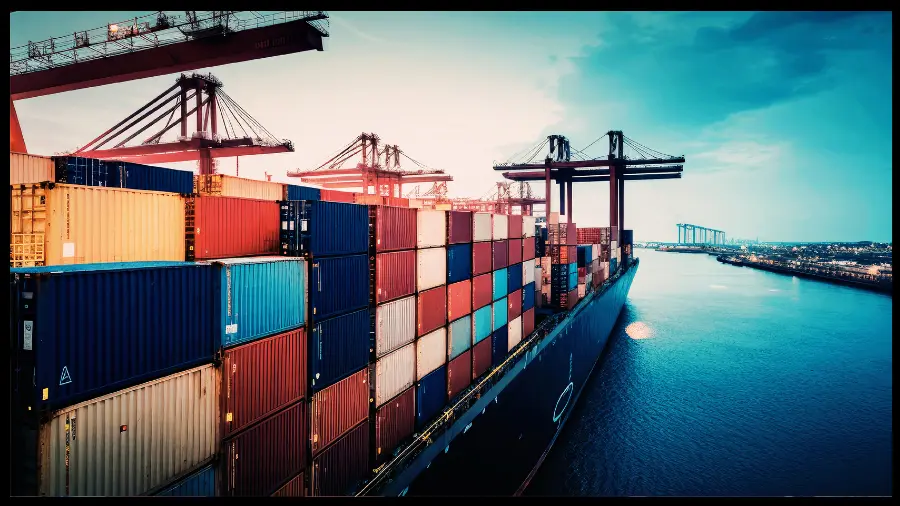
Maersk has firmed up an agreement with China’s New Times Shipbuilding for eight large containership newbuilds forming a new 18,600 TEU series, with deliveries scheduled across 2029 and 2030. The vessels are described as dual-fuel, able to run on conventional marine fuel and liquefied gas, and are presented as part of Maersk’s fleet renewal and “deployment flexibility” approach for its long-haul network.
Get the maritime stories operators are watching.
Stay ahead of vessel markets, port disruption, maritime technology, and more.
Click here for 30 second summary
Maersk newbuild order in one read
Maersk has signed an order with New Times Shipbuilding in China for eight large container vessels. The ships form a standardized new series with a nominal capacity of 18,600 TEU each, are described as dual-fuel, and are scheduled for delivery in 2029 and 2030.
-
Deal locked
Eight vessels at one yard, built to the same specification, creating a single-series late-decade capacity block. -
Technical configuration
Dual-fuel engines are specified, enabling operation on conventional marine fuel and liquefied gas, and the reported dimensions are about 366 m length and 58.6 m beam. -
Timing signal
With deliveries concentrated in 2029–2030, the order adds forward visibility into large-ship supply and fleet renewal intent rather than changing near-term market balance.
This order strengthens late-decade capacity visibility in the 18k-plus TEU band and reinforces that top liners are still locking in dual-fuel optionality while managing a softer near-term cycle.
| Quick numbers | Vessel spec snapshot | Build and delivery window | Capacity and network read-through | Closest stakeholders |
|---|---|---|---|---|
|
8 ships 18,600 TEU class
One homogeneous series, ordered as a block.
|
Dual-fuel18,600 TEU
Dual-fuel engines described as capable of operating on conventional marine fuel and liquefied gas.
Disclosed dimensions: about 366 m length and 58.6 m beam.
|
Builder: New Times Shipbuilding (China). Delivery: 2029 to 2030.
Long-dated deliveries mean this is a forward-cycle positioning move rather than a near-term supply shock.
|
Locks in future mainline capacity while keeping deployment flexibility in the large-vessel band.
Signals that large-liner fleet renewal continues even as carriers manage near-term rate softness and cost pressure.
|
Global liner competitors, alliance planners, terminals handling large-ship calls, and shippers with long-term contract exposure. |
|
Long-range capex signal
A reinforcement of the renewal pipeline rather than a one-off.
|
Fuel optionality posture
Dual-fuel choice preserves routing and compliance flexibility as fuel pathways evolve.
|
Long lead-time risk
Spec lock-in decisions are being made now for the 2029 to 2030 operating environment.
|
Forward supply visibility
Adds to 2029 to 2030 delivery stack and matters for rate-cycle expectations in large-vessel segments.
|
Chartering desks, shipbrokers, asset values, and shipyard slot markets tracking late-decade capacity. |
|
Physical footprint note
Shorter than 400 m class ULCVs but still a large envelope.
|
Port-interface implications
366 m by 58.6 m remains a high-demand berth and crane envelope, though not at the absolute max.
|
Slot planning horizon
Terminals and marine services can map this into late-decade call mixes.
|
Standardization benefit
A single-series block typically simplifies spares, training, and performance tuning across the set.
|
Terminal operators, marine services providers, and inland networks linked to hub calls. |
Spec points that matter operationally
The ships are described as 366 m long and 58.6 m wide, and built to the same specification across the full series. Standardization tends to reduce complexity across training, spares, and performance tuning when the ships enter service.
The stated dimensions sit below the roughly 400 m upper bound often referenced for the largest class of container vessels, while still requiring high-capability berths and crane outreach.
Fuel optionality is being locked in early
The order specifies dual-fuel engines, supporting operation on conventional marine fuel and liquefied gas. That choice signals continued emphasis on compliance flexibility and fuel pathway optionality for late-decade deployment decisions.
Fuel choice influences long-term operating cost sensitivity, emissions compliance planning, and potential resale and charter attractiveness when market conditions change.
This order does not alter near-term supply. It increases visibility into late-decade capacity composition and dual-fuel penetration across top-tier liner fleets.
This is a simple throughput estimator: TEU per ship × roundtrips per year × utilization × 8 ships. It is not a forecast and does not account for blank sailings, port disruption, slow steaming, or network redesign.
The New Times order is a reminder that even in a softer part of the cycle, top-tier liners are still making long-lead decisions about fleet shape and compliance optionality. With these eight 18,600 TEU ships slated for 2029–2030 delivery, the near-term market balance does not change, but the late-decade capacity picture becomes clearer for terminals, rivals, and long-contract shippers tracking future network intensity and cost structure.
We welcome your feedback, suggestions, corrections, and ideas for enhancements. Please click here to get in touch.