HavocAI Review: Operational Control at Scale
January 30, 2026
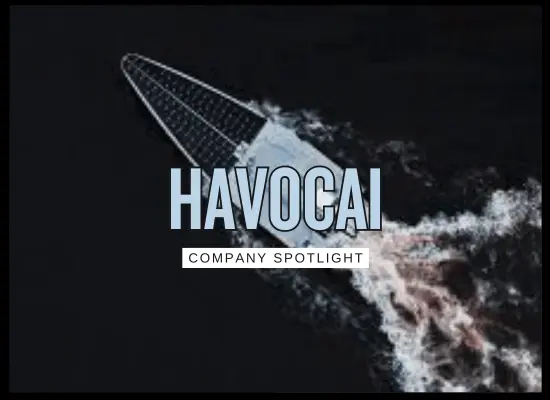
HavocAI operates in the fast-growing corner of maritime autonomy where one operator can supervise multiple uncrewed surface vessels from a single interface. The core value is operational control at scale: mission planning, tasking, sensor driven awareness, and resilient operations when communications or GNSS are degraded.
HavocAI • Providence office
225 Dyer St, Floor 2,
Providence, RI 02903, USA
Providence, RI 02903, USA
Website:
havocai.com
Operators benefit by:
HavocAI positions its platform around multi vessel autonomy, mission planning, and domain awareness for uncrewed surface operations.
- Scaling supervision without scaling headcount: One interface built for commanding multiple vessels can reduce the operational burden when you move from a single USV trial to fleet-level deployment.
- Cleaner mission execution through structured tasking: Standardized planning and task workflows reduce ad hoc control, which matters when multiple teams hand off operations across shifts.
- Domain awareness that links sensors, vessels, and operators: A fused picture of what is happening helps reduce “blind spots” during patrol, escort, perimeter monitoring, and offshore support missions.
- Resilience when comms degrade: Contested or low-connectivity environments are a reality offshore and in security operations. Autonomy that can continue safely during gaps reduces mission fragility.
- Repeatable operations and evidence trails: When tasks, detections, and operator actions are logged in a consistent way, it becomes easier to review outcomes, train operators, and support compliance or audit needs.
- Faster iteration from trials to deployment: Teams can pressure test concepts of operation, then tighten procedures and operating limits as they learn what works in real sea states and real comms conditions.
Notes: Outcomes depend on platform selection, sensor suite, rules of engagement, and how autonomy is governed under your safety management approach.
Notable mentions and external references
Third-party coverage across funding, autonomy demonstrations, and command-and-control integration.
-
$85m capital raise and scale narrative Fortune Oct 9, 2025Coverage focused on the funding round and the broader push to scale autonomous vessels. Read the story.
-
Funding round summary and context Ship Technology Oct 15, 2025Trade coverage summarizing the $85m raise and the positioning around maritime autonomy systems. Open Ship Technology.
-
GPS-denied air–sea autonomy demo reporting Naval Technology Dec 12, 2025Coverage of a live demo described as integrated air–sea autonomy without relying on GPS. Open Naval Technology.
-
Ukraine observers at GPS-denied trials in Portugal Axios Dec 22, 2025Reporting on Ukrainian officials observing a demonstration involving collaborative air and sea drones in Troia, Portugal. Read on Axios.
-
Autonomous vessels linked into a global C2 network Defense News Dec 5, 2025DefenseNews coverage of the SAIC and HavocAI agreement to connect autonomous vessels into a command-and-control network. Open Defense News.
-
Partnership announcement: SAIC integration details SAIC press release Nov 19, 2025Official SAIC release describing the integration with HavocAI’s autonomy stack for fleet linkage into a command network. Open SAIC release.
This list is illustrative, not exhaustive. It is intended to give fast third-party context beyond vendor materials.
USV patrol coverage + operator load estimator
Planning tool for non-combat missions such as perimeter monitoring, offshore asset watch, port approaches, survey support, and environmental response.
Adjust inputs to estimate vessel count and operator load.
Notes for realistic planning:
• Continuous monitoring usually requires overlap for comms gaps, weather, and maintenance.
• Speed and endurance vary by sea state and sensor duty cycle.
• The operator ratio is an organizational choice and should reflect mission complexity and safety rules.
• Continuous monitoring usually requires overlap for comms gaps, weather, and maintenance.
• Speed and endurance vary by sea state and sensor duty cycle.
• The operator ratio is an organizational choice and should reflect mission complexity and safety rules.
We welcome your feedback, suggestions, corrections, and ideas for enhancements. Please click here to get in touch.