FMC Signals Move to Collect Harbor Maintenance Tax on Land-Entered U.S.-Bound Imports Routed via Canada and Mexico
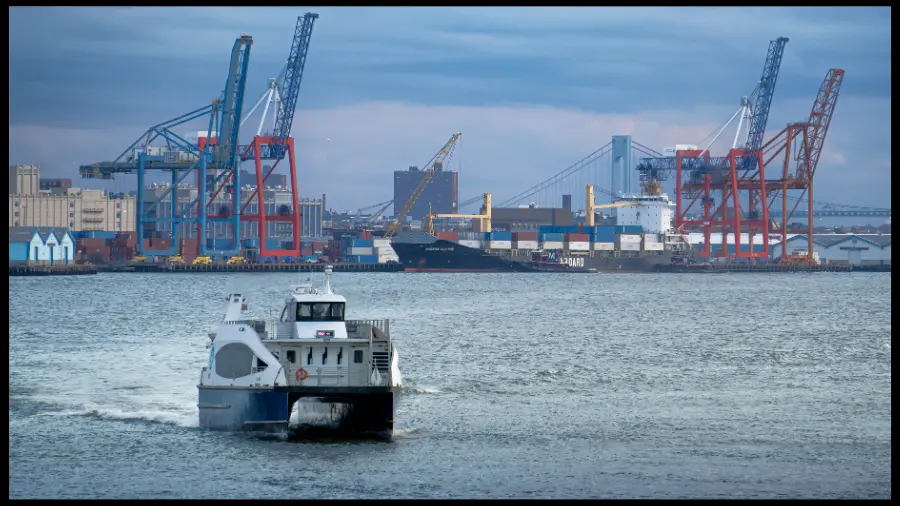
Two U.S. Federal Maritime Commission commissioners, Max Vekich and Laura DiBella, said the Administration is taking steps tied to Section 6 of the April 2025 Executive Order on restoring maritime dominance to close the Harbor Maintenance Tax land-border loophole. The stated aim is to remove the cost advantage for foreign cargo offloaded in Canada or Mexico and then moved into the United States by land, a routing pattern that has diverted volume away from U.S. ports. The Harbor Maintenance Tax is set at 0.125% of cargo value under federal law.
Click here for 30 second summary
HMT land-border loophole in one read
Two FMC commissioners say the Administration is taking steps to close the land-border loophole that allowed some U.S.-bound imports to discharge in Canada or Mexico and then enter the United States by land while avoiding taxes assessed at U.S. ports, including the Harbor Maintenance Tax. Their statement ties the move to Section 6 of the April 2025 Executive Order.
-
Rule trigger
EO Section 6 targets foreign-origin cargo that first arrives by vessel and then clears CBP at an inland location from Canada or Mexico, with a "not substantially transformed" condition and CBP discretion noted in the EO. -
Money line
CBP regulation describes the harbor maintenance fee at 0.125% of value for covered port use, and the EO section also states a 10% service fee for additional CBP costs for in-scope inland entries. -
Diversion reference point
The commissioners cite an FMC finding from its 2012 diversion work that eliminating Canada's HMT advantage could move up to half of U.S.-bound containers from Canada's West Coast ports back to U.S. ports.
If implemented broadly, the change compresses the cost gap that supported some Canada and Mexico gateway routings for U.S. cargo, which can shift competitive pressure back toward U.S. ports and alter inland corridor volumes during contract renewals.
| Signal | What changed | Immediate routing impact | Watchpoints |
|---|---|---|---|
| Enforcement posture is now explicit | FMC commissioners say the Administration is taking steps to implement Section 6 focused on closing the HMT land-border routing gap. | Reduces the landed-cost advantage for U.S.-bound imports that discharge in Canada or Mexico and enter the U.S. by land. | How CBP defines in-scope cargo movements and how consistently it is applied across land ports of entry. |
| The cost item is real and measurable | HMT is an ad valorem charge set at 0.125% of cargo value under federal statute and CBP regulations. | Shifts the comparison back toward U.S. gateways for cargo that was routed to avoid that charge at U.S. discharge. | Importer and broker compliance workflows, entry filing practices, and audit exposure around valuation. |
| Potential volume swing has a historical reference | The commissioners cite a 2012 FMC study: removing Canada’s HMT advantage could shift up to half of U.S.-bound containers from Canada’s West Coast ports back to U.S. ports. | Raises the probability of base-load volume rebalancing on corridors historically served via Prince Rupert or Vancouver plus rail into the U.S. | Which U.S. ports capture volume depends on rail service, inland transit time, and contract cycles. |
| Competitive investment logic changes | The commissioners describe new Canadian and Mexican port development projects as being supported by the current cost distortion. | If the distortion narrows, expected returns for cross-border gateway expansion tied to U.S.-bound cargo can change. | Look for changes in carrier service patterns and long-term terminal commitments tied to U.S.-bound intermodal flows. |
| Trust fund revenue and port competitiveness are part of the stated rationale | The commissioners frame the loophole as diverting both cargo and revenue away from U.S. maritime interests and trust funds supported by the fee. | Creates a clearer incentive structure for discharging at U.S. ports when the fee applies regardless of land entry workaround. | Timing matters: when enforcement is operational at scale, contract reroutes can show up within a season rather than a year. |
HMT land-border loophole: enforcement is now being publicly confirmed
FMC commissioners say steps are underway to close the land-border routing gap tied to the Harbor Maintenance Tax and the Executive Order language targets cargo that first arrives by vessel in Canada or Mexico and then clears into the U.S. at an inland location.
HMF rate in CBP regulation for covered port use
Service fee cited in EO Section 6 for in-scope inland entries
FMC diversion study referenced in commissioners' statement
Commissioners' statement posting date (2026)
Policy trigger line
The commissioners frame the issue as cargo moving via Canada or Mexico that can avoid taxes assessed at U.S. ports, including the Harbor Maintenance Tax. They also cite an FMC finding that removing the cost advantage could shift significant volume back to U.S. ports.
The statement points to the April 2025 Executive Order Section 6 as the enforcement vehicle.
EO mechanics in plain terms
EO Section 6 directs DHS to require foreign-origin cargo arriving by vessel to clear CBP entry at a U.S. port of entry for collection of applicable duties and fees, and it also states that in-scope inland clearances from Canada or Mexico should be assessed applicable charges including HMF plus a 10% service fee, subject to CBP discretion and a "not substantially transformed" condition.
"Substantial transformation" and CBP discretion are explicitly referenced in the EO language.
Who is most exposed
The affected pattern is imported cargo that first lands by vessel in Canada or Mexico and then enters the U.S. over land. That includes routings built around rail and truck corridors that historically competed with U.S. gateways for inland distribution.
The change concentrates around entry filing and assessment at inland ports of entry, not only marine terminal activity.
The fee line item is simple to compute
CBP regulations describe the harbor maintenance fee as 0.125% of value for commercial cargo loaded or unloaded at covered ports. EO Section 6 adds a separate service fee element for in-scope inland entries described above.
The tool below converts value into an estimated exposure range per shipment and per container.
This tool only applies the published percentages to declared value. It does not determine eligibility, substantial transformation, exemptions, or how CBP will apply the rule in specific cases.
If enforcement follows the EO language at scale, the cost advantage that supported some Canada and Mexico discharge plus overland entry routings shrinks materially, which can shift competitive pressure back toward U.S. ports and alter inland corridor volume allocation during contract renewal cycles.
We welcome your feedback, suggestions, corrections, and ideas for enhancements. Please click here to get in touch.