IEA Puts a 4.25M bpd Q1 2026 Surplus on the Board
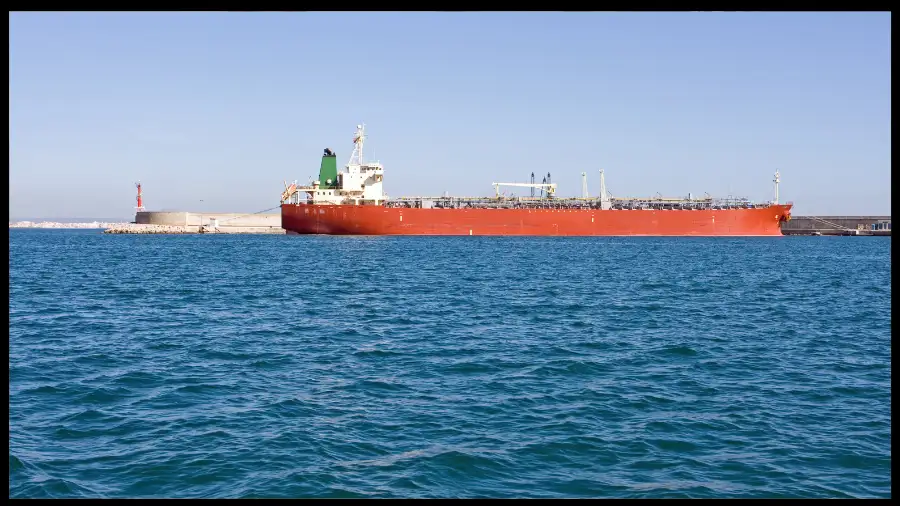
IEA just put a big number on the early-2026 balance: the agency says the global oil market is set for a deep surplus in Q1 2026, driven partly by seasonal refinery maintenance that reduces crude runs. For tankers, the immediate signal is not “rates up” by default, it is a shift in what matters day to day: inventory builds, storage economics, and the way marginal barrels choose between shorter and longer routes when disruptions are more headline than flow.
Click here for 30 second summary
IEA Q1 2026 surplus in one read
The International Energy Agency says the global oil market is likely to be in a deep surplus in the first quarter of 2026, projecting supply exceeds demand by about 4.25 million barrels per day, which the reporting notes is roughly 4 percent of world demand.
-
Headline number
Q1 2026: about 4.25 million bpd surplus, cited as about 4 percent of world demand. -
Key driver cited
Reporting links the Q1 surplus backdrop to refiners entering maintenance, which lowers crude demand in that period. -
Full-year context
Calculations from the IEA report indicate a 2026 implied surplus of about 3.69 million bpd, slightly narrower than the prior month’s estimate.
With the IEA placing a large surplus on Q1 2026, tanker sentiment tends to hinge on inventory build signals, maintenance timing, and whether disruptions change from risk headlines into actual barrels being removed from the system.
| Signal item | IEA balance update | Tanker market mechanics | What to watch next |
|---|---|---|---|
| Q1 2026 surplus sized and explicit | IEA projects global oil supply exceeds demand by about 4.25 million bpd in Q1 2026, described as roughly 4% of world demand. | Surplus conditions typically pull focus toward inventory builds and the pricing signals that determine whether barrels move promptly or wait for better economics. | Weekly inventory signals and any early signs of floating storage interest, especially if forward curves soften or contango appears. |
| Full-year surplus still large | IEA indicates an implied surplus of about 3.69 million bpd for 2026 overall (down from last month’s estimate). | The market can trade the direction (bigger vs smaller surplus) even when the headline remains oversupply. That can move sentiment for crude and products ton-mile assumptions. | Revisions cadence: next IEA and OPEC updates, plus whether producer policy offsets the surplus in practice. |
| Refinery maintenance season is the Q1 kicker | IEA highlights seasonal refinery shutdowns in Q1, lowering crude demand and helping build the surplus. | Lower refinery intake can reduce immediate crude liftings, then re-accelerate once maintenance ends. That “stop-start” flow pattern can distort spot fixture rhythm. | Refinery run rates, unplanned outages, and whether maintenance is extended. Watch crude exports from key suppliers during the dip. |
| OPEC+ output posture is a swing lever | OPEC+ has paused output hikes for Q1 2026, while the IEA frames deeper cuts as potentially needed as maintenance reduces crude demand. | When the surplus narrative gets loud, the tanker question becomes whether producers defend price via cuts (less volume) or defend share (more volume, more cargoes). | Signals around compliance, voluntary cuts, and any changes to the pace of returning supply in Q2. |
| Geopolitical risk has not yet tightened balances | IEA notes that excess supplies have, so far, offset disruption risk, and says a significant surplus is likely to re-emerge in Q1 barring major supply disruptions. | If risk stays “headline” rather than “barrels off the water,” the surplus theme dominates. If disruption becomes physical, the market can flip quickly from inventory build to scramble. | Flow reality: export volumes and load programs from Iran, Venezuela, and Kazakhstan-linked corridors, plus insurance and operational constraints. |
| Demand growth revision is modest but directional | IEA revises 2026 demand growth higher to about 930,000 bpd, but the market still shows surplus in early 2026. | Demand growth helps, but surplus size sets the tone. Tanker exposure is often more sensitive to where demand grows (which regions) and how far barrels must travel. | Regional demand signals: Asia import pull, Atlantic Basin export behavior, and whether arbitrage windows widen route length. |
The IEA’s Oil Market Report flags a large imbalance heading into early 2026: the agency projects a Q1 2026 surplus near 4.25 million bpd, described as roughly 4 percent of world demand. In the same update, the implied 2026 full year surplus is about 3.69 million bpd.
Q1 2026 imbalance
4.25 million bpd surplus
A quarter where stock builds become a central observable variable.
Scale reference
About 4 percent of world demand
Large enough to reset tone even if freight does not move in a straight line.
2026 implied balance
3.69 million bpd surplus
Still oversupplied overall, even with month to month revisions.
Quick visual: Q1 surplus share
A proportional view using the 4 percent reference in the IEA framing.
The report’s key seasonal driver callout is refinery maintenance in Q1, which lowers crude demand during that period.
What the report is really saying about early 2026
Balance narrative that the market will repeat
- Supply exceeds demand by a large margin in Q1.
- Maintenance reduces crude intake, increasing the probability of stock builds.
- Surplus persists in the annual view, even if month to month estimates move.
The physical indicators that validate or contradict it
- Inventory prints across major hubs and import regions.
- Load programs from key exporters during maintenance season.
- Run rate normalization as maintenance ends and crude demand returns.
Q1 surplus to inventory build estimator
This converts a daily surplus into a period scale stock build. It is arithmetic only, intended as a sizing tool.
Q1 Surplus to Inventory Build
Implied barrels added (million bbl)
-
VLCC equivalents (2.0M bbl)
-
Suezmax equivalents (1.0M bbl)
-