EU and UK Cut the Russian Crude Price Cap Again as the Dynamic Mechanism Kicks In
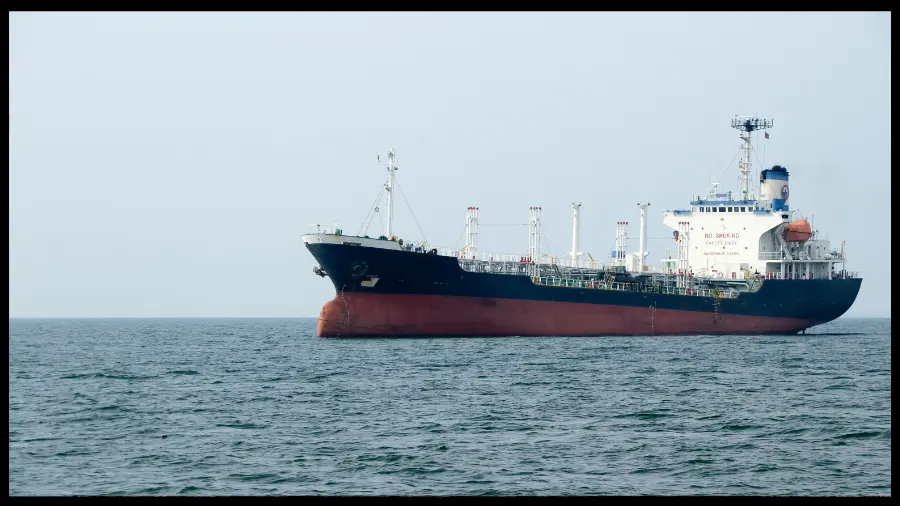
The EU and UK have aligned on a lower Russian crude oil price-cap level under the EU’s new “dynamic” adjustment mechanism, with the updated cap taking effect on February 1. The change is set to be reflected in how counterparties handle price-cap attestations and related checks across chartering, insurance placement, banking, and port services, as the market adjusts to the new level and the reset framework.
Get the maritime stories operators are watching.
Stay ahead of vessel markets, port disruption, maritime technology, and more.
Click here for 30 second summary
EU and UK tighten the Russian crude price cap
The European Union set a new Russian crude oil price cap of US$44.10 per barrel effective February 1, 2026, under a dynamic method designed to keep the cap 15% below a rolling market reference for Urals crude measured over 22 weeks.
-
EU timing
The EU decision includes a 90-day execution period for certain contracts concluded under the previous cap, counted from January 15, 2026. -
UK alignment
The UK confirmed the same cap level, applying it from 23:01 GMT on January 31, 2026, with a wind-down approach for qualifying pre-change contracts. -
Reset structure
The EU framework is built so the cap can be updated on a set cycle as the rolling reference price changes.
The lower cap level and the new dynamic reset structure increase screening intensity across chartering, insurance, and payments. In practice, more fixtures will take longer to clear, documentation standards get tested more often, and the gap between “easy-to-service” mainstream voyages and higher-friction trades can widen.
| Policy move | Confirmed change | Shipping friction shows up first | Market knock-on |
|---|---|---|---|
| New cap level | The EU set the new Russian crude oil price cap at US$44.10 per barrel, effective 1 February. | More “prove it” questions on invoices, attestations, and service eligibility before fixtures progress. | Stronger separation between voyages that clear quickly and voyages that attract extended review. |
| UK alignment timing | The UK confirmed the same cap level, effective at 23:01 GMT on 31 January to align with the EU changeover. | Time-zone cutovers create immediate cut-off sensitivity for documentation timestamps and contract effective dates. | Late-cycle fixtures may reprice or slip as counterparties pause to validate eligibility under the new level. |
| Dynamic mechanism | The EU’s mechanism keeps the cap 15% below the average market price for Urals crude over a 22-week reference period, with updates on a set cycle. | Compliance teams treat each reset as a re-screen trigger, increasing recurring workload for operators and service providers. | Periodic resets can harden the two-tier market because “paper strength” becomes a recurring differentiator. |
| Transition window | The EU allowed a 90-day execution period for older contracts concluded under the prior cap, starting from 15 January. | Execution windows lead to more granular checks on when contracts were concluded, loaded, and serviced. | Some voyages proceed under legacy terms, but with higher audit discipline and less tolerance for ambiguity. |
| UK wind-down specifics | UK guidance sets a wind-down path for pre-change contracts under the previous cap, with completion tied to a defined cutoff in April. | Service providers may require explicit confirmation that the voyage fits the wind-down conditions before acting. | Voyages that cannot clearly fit the wind-down profile may face refusals or re-trading at higher friction cost. |
| Two-tier tanker market reinforcement | Mainstream operators generally rely on Western-linked finance, insurance, and compliance processes. Grey-market voyages rely on alternative structures and higher-risk service stacks. | Underwriters and banks intensify “chain of custody” scrutiny, including counterparties, routing patterns, and documentation consistency. | Rate spreads can widen between clean-chain tonnage and higher-scrutiny tonnage as service access becomes the constraint. |
| Chartering behavior shift | Lower caps increase sensitivity to pricing terms, attestations, and documentary completeness in voyage planning and fixture execution. | More conditional fixtures and longer approval lead times as parties build time for review and escalation. | Scheduling buffers grow in value, and operational reliability becomes a bigger commercial differentiator. |
Dynamic price cap resets turn compliance into a recurring operational cost
The cap level is now mechanically linked to Urals pricing, so each reset becomes a market event for documentation, approvals, and service-provider comfort, even when cargo volumes do not visibly change.
EU and UK set the Russian crude oil price cap at US$44.10 from 1 February, using a formula that keeps the cap 15% below the rolling Urals average over a 22-week reference period. Execution and wind-down provisions mean timing and paperwork quality matter as much as the number itself.
Two-tier tanker market gets harder edges
When the cap drops, service desks tend to tighten interpretation and re-check habits. Mainstream tonnage that relies on Western-linked insurance, finance, and port services becomes more sensitive to documentary consistency, while higher-friction trades lean more on alternative structures.
Chartering focus shifts to proof, not promises
Fixtures that look close to the line attract more conditional language and longer lead times for approvals. The practical differentiator becomes whether the paper trail can be shown quickly and consistently across multiple counterparties.
Insurance comfort becomes more timestamped
Transition provisions mean insurers and brokers pay closer attention to contract dates, effective times, and whether the voyage is inside a permitted execution window. That can pull more routine voyages into manual review during cutover weeks.
Ports and banks inherit the burden
Even when the ship is not the problem, services can become the constraint. Banks, agents, terminals, and counterparties want alignment, meaning the same story must hold across invoices, attestations, charter terms, and supporting documents.
Cutover mechanics that drive real-world friction
The cap change has a calendar. That calendar is often where delays originate, because it forces counterparties to confirm which rule-set applies and whether a voyage can be serviced without exception risk.
Contracts concluded under the prior cap can be executed for 90 days from 15 January 2026, per the EU’s transition approach for the cap update.
- Most sensitive fields are contract conclusion date and documentation completeness.
- Expect more follow-up when dates and invoices do not align cleanly.
UK applied US$44.10 from 23:01 GMT on 31 January 2026, and allows a wind-down for qualifying pre-change contracts until 22:59 BST on 16 April 2026.
- Time stamps matter, especially around late-month fixtures and service cutovers.
- Service providers may ask for explicit confirmation the trade fits the wind-down conditions.
Friction map for the shipping stack
These bars are a directional view of where added work usually lands when the cap tightens. The highest sensitivity sits in approval bottlenecks that can slow voyages without any physical disruption.
Burden score
0
Fastest bottleneck
Likely process shape
We welcome your feedback, suggestions, corrections, and ideas for enhancements. Please click here to get in touch.