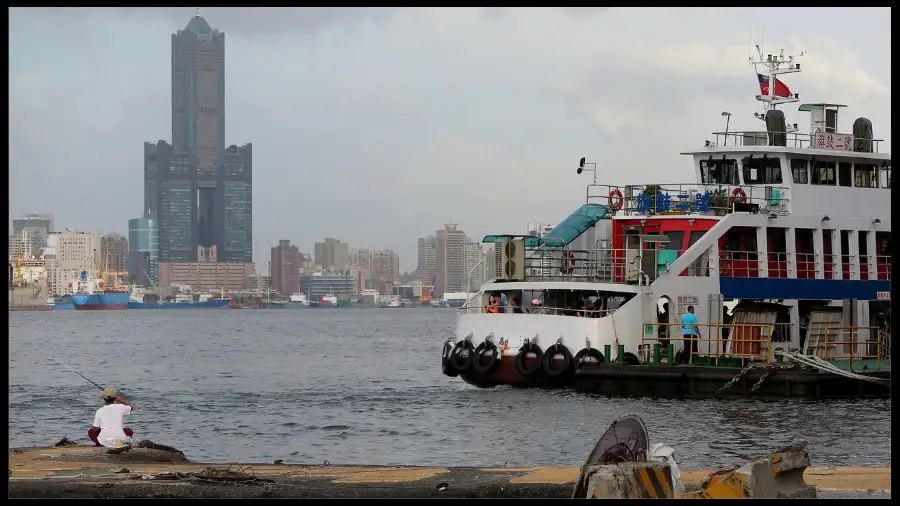
China launched its largest drills around Taiwan in years, explicitly practicing elements that look like a blockade and strike scenario, with live fire and restricted sea and air areas set around the island. For maritime stakeholders, the story is not only geopolitics. It is how quickly drills can turn into real operating friction: route uncertainty, higher risk pricing, tighter schedules, and sudden capacity shifts if carriers choose to give the Taiwan Strait wider clearance.
Click here for 30 second summary
Taiwan lane disruption risk rises as drills rehearse a port squeeze
China launched “Justice Mission 2025” around Taiwan with large-scale multi-service activity, live-fire components, and multiple restricted zones.
The messaging included blockade-style pressure on key ports, making this a routing, insurance, and schedule integrity story for commercial shipping even if vessels are not formally barred from the strait.
The footprint
Drill geometry was published as multiple zones around Taiwan, with live-fire timing described in an 8:00 to 18:00 window on the day cited, and broader coverage described as a record spread of zones.
The early shipping effect
Operators tend to give restriction boxes wider clearance, slow down, and wait outside windows. That creates ETA bunching, missed berth windows, and feeder knock-ons.
The commercial ripple
War-risk checks and contract clauses get re-read quickly. If deviations add time, capacity is absorbed and some segments can see short-term rate support while voyage costs rise.
Bottom line
The immediate risk is not a full stop. It is fragmented restrictions and higher perceived conflict risk, which can turn into delays, higher premiums, and schedule volatility across Taiwan calls and nearby hub rotations.
China’s “Justice Mission 2025” drills around Taiwan
What it means for routes, ports, chartering, insurance, and schedule integrity
Item
Summary
Business mechanics
Bottom-line effect
Drill headline
China’s Eastern Theatre Command deployed multi-service forces for “Justice Mission 2025” around Taiwan, including live fire and simulated strikes on land and sea targets.
When exercises are framed around port denial and “external interference” deterrence, the operating impact concentrates on shipping lanes, port approaches, and the planning assumptions that carriers and shippers rely on.
📉 Risk premium rises fast even without a closure.
📈 Some segments can see short-term rate support if reroutes add days and absorb capacity.
Scale signal
Taiwan reported unusually high activity counts around the island on the first day, including a large aircraft tally and a sizeable naval and coast guard presence.
Higher tempo increases the chance of stand-offs near sensitive lines, which can trigger conservative routing, slower speeds, and greater reliance on nav warnings and convoy-like spacing near chokepoints.
📉 More tactical traffic near commercial routes increases delay and incident sensitivity.
📈 Stronger clarity on “where not to go” can help operators plan if notices are precise and timely.
Where the water and air restrictions sit
Coordinates published for live-fire drills described five designated zones around Taiwan, while maritime notices also described a wider, record coverage that reached seven zones.
The practical issue is not total closure. It is fragmented exclusion areas that force route bends, timing changes, and “wait and see” pauses outside drill boxes, especially for ships with tight berthing windows.
📉 Extra miles, extra time, and missed port windows can cascade into network reliability problems.
📈 More deviation can tighten tonnage supply and lift spot earnings on some legs.
Port blockade element
The drills were described as practicing blockade-style pressure on Taiwan’s main ports, with messaging that highlighted key deep-water gateways.
Even a simulated port squeeze affects feeder planning, transshipment schedules, and “just-in-time” inventory assumptions for cargo owners, because the biggest risk is a sudden inability to approach or berth on schedule.
📉 Port access uncertainty increases delay risk and can lift detention and demurrage exposure.
📈 Alternative hubs and secondary routings can see volume diversion and short-term throughput gains.
Immediate traffic disruption
Aviation authorities in the region warned of large flight disruptions tied to drill areas and timing, underscoring how quickly “exercise geometry” translates into real-world movements.
Maritime tends to feel this as conservative navigation: wider clearance, altered ETAs, slower speeds, and bunching before and after drill windows, which then impacts pilotage and berth scheduling.
📉 Scheduling volatility increases, especially for liner strings built on tight port rotations.
📈 Operators with flexible networks can sometimes reposition capacity to capture dislocated demand.
Insurance and contract friction
Larger, more explicit blockade-style drills tend to push stakeholders to review war risk clauses, additional premium triggers, and deviation rights in charter parties and service contracts.
The commercial mechanism is fast: underwriters re-price perceived risk, owners and charterers re-check liability, and shippers reassess urgency and routing choices for time-sensitive cargo.
📉 Higher premiums and stricter clauses can raise voyage costs and slow fixture decisions.
📈 Clearer contract language can reduce dispute risk if rerouting becomes necessary.
Cargo and supply chain sensitivity
Taiwan is a high-value manufacturing node and a major maritime consumer. Any drill-driven uncertainty near approaches can magnify supply-chain variability beyond the island itself.
The effect is usually indirect first: timing risk rises, buffer inventories are rebuilt, and lead times stretch. If uncertainty persists, shippers may shift routings or accelerate air and sea alternatives where possible.
📉 Higher variability increases inventory carrying costs and weakens schedule reliability KPIs.
📈 Some logistics providers benefit from expedited and contingency routing demand.
Political trigger context
The drills followed a large announced U.S. weapons package for Taiwan and were framed by Beijing as a warning against independence and outside involvement.
Trigger-linked exercises are harder for operators to calendar. That increases the value of contingency playbooks and pre-cleared reroute options for both liners and tramp segments.
📉 Higher probability of surprise drills raises the baseline risk discount for the lane.
📈 Better preparedness can reduce disruption duration when notices arrive.
Notes: Built from public reporting and official statements describing “Justice Mission 2025” drills around Taiwan, including live-fire activity, published drill coordinates and restricted areas,
and drill messaging referencing port blockade scenarios and external-interference deterrence.
🧭
Why drills move freight markets fast
The first-order shipping effect is not usually a full shutdown. It is uncertainty in where and when ships can safely transit, and how quickly risk pricing adjusts when zones expand or timelines shift.
🔎
Quick facts stakeholders keep on one screen
Exercise: Justice Mission 2025
Coverage: record 7 zones cited
Live fire window: 8:00 to 18:00 Tuesday
Messaging: port blockade scenario
Taiwan tally cited: 89 aircraft
Taiwan tally cited: 28 vessels
Ports referenced: Keelung, Kaohsiung
Collateral: major flight disruptions
Shipping translation: even short-lived restriction geometry can create ETA bunching, missed berth windows, and re-sequencing across liner rotations, especially when multiple zones sit near normal approach lanes.
📍
Where disruption tends to show up first
Approach geometry around Taiwan where drill boxes intersect routine routing and pilot timing, creating “wait outside” behavior and bursty arrivals.
Feeder links into Taiwan gateways because short-sea schedules have less slack and missed windows cascade faster.
Transshipment timing when a few hours of slip forces rollovers, re-stows, or missed connections at hub ports.
High value cargo planning as shippers shift from cost focus to delivery certainty, which changes booking patterns and cut-off discipline.
⚖️
Risk pulse in the first 24 hours
🧾
Insurance and clauses
War risk checks and “additional premium” conversations accelerate, and charter parties get re-read for deviation rights and delay allocation.
⏱️
Schedule integrity
Even without a closure, fragmented zones can add waiting time. Liner networks feel it as berth misses and vessel bunching more than raw distance.
📈
Rates and utilization
Added time at sea or at anchor absorbs capacity. That can support spot pricing in pockets, while also raising operating cost for voyages exposed to delays.
🏗️
Port and terminal throughput
If large gateways are referenced in drill messaging, it increases the probability of proactive slowdown in calls or feeder adjustments, even if ports remain open.
🧮
Quick detour math for planners (inputs only, no assumptions)
This is a neutral time-and-cost proxy. It does not include port knock-on effects, war risk premiums, or schedule penalties.
Why this matters: on tight rotations, the larger cost is often not the extra miles. It is the missed berth window and the resulting re-sequencing across multiple ports.
📡
Signals that typically move the lane from “noise” to “friction”
Zone updates from maritime safety authorities that expand, move, or extend restriction boxes.
Daily activity tallies reported by Taiwan on aircraft and vessel presence, which influence perceived tempo.
Port-side advisories on pilotage, approach lanes, and any temporary holding patterns.
Carrier bulletins that indicate call skipping, feeder re-timing, or revised cut-offs.
Insurance circulars that change how war risk and deviation clauses are interpreted for the area.
The drills are a reminder that the Taiwan lane can shift from normal operations to risk-managed operations on short notice. For shipping stakeholders, the immediate commercial impact usually shows up as schedule volatility first, then pricing and contract friction as underwriters and counterparties re-check exposure, especially when exercise zones are large, multi-directional, and explicitly framed around port access pressure.