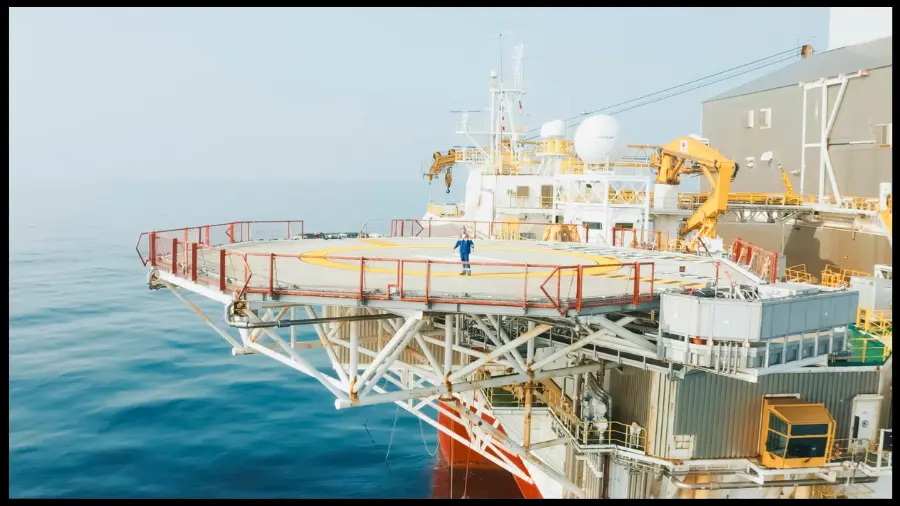
Saipem (working in partnership with China’s Offshore Oil Engineering Co. Ltd., COOEC) has been awarded an offshore EPCI contract by QatarEnergy LNG for the COMP5 package of the North Field Production Sustainability (NFPS) Offshore Compression Complexes project. The contract’s total value is about US$4 billion, with Saipem’s share about US$3.1 billion. The scope centers on building and installing two large offshore compression complexes to help sustain and lift production capacity from Qatar’s North Field over the long run, with offshore installation targeted for 2029 and 2030.
Click here for 30 second summary
Saipem’s North Field COMP5 win: a big offshore build that supports LNG supply stability
Saipem, partnering with COOEC, won an offshore EPCI award from QatarEnergy LNG worth about US$4bnUS$3.1bn.
The work is part of the North Field Production Sustainability program and centers on two offshore compression complexes that help keep gas deliverability strong for the LNG chain.
What gets installed
Each complex includes a compression platform plus living quarters and flare platforms, linked by bridges, with stated total weight around 68,000 tons per complex.
Runway
The contract is described as roughly five years, with offshore installation planned in 2029 and 2030 using Saipem’s De He construction vessel.
Commercial signal
Mega offshore packages add multi-year backlog and high-end vessel visibility, but the heaviest execution risk sits in the late offshore campaign windows where weather and vessel time can swing outcomes.
Bottom line
COMP5 is another large late-decade offshore work block tied to North Field LNG supply resilience: good for contractor backlog and heavy marine utilization, with schedule and margin sensitivity concentrated around the 2029 to 2030 offshore campaigns.
Quick read for shipowners, offshore contractors, LNG shippers, ports, and energy supply chain stakeholders
Item
Summary
Business mechanics
Bottom-line effect
Award and value
Offshore EPCI award from QatarEnergy LNG for the COMP5 package under the North Field Production Sustainability (NFPS) offshore compression program.
Total contract value is about US$4bn, with Saipem’s share about US$3.1bn.
A joint execution model: Saipem leads in partnership with COOEC.
Typical cashflow profile is milestone-driven (engineering, procurement, fabrication, offshore installation), supporting multi-year revenue visibility.
📈 Material backlog addition for the contractors over roughly a five-year run.
📉 Execution risk stays high on mega offshore packages where late changes and tight vessel windows can move margins.
What gets built
The award covers two offshore compression complexes.
Each complex includes a compression platform, a living quarters platform, a flare platform, plus interconnecting bridges.
Compression complexes are production-sustaining infrastructure: they help keep gas flowing at target rates as field conditions evolve.
The living quarters and flare systems add safety, operability, and uptime resilience.
📈 More stable upstream deliverability supports LNG supply reliability across the chain (feedgas, liquefaction planning, shipping schedules).
📉 More offshore hardware means more inspection, maintenance, and outage planning over time.
Scale and lift complexity
Each compression complex is stated at about 68,000 tons total weight, putting it in the “very heavy” offshore category.
Very large topsides and modules drive schedule pressure: fabrication quality, integration sequencing, load-out, and transport must align with narrow offshore weather windows.
📈 Big tonnage favors owners of capable heavy construction assets and proven offshore project controls.
📉 Any slip at fabrication or commissioning can cascade into delayed first gas benefit and higher offshore time.
Timeline and vessels
The contract duration is described as about 5 years. Offshore installation is expected around 2029 and 2030 using Saipem’s De He construction vessel.
The long runway spreads workload across engineering and procurement first, then fabrication, then offshore lift and hook-up.
Vessel day rates and weather downtime become major swing factors in the peak offshore phase.
📈 Forward utilization visibility for high-capability offshore vessels late in the decade.
📉 A lot can change by 2029 to 2030 (yard congestion, supply chain lead times, offshore campaign sequencing).
Why Qatar is doing it
NFPS is positioned as part of QatarEnergy LNG’s strategy to maintain and increase production capacity from the North Field over time.
Think of it as “keeping the upstream engine strong” while the LNG export system expands and operates at higher throughput.
Sustained upstream performance reduces surprises that ripple into LNG shipping programs.
📈 More predictable supply helps stabilize logistics planning for terminals, chartering, and downstream buyers.
📉 Large capex programs raise the bar on project governance, contractor performance, and HSE management.
Continuity of awards
COMP5 follows earlier NFPS offshore compression awards to Saipem: the company previously disclosed COMP2 (Oct 2022) and COMP3 (Sep 2024), both stated as under execution.
Repeat awards usually signal a proven delivery relationship, shared standards, and an established local execution footprint.
It can also allow procurement and fabrication playbooks to be reused across packages.
📈 Repeat work can reduce learning curve and improve schedule confidence.
📉 Concentration on one mega program can amplify exposure if priorities or sequencing change.
Notes: Summary reflects public disclosures stating (i) an offshore EPCI award by QatarEnergy LNG to Saipem and COOEC for the NFPS COMP5 package,
(ii) overall contract value about US$4bn with Saipem share about US$3.1bn, (iii) scope covering two compression complexes including compression, living quarters, and flare platforms plus bridges,
(iv) each complex about 68,000 tons, (v) roughly five-year duration with offshore installation targeted around 2029 and 2030 using Saipem’s De He construction vessel,
and (vi) the award following earlier COMP2 and COMP3 packages disclosed in 2022 and 2024.
🧱
North Field offshore compression, simplified
This award is an upstream reliability build. It adds large offshore compression complexes that support steady gas delivery into the LNG chain over time.
🔢
Numbers that matter (fast scan)
Package: COMP5 (NFPS)
Total: about US$4bn
Saipem share: about US$3.1bn
Build: two complexes
Weight: about 68,000 tons each
Run time: about 5 years
Offshore campaign: 2029 and 2030
Install vessel: De He
Partnership note: Execution is described as a partnership between Saipem and COOEC, a common structure for mega offshore packages where local capacity and heavy marine capability are both critical.
🧠
A simple picture of what “offshore compression complexes” do
⛽Gas arrives from the field
Over time, fields can require more help keeping gas moving at target rates and pressures.
›Next link in the chain
🧰Compression platform does the heavy lifting
This is the core topsides: equipment that supports stable flow so downstream LNG planning has fewer surprises.
Accommodation improves operability and maintenance cadence, which matters on long-life infrastructure.
›Safety and controlled venting
🔥Flare platform and bridges tie the complex together
Flare and interconnecting bridges support safe operations and integrated workflows across the complex.
🗓️
The work curve, from desk to offshore lift
Early years
Engineering and long-lead procurement
Design lock-in drives the procurement list and supplier delivery dates, which then set the pace for fabrication.
Middle years
Fabrication and integration
Large module build and integration sequencing determine how smoothly the load-out and transport phases run.
2029
Offshore installation campaign 1
Heavy offshore work begins in the stated window, using the De He construction vessel for installation activity.
2030
Offshore installation campaign 2
Second-year offshore activity in the stated window, where weather and vessel time are often the swing factors for final schedule outcome.
Scale reminder: Each complex is stated at about 68,000 tons total weight, placing the lifts and installation in the very heavy offshore category.
⚖️
Two quick lenses that stakeholders track
✅Where this supports the LNG chain
Sustained upstream deliverability helps LNG scheduling look steadier. The payoff is fewer sudden adjustments that can ripple into cargo program timing and shipping lineups.
⚠️Where projects like this tend to pinch
Heavy offshore work concentrates risk late in the project. A lot of planning and spending happens before the 2029 to 2030 offshore windows, so any late changes can be expensive.
Continuity note: COMP5 follows earlier Saipem North Field offshore compression awards (COMP2 and COMP3), indicating a continuing delivery relationship on this program.
Saipem’s COMP5 award extends the North Field offshore compression buildout with a multi-year EPCI package that runs through late-decade installation windows. The contract adds another major workload block for offshore construction capacity and keeps attention on the late-2020s campaign period, when heavy-lift vessel time and offshore conditions become central to schedule outcomes.