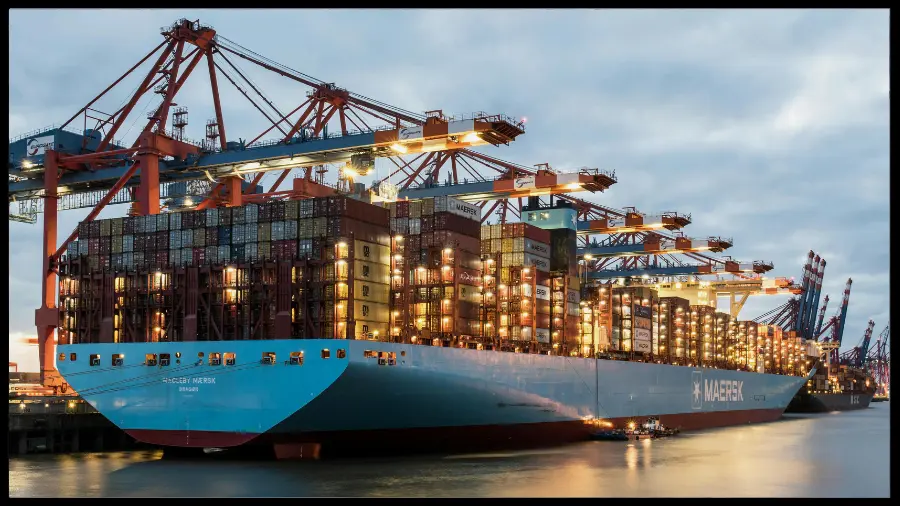
Maersk confirmed that one of its containerships successfully transited the Bab el-Mandeb Strait and entered the Red Sea on December 19, 2025, marking its first such passage in nearly two years. The move is being read across shipping as a cautious “probe” of whether the Suez route can start coming back into regular use after the long diversion period that followed Houthi attacks in late 2023.
Click here for 30 second summary
Maersk puts a ship back through Bab el-Mandeb and into the Red Sea
Maersk said the containership Maersk Sebarok completed a passage through the Bab el-Mandeb Strait and the Red Sea on December 19, 2025, its first trip through that corridor in nearly two years. The transit is being treated as a test of whether Suez-linked routings can start returning after most major lines diverted around the Cape following attacks that began in late 2023.
On the water
This was a single confirmed transit, not a full network reset. Maersk has not committed to reopening all trans-Suez operations, so near-term routing is still likely to be mixed across services.
Market math
If Red Sea routings come back at scale, voyages shorten and ships are freed up. BIMCO’s chief shipping analyst said a broad return could reduce global ship demand by about 10 percent, which would typically lean on freight and charter rates.
Next signals
Follow-through matters more than headlines. Reuters reported CMA CGM plans to use the Suez route on its India to U.S. service starting in January, which would be an early sign that returns could spread beyond one-off transits.
Bottom line
One Maersk passage does not reopen the corridor by itself, but it changes the conversation from theory to execution. The real business impact arrives if repeatable transits become routine, because shorter loops quickly translate into more effective capacity across the container system.
Maersk Completes a Red Sea and Bab el-Mandeb Transit
Item
Summary
Business mechanics
Bottom-line effect
The transit itself
Maersk said the Maersk Sebarok completed a Red Sea and Bab el-Mandeb passage on December 19, 2025, its first transit of that corridor in nearly two years.
One successful voyage does not equal a network restart. It functions like a live risk test: route execution, security posture, and downstream schedule impact.
📈 A credible “reopening signal” that can shift expectations quickly. 📉 Still a single data point until repeated across multiple voyages and services.
Why this matters
The Suez route is the shortest mainstream corridor between Asia and Europe. Maersk and peers largely avoided it after late-2023 attacks and diverted around the Cape of Good Hope.
When ships divert, voyage days rise, more hulls are needed to carry the same weekly volumes, and schedule buffers expand. Returning compresses that “hidden capacity burn.”
📉 A broad return would increase effective capacity and typically pressures freight and charter markets. 📈 It can also improve schedule reliability and container equipment rotation.
Maersk’s stance
Reporting described the voyage as a cautious step. Maersk has not publicly committed to a full, immediate restart of trans-Suez routings.
Major carriers usually phase returns to avoid whiplash: one incident can force a quick pivot back to Cape routings and disrupt weeks of vessel and box positioning.
📉 Customers should expect “mixed routing” for a period. 📈 A measured approach reduces the probability of large schedule breakdowns if security shifts again.
Market impact math
BIMCO’s chief shipping analyst said a full return to the Red Sea could reduce global shipping demand by about 10 percent.
“Demand” here is operational demand for ships, driven by longer or shorter routes. Shorter routes mean fewer ships are needed to deliver the same cargo volume.
📉 Downward pressure risk for freight and charter rates if the return becomes widespread. 📈 Carriers regain flexibility to redeploy ships and absorb disruptions elsewhere.
Competitive follow-through
Other lines are also reassessing. CMA CGM has indicated it plans to route an India to U.S. service via Suez starting in January.
Early movers can capture time-sensitive cargo and marketing value, but they also absorb the first wave of execution risk if the security picture deteriorates.
📈 Potential advantage for lines that can run reliably through Suez. 📉 If only a few carriers return at first, benefits are uneven and planning complexity rises for shippers.
Insurance and contracts
Industry reporting has pointed to easing war-risk pricing compared with earlier peaks, but residual caution remains and routing decisions vary by company risk tolerance.
Even with lower premiums, underwriters and cargo owners often require tighter voyage controls, clearer routing language, and stronger cancellation or deviation clauses.
📉 Extra compliance steps and voyage conditions can slow execution. 📈 Lower war-risk costs improve the economics of Suez if the security trend holds.
Ports and canal effects
A scaled return would shift volume back toward Suez-linked hubs, while reducing the diversion-driven load on Cape routing patterns.
When routings change, port calls, berth windows, and hinterland flows re-balance. A “fast return” can also create bunching if multiple loops re-enter at once.
📈 Potential uplift for Suez-connected ports and services. 📉 Risk of short-term congestion if returns happen faster than terminal planning can absorb.
Notes: Wider return timing remains carrier-specific and sensitive to security conditions.
Red Sea routing: one Maersk transit, a lot of market implications
Dec 19, 2025 signal
Why this one passage matters Mechanics
The Red Sea is not just a dot on the map, it is a capacity multiplier. When ships divert around the Cape, the same weekly services consume more vessel days. If routes shorten again, effective capacity rises fast, and that can show up in rates, charter cover, and network reliability.
Long routing
More sea days per loop, more ships tied up, tighter capacity feel even if the fleet size is unchanged.
Capacity “burn”
Higher
Shorter routing
Fewer sea days per loop, ships and boxes turn faster, and the market suddenly feels looser.
The signals that will be repeated Fast read
Carrier actionConfirmed
Maersk said Maersk Sebarok transited Bab el-Mandeb into the Red Sea, the first Maersk passage in nearly two years.
This looks like a route-probe, not a full network restart.
Analyst lensCapacity release
BIMCO’s chief shipping analyst said a full return to Red Sea routings could reduce global shipping demand by about 10 percent.
In practice this means fewer ships are needed to move the same cargo if routes shorten.
Competitive follow-throughNext move
CMA CGM has said it plans to use the Suez route for an India to U.S. service starting in January.
If multiple carriers follow, the market impact becomes structural rather than symbolic.
Where the upside shows up first Tailwinds
Less diversion time can improve schedule reliability and reduce the “hidden” fleet tied up in longer loops.
Equipment positioning can normalize faster when round-trips shorten, which matters for exporters and empties.
Suez-linked hubs and services regain relevance if traffic becomes repeatable, not one-off.
Where the friction does not disappear Headwinds
Security risk remains route-defining, and one adverse event can force an immediate reversion back to Cape routings.
Mixed routing creates planning noise for shippers, forwarders, and ports because arrival patterns can swing quickly.
As effective capacity rises, pricing power can shift away from carriers, especially if overcapacity is already building.
The commercial knobs that tend to move first On deals and ops
When a corridor re-opens even partially, the first changes are usually seen in how risk is priced and how flexibility is written into service commitments.
War risk add-ons
Premium language, routing conditions, and voyage approvals become more visible in the invoice stack.
Deviation rights
Contracts and bills of lading lean harder on re-route provisions if conditions shift.
Schedule buffers
Networks may keep extra slack until repeated safe transits prove the corridor is stable.
Rate pressure
If more services return, shorter loops can loosen the market and weigh on pricing power.
Source notes: The transit, timing, “nearly two years” framing, BIMCO’s 10 percent estimate, and CMA CGM’s January Suez plan are based on public reporting from Dec 19, 2025.
Maersk’s Red Sea transit is being treated as a market signal because it breaks a long operational pause that began after the late-2023 security shock. For now it reads more like a controlled test than a full return, but even a handful of repeatable transits can change expectations quickly. If more carriers follow, the story shifts from security headlines to capacity math, with shorter routings freeing ships and pushing the industry into a different pricing and reliability landscape.