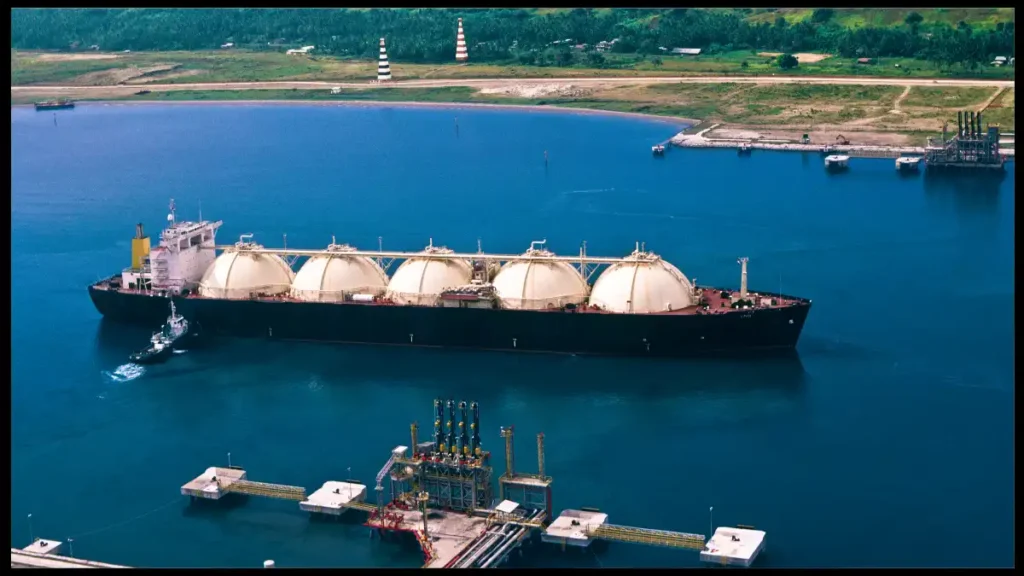
LNG Canada’s first phase at Kitimat has now reached full construction handover, with both liquefaction trains delivered and the plant already exporting cargoes from Canada’s west coast. That makes Canada a long term LNG supplier into Pacific markets, reshaping tonne miles, contract structures and fleet deployment for LNG carrier owners over decades rather than seasons.
|
LNG Canada Phase One Complete: Pacific LNG Exports Go Fully Live
|
| Item |
Summary |
Business mechanics |
Bottom line effect |
| Phase one milestone |
JGC Fluor has handed over Train 2 and all remaining construction areas at LNG Canada, marking completion of the first phase of Canada’s first large scale LNG export plant at Kitimat on the Pacific coast. The plant has already loaded initial cargoes in 2025 while ramping up both trains.
|
Construction risk on phase one is now largely behind the project. Focus shifts to steady operations, reliability on both trains and optimisation of the shipping program that lifts volumes out of Kitimat over a forty year export licence.
|
📈 A fully handed over plant underpins long life export flows and forward planning for LNG carrier deployment.
|
| Scale of the project |
Phase one consists of two liquefaction trains with nameplate capacity of about 14 million tonnes per year, making LNG Canada one of the larger single site export projects globally and the anchor for a new Canadian LNG export industry.
|
Once both trains are running at or near design rates, the plant can support a steady stream of mid to large size LNG carriers on Pacific routes. Portfolio players use the new Pacific supply point to rebalance liftings between Canada, the United States and other basins.
|
📈 Extra long term volume supports new and renewed LNGC employment, 📉 but increases competition pressure on some existing Pacific supply routes.
|
| Pacific location and tonne miles |
Kitimat’s position on the British Columbia coast offers shorter sailing times to key North Asian buyers than United States Gulf export plants, with direct access to deep water and an ice free harbour.
|
Typical voyages from Kitimat to Japan, Korea and China require fewer days than a Panama or Cape Suez routing from the Gulf. That changes the tonne mile mix in the Pacific LNG trade, with some cargoes that might have loaded in the Atlantic now sourced from western Canada instead.
|
📉 Extra days at anchor and at sea on some Atlantic to Asia patterns are reduced if liftings pivot to Kitimat. 📈 A new Pacific load point still creates firm, recurring sailing work for LNG carriers over decades.
|
| Contracts and ship portfolios |
LNG Canada is backed by long term offtake linked to joint venture partners in Asia, with volumes anchored in portfolio supply deals rather than pure spot flows.
|
Much of the shipping is expected to be covered under long term or dedicated tonnage, but portfolio players can still use third party LNGCs to trim peaks, manage outages and arbitrage between basins. That keeps a link between the project and the independent LNG carrier market.
|
📈 Stable base demand for term charters supports financing and fleet renewal plans, 📉 while leaving less slack for owners that rely mainly on short duration spot employment.
|
| Competition with other exporters |
New Canadian Pacific volumes arrive as United States Gulf, Qatar and other suppliers expand, with several further Canadian projects also under development or review such as Woodfibre and Cedar LNG.
|
Buyers will compare delivered cost and emissions across these projects. Portfolio players can swing cargoes between Canada, the Gulf and other origin points, which will influence how many ships are positioned in each basin and how often vessels switch regions during a year.
|
📉 Extra competing supply narrows margins for some legacy exporters, 📈 but broadens the set of routes and counterparties available to LNGC owners willing to follow cargo flows.
|
| Operational ramp up and reliability |
First LNG from Train 1 was followed by technical issues and a staged ramp up. Train 2 has now been handed over, but both units still face the usual early years challenge of balancing start up problems with export commitments.
|
Any unplanned outages can force cargo reshuffling and temporary changes in ship deployment. Over time, higher reliability will allow project partners to plan shipping rosters further ahead and reduce the amount of contingency tonnage they need to keep available.
|
📉 Extra days at anchor or waiting on revised laycans raise costs for owners and charterers when trains trip. 📈 As reliability improves, voyage planning and fleet allocation become more predictable for both sides of the charter party.
|
| Emissions profile and CII |
LNG Canada is designed to have relatively low plant emissions per tonne of LNG by using hydropower for parts of its operation, which is attractive for buyers looking at the life cycle footprint of their cargoes.
|
Shorter Pacific voyages paired with a lower upstream emissions profile help buyers and ship operators manage overall carbon intensity scores and CII outcomes compared with some longer, higher emission routes from other origin regions.
|
📈 Better life cycle emissions and shorter routes can support premium demand for modern, efficient LNGCs trading into Kitimat, 📉 while older, less efficient ships may face tighter scrutiny on fuel burn and ratings.
|
| Local and Indigenous footprint |
The plant sits in the traditional territory of the Haisla Nation, with the project emphasising long term partnerships, local contracts and employment as part of its licence to operate in British Columbia.
|
Stable community relationships and predictable regulatory frameworks are important for avoiding disruptions that could affect access, pilotage, tug support and port operations for calling LNGCs over the multi decade project life.
|
📈 Strong local support lowers the risk of future delays that would add extra idle days for visiting ships, 📉 while any breakdown in that relationship could introduce new constraints on berth access and sailing windows.
|
|
Notes: Based on public information from LNG Canada, project partners and recent reporting on first cargoes, Train 2 handover and early operations as of late 2025. Actual ramp up profiles, cargo destinations and shipping strategies will evolve with market conditions and technical performance.
|
Phase one completion at LNG Canada turns Kitimat into a permanent feature of the Pacific LNG landscape rather than a future promise. For LNG carrier owners, it means a new stream of long-term liftings tied to large portfolio players, with potential upside if a second phase is approved. For gas producers and buyers, it adds another origin point and pricing reference into a market that is still reorganising after the last few years of volatility.