Amogy Review: Turning Ammonia Into Clean Power
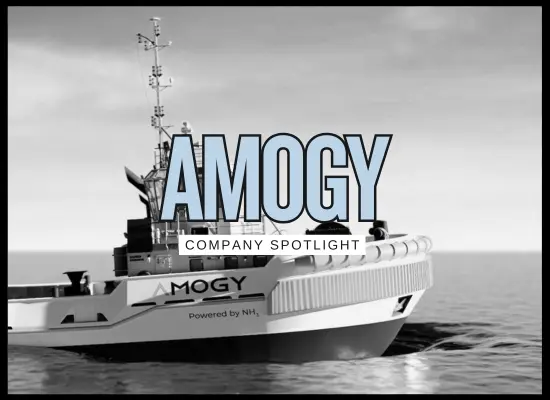
Amogy sits in the “fuel tank of the future” bucket: instead of asking shipowners to wait for green hydrogen or giant batteries, they use liquid ammonia, crack it into hydrogen on board, and feed that to fuel cells for zero-carbon electrical power at the point of use. From a Brooklyn HQ with growing hubs in Houston and Pangyo, they are pitching container ships, tankers and offshore vessels a way to turn an existing ammonia supply chain into hybrid propulsion, auxiliary power and shoreside systems that can run inside future carbon budgets instead of fighting them.
Brooklyn, NY 11205, United States
- Switching to carbon free electrical power at the point of use: Amogy’s core system cracks liquid ammonia into hydrogen and nitrogen, then feeds the hydrogen into fuel cells so the ship gets electrical power with zero CO₂ at the point of use. For owners this is a way to cut operational emissions without waiting for a completely new fuel logistics chain.
- Using an existing global fuel infrastructure: Ammonia is already traded and transported worldwide for fertiliser and industry, which means bunkering concepts can build on existing storage, terminal and handling experience instead of starting from scratch. That can reduce future logistics risk once safety and training frameworks are in place.
- Unlocking higher energy density than many battery concepts: Amogy highlights ammonia’s power density advantage, noting that liquid ammonia contains roughly three times the energy density of hydrogen at 700 bar. For deep sea ships that cannot carry enough batteries, this supports longer zero carbon range per cubic metre of energy storage.
- Targeting hybrid and auxiliary loads first: The company is designing modular “powerpacks” that can sit alongside conventional engines and serve hybrid propulsion, auxiliary loads and shoreside power, which lets owners start with pilots on tugs, offshore vessels or auxiliary systems rather than a full fleet refit on day one.
- Avoiding NOx penalties linked to ammonia combustion: Because Amogy’s systems crack ammonia and send hydrogen to a fuel cell instead of burning ammonia in an engine, they aim to avoid the nitrous oxide issues tied to direct ammonia combustion, which can simplify future compliance and aftertreatment requirements.
- Positioning for future green ammonia supply: Demonstrations such as the “NH₃ Kraken” ammonia powered tugboat and pilot projects with Samsung Heavy Industries and Hanwha indicate how early movers may be able to secure offtake from green ammonia projects and lock in low carbon corridors as those fuels scale.
- Sharing development risk with industrial partners: Amogy has attracted more than 270 million dollars of funding and partnerships with companies such as Saudi Aramco, Samsung, HD Hyundai and GS Engineering and Construction. That spreads the technology and project risk across shipyards, engine firms and energy suppliers, instead of leaving individual owners to experiment alone.
- Keeping options open across vessel types: The same ammonia to power approach is being pitched for container ships, tankers, general cargo and offshore vessels, with pilots in heavy transport and stationary power as well. That broad scope could help large groups explore one technology family across shipping, terminals and land assets.
-
Series funding and strategic investors SK, Aramco, AP VenturesAmogy has raised several hundred million dollars across seed, Series A and Series B rounds, with strategic investors including SK Innovation, Aramco Ventures, Temasek, AP Ventures and others, positioning it as a well capitalised ammonia to hydrogen fuel cell player rather than an early lab project. Funding details are summarised on Amogy’s news page and in investor press releases.
-
Demonstration ladder: from tractor to tugboat Pilot projectsAmogy has run a sequence of pilots that moved from a 5 kilowatt drone and ammonia powered John Deere tractor to a Class 8 semi truck and then an ammonia powered tugboat concept, showing how the same ammonia to power system can scale from land to harbour applications. A timeline is outlined in Amogy’s technology overview.
-
Ammonia powered tug and maritime focus Harbour vessel demonstratorAmogy has announced an ammonia powered tug project often referenced as a key maritime demonstrator, aimed at combining its ammonia cracking and fuel cell system with a harbour tug platform to validate safety, operations and emissions performance in a real port environment. Project information is available via Amogy’s maritime page.
-
Partnerships with Korean shipyards and energy players Samsung, HD Hyundai, HanwhaAmogy has announced collaborations and memorandums of understanding with Korean shipyards and energy companies, including Samsung Heavy Industries, HD Hyundai and Hanwha affiliates, aimed at integrating ammonia power systems into large vessels and offshore units and connecting them to future green ammonia supply projects. Selected releases are linked from Amogy’s news section.
-
Ammonia bunker vessel design with Azane Zero emissions bunkeringAmogy’s power system is part of an ammonia bunker vessel concept developed with Azane Fuel Solutions, where the vessel itself would run on ammonia derived power while distributing ammonia as marine fuel, creating a closed loop bunkering asset for zero carbon corridors. The collaboration is described by Azane at Azane Fuel Solutions.
-
Class, safety and regulatory progress AiP and codesAmogy reports work with class societies and regulatory bodies to obtain approvals in principle and to feed lessons from early pilots into ammonia handling and fuel cell safety guidance, which will be central to making ammonia power acceptable for wider commercial trade. Updates are shared via company announcements.
| Category | Calculated value |
|---|---|
| Baseline fuel use for covered load (fleet, per year) | 0 mt |
| Baseline CO₂ emissions for covered load (fleet, per year) | 0 tCO₂ |
| Baseline fuel cost (fleet, per year) | $0 |
| Baseline carbon cost (fleet, per year) | $0 |
| Baseline total cost (fuel plus CO₂) | $0 |
| Ammonia tonnes used (fleet, per year) | 0 mt |
| Conventional fuel remaining in scenario (fleet, per year) | 0 mt |
| Scenario fuel and ammonia cost | $0 |
| Scenario CO₂ emissions (fleet, per year) | 0 tCO₂ |
| Scenario carbon cost (fleet, per year) | $0 |
| Scenario total cost (fuel plus CO₂ plus system) | $0 |
| Green premium or saving vs baseline (per year) | $0 |
Amogy is still in the early commercial and pilot phase, but the picture from funding, demonstrator projects and partner announcements is that serious capital and industrial names are now attached to the ammonia to power route, from SK and Aramco on the energy side to Korean shipyards and bunkering partners such as Azane on the maritime side. The planner is there to help you express that option in shipowner language: tonnes of fuel displaced, CO₂ avoided, green premium per year and an implied cost per tonne of CO₂, anchored on whatever ammonia price and annualised system cost you can negotiate instead of abstract percentage claims.
We welcome your feedback, suggestions, corrections, and ideas for enhancements. Please click here to get in touch.