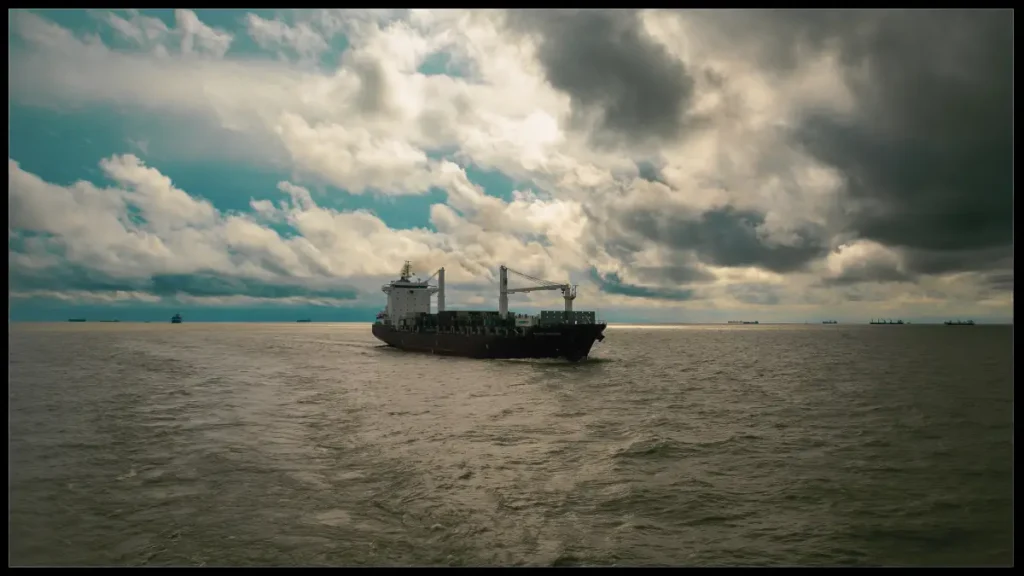
The global "shadow fleet" that moves sanctioned crude has expanded into a parallel system of older, lightly regulated tankers, with estimates suggesting that roughly 16 percent of the crude fleet tied to sanctioned trades and more than 3,000 vessels now operating with limited oversight or data visibility. At the same time, India has tightened insurance verification for ships calling at its ports, and an Aframax tanker, Tiger 6, carrying ESPO crude for Indian Oil Corp was kept waiting off Paradip after officials paused discharge until they could confirm cover from a Russian non IG insurer online. Together, the safety concerns around dark ships and India’s real world enforcement example spell higher compliance costs, more idle days for risky tonnage, and a clearer premium for transparent operators.
| Shadow Fleet Expansion And Indian Insurance: Industry Impact |
| Item |
Summary |
Business Mechanics |
Bottom-Line Effect |
| Shadow fleet share and scale |
Industry estimates now put roughly one sixth of the crude tanker fleet into sanctioned or high risk trades, with several thousand older ships operating with limited oversight.
|
Redeployed and end of life tonnage moves into opaque structures that focus on discounted barrels, minimal maintenance and looser flag and class conditions.
|
📉 More substandard ships in circulation increase casualty and spill risk for everyone. 📈 Compliant owners can justify stronger terms where counterparty quality is valued.
|
| Safety and environmental exposure |
Many dark fleet vessels are older units run hard on sanction trades, with concerns around maintenance, class status, and ability to respond if something fails at sea.
|
Repeated high risk ship to ship operations, limited port state control, and patchy insurance increase the probability that a single failure creates a high profile pollution case.
|
📉 A major casualty would trigger stricter rules for all tanker operators, not only those on dark trades, and could raise capital and insurance costs across the board.
|
| Data and visibility gaps |
Shadow fleet operators frequently switch off or manipulate AIS, creating blind spots in traffic data and weakening incident learning and trade statistics.
|
Less reliable position and voyage history makes routing, benchmarking and risk modelling harder for ports, pilots, insurers and legitimate operators.
|
📉 More uncertainty around who is nearby and what they carry, 📈 greater value for fleets that can prove continuous visibility and verifiable track records.
|
| Tiger 6 insurance delay |
Aframax tanker Tiger 6, under EU and UK sanctions and carrying ESPO crude for Indian Oil Corp, waited off Paradip after discharge was postponed while port authorities checked its P&I cover.
|
The vessel is insured by Russian provider Soglasie, one of the non International Group insurers recognised by India. Officials paused operations until they could confirm the policy online under new rules.
|
📉 Extra days at anchor raise costs for owner and charterer. 📈 Sends a clear signal that documentation for sanctioned or older ships will be tested in practice, not just on paper.
|
| India insurance verification rules |
Since 2025, India has required online verification of P&I certificates, especially for ships covered by non IG clubs, to filter out forged or unpaid cover.
|
The regulator checks authenticity and premium payment status before allowing berthing. Vessels without valid or verifiable cover can be denied access to ports.
|
📉 Greater entry risk and time loss for shadow fleet ships. 📈 Compliant fleets that keep documentation in order face an admin burden but enjoy smoother port clearance.
|
| Non IG cover and dark trades |
Many ships used on sanction linked trades rely on non IG insurers or less transparent arrangements, which are now under closer review in some ports.
|
When key importers insist on verifiable insurance, the business case for very old or poorly documented tonnage erodes and more voyages face delay or rejection.
|
📉 Financing and resale prospects for opaque units weaken. 📈 IG backed and well documented fleets gain a clearer competitive edge in cargo allocations.
|
| Freight and utilisation effects |
If enforcement like India’s spreads, some dark fleet capacity will sit idle more often or take longer routes to friendlier ports, changing effective supply.
|
Longer waiting and diversions increase voyage days per cargo. Even if global demand is flat, the number of ship days required to move a given volume can rise.
|
📈 Potential support for earnings on compliant fleets if risky tonnage is constrained. 📉 Volatility in trades where enforcement is uneven or changes quickly.
|
| Owner response toolkit |
Operators that invest in visibility, clean ownership structures and strong P&I relationships can use this environment to differentiate.
|
Practical steps include proactive sharing of verified insurance details, robust AIS and log keeping, and pre clearance conversations with ports and charterers.
|
📈 Better charterer confidence, higher acceptance on sensitive routes and scope to negotiate higher hire where risk screening is intensive.
|
|
Notes: Shadow fleet estimates and safety concerns are based on recent industry commentary and op ed analysis. Tiger 6 information reflects November 2025 reporting on the Paradip delay and India P&I verification rules. Effects vary by ship age, flag, insurer and trade lane.
|
Growing enforcement around P&I verification and dark activity is starting to turn policy language into real delay days and real cost for some ships. For owners and operators, the practical play now is to decide which side of this line you want to be on: chasing discounted but fragile trades with higher documentation risk, or leaning into cleaner routes where verifiable cover, younger tonnage and good data can earn a premium. The Tiger 6 case shows that port states are willing to press pause while they validate insurance, and as more administrations follow that path the value of transparent fleets, strong clubs and reliable signals is likely to climb.