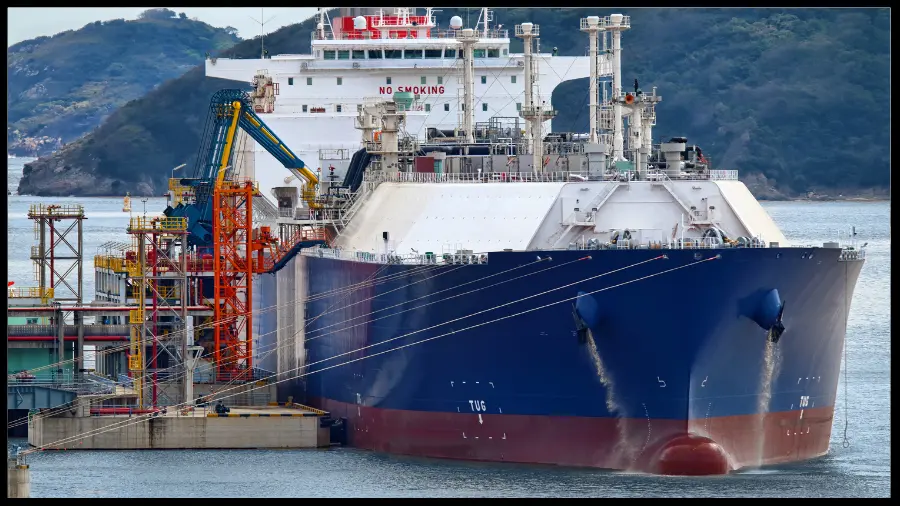
China’s seaborne LNG imports are set to fall year on year for the 13th straight month in November, with Kpler data (via Bloomberg and other outlets) pointing to about 5.81 million tons of arrivals, roughly 5.5% below last year as China leans on cheaper pipeline gas and strong domestic output instead of spot seaborne cargoes.
| China LNG Imports Continue Decline: Industry Impact |
| Item |
Summary |
Business mechanics |
Bottom line effect |
| Hook |
China’s seaborne LNG imports are set to fall year on year for the 13th straight month in November, with arrivals around 5.81 million tons, about 5.5% below last year as buyers lean on cheaper pipeline gas and strong domestic output.
|
Kpler ship tracking data and customs comparisons show a sustained drop in seaborne intake while domestic production and pipeline inflows from Russia and Central Asia stay firm.
|
📉 Extra days at anchor raise costs for owner and charterer. 📈 Sends a clear signal that documentation for sanctioned or older ships will be tested in practice, not just on paper.
|
| Core data point |
November seaborne LNG arrivals into China are forecast near 5.81 million tons, roughly 5.5% lower than a year earlier, extending a run of year on year declines that began in November 2024.
|
China stays active on long term LNG contracts but is noticeably less present in the spot market compared with earlier tight periods.
|
📉 Extra days at anchor raise costs for owner and charterer as open tonnage waits longer between fixtures. 📈 Sends a clear signal that documentation for sanctioned or older ships will be tested in practice, not just on paper when competing for fewer high quality tenders.
|
| What is driving it |
The decline is tied to strong domestic gas production, higher pipeline imports and comfortable inventories, plus softer industrial demand and LNG by truck inside China.
|
Cheaper pipeline gas and local output displace marginal LNG volumes that previously came from spot cargoes, particularly on long haul routes.
|
📉 Extra days at anchor raise costs for owner and charterer when marginal demand disappears from one of the largest growth engines. 📈 Sends a clear signal that documentation for sanctioned or older ships will be tested in practice, not just on paper as charterers tighten counterparty and ship selection.
|
| Trend vs recent months |
The November decline is smaller than the double digit drops seen in the previous two months but still keeps China’s LNG intake below last year’s level for the thirteenth month in a row.
|
Structural factors are replacing one off weather or price shocks, so the market reads this as a more durable moderation in China’s role as incremental buyer.
|
📉 Extra days at anchor raise costs for owner and charterer when seasonal spikes fail to materialise. 📈 Sends a clear signal that documentation for sanctioned or older ships will be tested in practice, not just on paper as more players fight for a smaller pool of China related voyages.
|
| Tonne mile and routing |
Fewer China bound cargoes cut long haul voyages from the Atlantic and Middle East into North Asia, while more molecules clear in Europe, South Asia and Latin America on shorter or medium haul routes.
|
Portfolio players re route cargoes toward Europe and other basins, which reduces average voyage distance even if global LNG volumes stay broadly supported.
|
📉 Extra days at anchor raise costs for owner and charterer if shorter voyages and repositioning runs leave more ships idle between stems. 📈 Sends a clear signal that documentation for sanctioned or older ships will be tested in practice, not just on paper whenever alternative, compliant tonnage is available in oversupplied regions.
|
| Spot vs term cover |
More LNG ships are locked into long term charters linked to new export projects, while open spot tonnage finds fewer high paying China linked stems.
|
Portfolio sellers lean on destination flexible term deals, shifting volumes between basins rather than chasing China specific spot tenders.
|
📉 Extra days at anchor raise costs for owner and charterer when spot vessels chase a thinner stream of reloads and backhaul opportunities. 📈 Sends a clear signal that documentation for sanctioned or older ships will be tested in practice, not just on paper as charterers can be more selective on compliance and age.
|
| Newbuild appetite |
A large LNG carrier orderbook is already tied to Qatar and US export projects. Softer China growth removes one bullish demand argument for additional speculative orders.
|
Yard slots into the late 2020s are largely spoken for, so marginal appetite for unbacked ships depends on confidence that tonne mile demand will absorb them.
|
📉 Extra days at anchor raise costs for owner and charterer, making investors more cautious about adding uncommitted capacity. 📈 Sends a clear signal that documentation for sanctioned or older ships will be tested in practice, not just on paper when financiers and charterers weigh fleet renewal.
|
| Asia vs Europe balance |
Asia’s LNG imports are slightly weaker, while Europe has lifted intake significantly versus last year, soaking up some surplus but on routes that are often shorter than Asia bound cargoes.
|
Vessel deployment shifts toward Atlantic and European demand, reshaping earnings by basin even if global volumes remain firm.
|
📉 Extra days at anchor raise costs for owner and charterer where triangulation options are limited. 📈 Sends a clear signal that documentation for sanctioned or older ships will be tested in practice, not just on paper as European buyers focus heavily on compliance and age profiles.
|
| Owner playbook |
Owners need to plan for more modest China driven growth and focus on term cover, flexible routing and high efficiency ships rather than relying on repeated China spot surges.
|
Priority moves include raising multi year coverage with portfolio players, optimising ballast legs and positioning tonnage for European and cross basin flows.
|
📉 Extra days at anchor raise costs for owner and charterer if fleets stay too exposed to spot volatility. 📈 Sends a clear signal that documentation for sanctioned or older ships will be tested in practice, not just on paper so compliance, age and technical standards become core to securing the best employment.
|
|
Notes: Data reflect public reporting based on Kpler estimates and Chinese customs comparisons as of late November 2025. Actual flows depend on weather, domestic output, pipeline volumes, relative prices and unplanned outages. Shipping impacts vary by contract profile, route mix and vessel efficiency.
|
China’s softer LNG buying is pushing tonne miles, not total volumes, to the centre of the LNG shipping story. With fewer long haul runs into North Asia and more Atlantic cargoes clearing in Europe and nearby basins, open tonnage sees longer waits between fixtures and more pressure on spot earnings, while well covered, fuel efficient ships remain largely protected. Over the next two to three years, the big swing factors for LNG owners will be European regas utilisation, the pace of new US and Qatari supply, and whether South Asia and Latin America quietly take over part of the demand role China used to play.