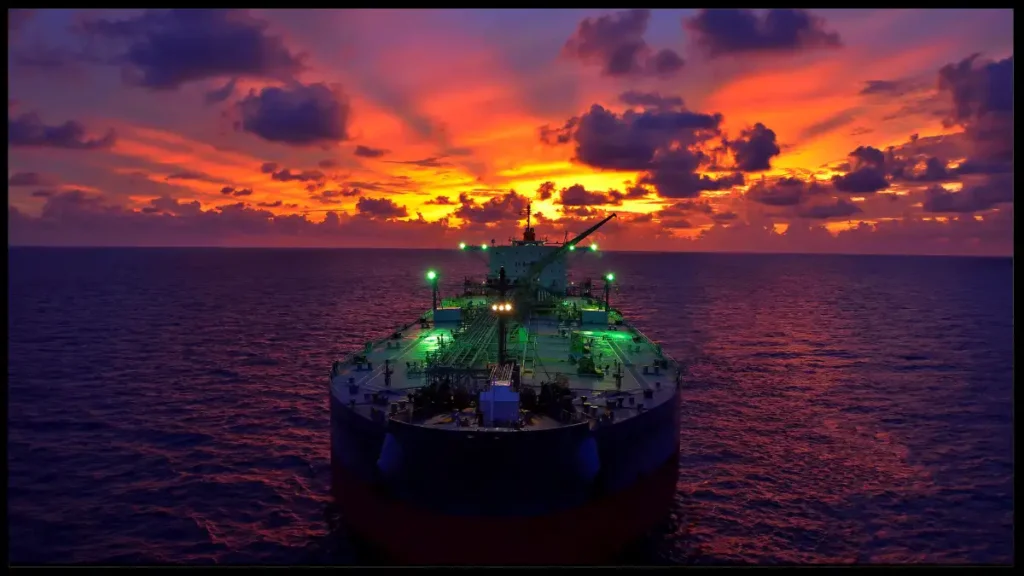
Maran Tankers has moved for four very large crude carriers at Hanwha Ocean. Hanwha’s exchange filing confirms a KRW 757.7 billion contract for four VLCCs with deliveries by November 2028, while trade press attributes the buyer as Maran Tankers at about 129 million dollars per ship. The deal adds late-decade crude capacity and signals that private owners still find newbuild pricing and timing compelling relative to secondhand tonnage.
Maran Tankers Orders Four VLCCs at Hanwha Ocean: Industry Impact
Item
Summary
Business Mechanics
Bottom-Line Effect
Order scope
Four 320,000 dwt VLCCs booked at Hanwha Ocean. Filing lists an unnamed buyer and KRW 757.7b total, trade press links the order to Maran Tankers at about $129m per ship.
Confirms ongoing appetite among large private owners for late-decade crude capacity.
📈 Scale for the buyer, 📉 potential future rate headwind near delivery if demand underperforms.
Delivery window
Hanwha indicates deliveries by Nov 2028.
Slots sit in the late-decade wave alongside other VLCC programs.
📉 Little near-term supply impact, monitor 2028 capacity landing.
Price and yard context
About $129m per VLCC aligns with recent South Korea quotes for top-tier berths.
High yard utilization and long lead times keep tags firm versus secondhand.
📉 Capex heavy until vessels earn, coverage strategy matters.
Fleet strategy signal
Rebuilds late-decade liftings, positions for longer-haul crude trade patterns.
Potential pairing with term business or program cargoes to smooth cash flows.
📈 Option value if tonne-miles stay strong, 📉 exposure if flows normalize lower.
Orderbook impact
Adds to an active VLCC order run in 2025 that includes other owners.
Cumulative deliveries can pressure time-charter and spot if oil demand growth softens.
📉 Medium-term rate dilution risk around the landing window.
Spec and efficiency
Public details on propulsion not disclosed at announcement time.
Modern VLCCs typically deliver higher EEXI and CII headroom versus legacy ships.
📈 Compliance buffer on regulated routes, potential OPEX and fuel-cost benefits.
Counterparty dynamics
More owner-controlled liftings reduce reliance on long charters from third parties.
Contracting approach near delivery influences marketable days and earnings stability.
📈 Stronger negotiating position if covered, 📉 downside if uncovered in a soft patch.
Notes: Hanwha’s filing confirms four VLCCs, total KRW 757.7b, deliveries by Nov 2028. Trade media name Maran Tankers and indicate about $129m per ship. Public spec details were not disclosed. Effects vary by crude flows, refinery runs, and sanction routing.
Delivery landing map
Guidance points to a 2028 delivery window. Exact months to be confirmed; larger newbuild classes often arrive in waves.
Early arrivalsMain waveTail arrivals
Map is directional to frame planning, not a schedule.
Market pulse
Newbuild pricing firmness at top-tier yards
Late-decade supply addition sensitivity
Ability to backstop with multi-year coverage
Higher bars imply more pressure or importance for near-term decisions.
Lane fit and routing cues
Core lanes
Planning cue
AG to Asia
Program cargoes and refinery runs shape coverage; term liftings reduce earnings variance near delivery.
West Africa to Asia
Longer tonne-miles support utilization if flows remain steady; watch security and port readiness.
Atlantic to Europe/Med
Seasonal refinery turnarounds and sanctions routing can swing spot availability.
Quick positives and negatives
Younger VLCCs add compliance headroomScale improves leverage with counterpartiesOption value if tonne-miles stay elevated
Capex burden until vessels earnLanding wave could pressure rates if demand lagsRefi and interest cost sensitivity
Coverage planner
Estimate the day rate needed to cover debt service plus opex (simplified annuity model per ship).
Minimum TCE per day to cover opex + debt service: $0
Illustrative only. Results depend on actual loan terms, spreads, fees, and operating profile.
The order adds fresh VLCC lift late in the decade and reinforces that private owners still see value at today’s yard prices. Rate effects hinge on where demand, sanctions routing, and refinery runs settle when these ships arrive. Owners that line up coverage and keep specs efficient should carry a margin edge, while uncovered tonnage will feel any softness around the landing window most.