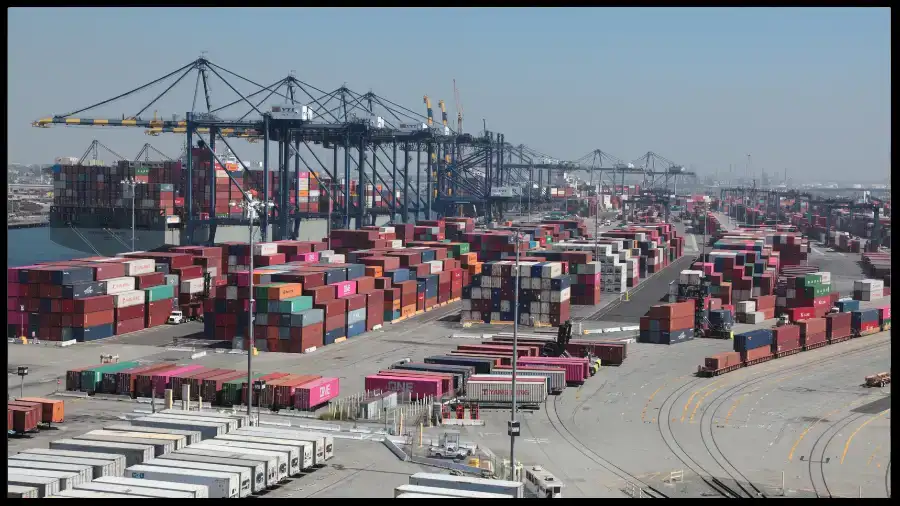
A container fire aboard the ONE Henry Hudson triggered an overnight hazmat response at the Port of Los Angeles, with shelter-in-place orders for San Pedro and Wilmington and partial terminal slowdowns. By the next day, officials moved the ship away from berths to continue firefighting at sea; work restrictions were lifted as the incident was “substantially contained,” and operations resumed across the port complex. Expect some residual delays and box re-handles as yards clear backlogs and verify cargo.
Click here for 30 second summary
Simple Summary in 30 Seconds
A fire aboard the container ship ONE Henry Hudson triggered an emergency response at the Port of Los Angeles. The ship was moved offshore, terminals lifted work restrictions, and operations have resumed. Expect a few days of ripple effects, some re-handles, variable truck turn times, and minor scheduling tweaks before flows fully normalize.
🚢 What happened
On-dock fire response and hazmat posture slowed work briefly. The vessel was relocated to anchorage so fireboats could finish cooling and monitoring without tying up a berth.
💰 Cost & time effect
Extra port stay for affected strings, targeted inspections, and some box re-handles add OPEX. Truck turn times may fluctuate until stacks are re-balanced.
🧭 Market signal
Localized and short-lived if no new incidents occur. Carriers may re-sequence calls; wider network impact is limited unless delays stack across multiple services.
🗓️ Near-term watch
Terminal advisories, extended gate hours, appointment availability, reefers near cut-off, and any insurer or customs holds tied to inspected cargo.
📌 Bottom line: Short, sharp disruption with manageable spillover. Build small schedule buffers and check terminal notices; conditions should improve steadily through the next rotations.
ONE ‘Henry Hudson’ Fire: Industry Impact
Story
Summary
Business Mechanics
Bottom-Line Effect
Fire aboard ONE ‘Henry Hudson’
Electrical fire reported below deck with at least one explosion heard; 23 crew safely evacuated; no injuries reported.
LAFD hazmat response; unified command with port agencies; continuous cooling and monitoring.
📉 Immediate berth-level disruption and safety hold; documentation checks on affected boxes add cycle time.
Shelter-in-place & hazmat zone
Shelter-in-place issued for San Pedro and Wilmington; later lifted as conditions improved.
Air monitoring, exclusion perimeters, and limits on yard activity near the vessel.
📉 Short-term gate/yard inefficiencies; localized labor reassignments and hour losses.
Ship moved away from berths
Vessel relocated offshore so fireboats could continue the attack without tying up quays. Officials later said the fire was “substantially contained.”
Berth reallocation; marine firefighting at anchorage; terminal work restrictions lifted as conditions stabilized.
📈 Berth capacity restored faster; 📉 lingering schedule slippage on services that missed windows.
Terminal status
Officials indicated four of seven container terminals had resumed operations earlier in the response; broader work restrictions were later lifted.
Staggered reopenings; priority moves for reefers, export cut-offs, and dwell reduction.
📈 Gradual normalization; backlog clearing requires extra shifts and crane hours.
Box checks & re-handles
Select containers may need inspection or repositioning; hazmat cargo faces added scrutiny.
Survey, EDI holds, and targeted lifts; coordination with customs and insurers.
📉 Added OPEX per lift; truck turn times can wobble until stacks are re-balanced.
Voyage economics
Missed windows and bunching inflate port stays; some services may slide rotations or blank a call to reset.
Extra tugs/fireboat standby, yard overtime, potential contract penalties for late cut-offs.
📉 Higher port cost per call near term; 📈 manageable if backlogs clear within a few days.
Market read-through
One-off shock rather than systemic risk. Residual congestion is possible if other incidents stack up.
Spot box rates unlikely to shift materially from a single event; reliability takes a short, local hit.
📈 Owners/operators with schedule slack absorb better; thin buffers feel the cost in fuel/overtime.
Notes: Facts reflect public reports by LAFD and local/national media. Officials moved the ship offshore, lifted shelter-in-place orders, and later reported the fire “substantially contained” with work restrictions removed. Terminal resumptions occurred in stages. Impact varies by service, window, and cargo mix.
Operations Recovery Timeline
1) Alarm
Fire detected aboard; hazmat posture, safety cordons, selective terminal slowdowns.
2) Contain
Cooling and monitoring; shelter-in-place advisories near the harbor.
3) Relocate
Vessel shifted offshore so fireboats can work without tying up a berth.
4) Resume
Work restrictions lifted; terminals clear backlogs and re-balance stacks.
Port Impact Meter
Berth capacity
Most berths available again; localized sequencing fixes ongoing.
Yard flow
Backlog clearing; some re-handles on targeted stacks.
Truck turn times
Improving as appointments reset and stacks normalize.
Positive
Rapid tow offshore freed a berthNo reported injuries to crewWork restrictions lifted promptly
Negative
Short-term schedule slippageExtra inspections and re-handlesAdded tug and overtime costs
Stakeholder Snapcards
Carriers
Re-sequence rotations, protect reefers and time-sensitive boxes, price extra port stay where applicable.
Terminals
Focus on yard fluidity and appointment discipline; priority stacks for exports nearing cut-off.
Truckers
Expect variable turn times until stacks stabilize; watch for extra night gates to ease peaks.
BCOs
Check EDI holds and updated last free day. Some deliveries may move 24–48 hours.
Cost / Delay Pocket
What drives it
Owner / Operator effect
Extra port stay
Missed windows and bunching while stacks are re-balanced.
Higher fuel and port OPEX per call; possible downstream blanking.
One-off line items; recoverable only if covered by terms.
Next 72 Hours Watchboard
Terminal advisories on appointment slots and any extended gate hours.
Updated ETAs for services that missed berthing windows.
Customs and insurance notifications tied to inspected cargo.
Truck turn-time metrics and queue snapshots during peak gates.
The incident created a sharp but short shock to the Los Angeles gateway. With work restrictions lifted and the ship offshore, terminals are prioritizing fluidity and appointment control to clear backlogs. The residual impact should fade over coming rotations unless fresh disruptions stack on top of this event.