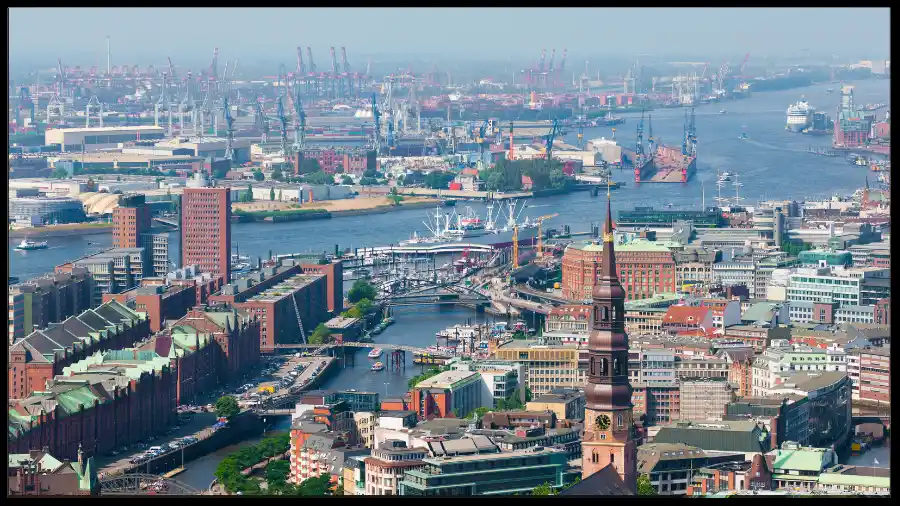
CMA CGM has signed a term sheet to acquire a 20% stake in Eurogate’s Container Terminal Hamburg (CTH), with closing targeted in the first half of 2026 subject to regulatory approvals. The deal aligns with CMA CGM’s push to own more port assets in Europe and would support CTH’s planned Western Extension, adding yard and quay to lift capacity from roughly 4 million TEU toward nearly 6 million TEU and deepen rail links via Eurokombi. The group already calls CTH on its Asia–North Europe loop with LNG-powered megamaxes.
Click here for 30 second summary
Simple Summary in 30 Seconds
CMA CGM plans to buy a 20% stake in Eurogate’s Container Terminal Hamburg. The move ties a key North Europe gateway closer to the carrier and supports a planned expansion of quay, yard and rail capacity. For users, this points to steadier berth windows and stronger inland rail choices over time. For rivals and ad-hoc callers, peak-hour access could tighten once alignment and upgrades take hold. Closing depends on approvals and timing is medium-term.
🧾 What happened
A minority equity deal gives CMA CGM a seat at Hamburg’s CTH alongside Eurogate, subject to approvals and closing milestones.
🏗️ Importance
Closer carrier–terminal alignment can reduce waiting, lift crane productivity and use rail to move more boxes inland reliably.
🚢 Who feels it
CMA CGM services gain schedule control; shippers get more predictable cutoffs and rail slots; other carriers may face tighter prime windows at peaks.
⏳ Risks and timing
Benefits arrive gradually after approvals and build phases. Expansion pace and market conditions will shape the real gains.
📌 Bottom line: A strategic foothold in Hamburg that should smooth turns and strengthen inland reach for CMA CGM-linked flows, with gradual benefits and tighter peak access for non-aligned callers.
CMA CGM 20% move on Eurogate Container Terminal Hamburg: Industry Impact
Point
Summary
Business Mechanics
Bottom-Line Effect
Deal outline
Term sheet signed for a 20% stake in CTH; completion aimed for H1 2026 pending approvals.
Minority equity with strategic partner rights; aligns terminal access with carrier network plans.
📈 Greater schedule control for CMA CGM callers; 📉 potential competitive pressure for rival berth windows.
CTH today
Major Hamburg gateway handling ~4 m TEU annually; served by CMA CGM’s Asia–North Europe loop using 23k TEU LNG dual-fuel ships.
Deep-sea mainline calls and rail connectivity support inland reach across DACH/CEE markets.
📈 Productivity and rail options can trim dwell and trucking; network stickiness for anchor customers rises.
Western Extension
Planned expansion adds ~38 ha yard and ~1,050 m quay, lifting capacity toward ~6 m TEU and modernizing operations.
HPA delivers enabling works; Eurogate invests for terminal upgrades; staged delivery through mid-2030s context.
📈 Longer quay and yard raise ship size headroom and crane productivity; potential unit cost relief if volumes hold.
Intermodal edge
Direct link to Eurokombi, Germany’s largest intermodal terminal, strengthens inland corridors.
High rail share reduces truck dray, improving reliability and emissions profile for box flows.
📈 Better schedule adherence and lower hinterland OPEX for cargo owners and lines using rail.
Competitive landscape
Hamburg ownership is reshaping: COSCO holds 24.99% of CTT; MSC took 49.9% of HHLA in 2024.
Carrier stakes in terminals tighten ecosystem ties and can influence berth priority and pricing strategy.
📉 Independent carriers may face tougher slot negotiations; 📈 integrated players gain logistics leverage.
Strategy fit
Part of CMA CGM’s global terminals push (interests in ~64 terminals) to reinforce Northern Europe hubs.
Equity in key gateways supports service design, reliability and end-to-end logistics with CEVA and inland assets.
📈 Potential margin stability from better port turn times and landed cost control on core trades.
Ops implications
Berth planning and crane windows can be aligned to flagship loops; upgrade path enables next-gen ship handling.
Higher yard density and automation improve moves per hour; rail fluidity reduces queue risk at gates.
📈 Lower schedule variance for users; 📉 risk of crowd-out for ad-hoc calls at peaks.
Risks & timing
Closing depends on consents; expansion benefits phase in with HPA works and Eurogate capex.
Regulatory review, construction timelines and market cycles can shift realized returns.
⚠️ Benefits are medium-term; near-term port operations remain status quo until works progress.
Notes: Public statements indicate a signed term sheet for a 20% stake in CTH, closing targeted H1 2026 subject to approvals, plus Western Extension parameters (~38 ha yard, ~1,050 m quay; capacity lift toward ~6 m TEU) and Eurokombi rail linkage. Context on Hamburg ownership includes COSCO’s 24.99% in CTT and MSC’s 49.9% in HHLA.
Deal snapshot and terminal pulse
Transaction
20% minority stake in CTH (pending approvals)
Timing
Target close in 2026 (H1 guidance)
Role
Strategic port equity for network control
Scope
Participation alongside Eurogate at Hamburg
Berth priority for anchor loops
Rail and hinterland leverage
Capacity runway (expansion)
Regulatory certainty
Bars are qualitative planning gauges based on a minority stake, planned expansion, strong rail links, and standard approval timelines.
Ops levers that matter day to day
Area
What changes for stakeholders
Window discipline
Closer alignment of berth windows to CMA CGM flag loops can reduce waiting and improve crane readiness for those services.
Yard strategy
Modernized yard and equipment can lift moves per hour, smoothing peak stack times and improving dwell predictability.
Rail share
More inland moves via rail lowers truck bottlenecks and can cut landed cost volatility for DACH and CEE corridors.
Peak conflicts
Ad hoc callers may see tighter windows at peaks; planning buffers and earlier prenotes gain value.
Closer carrier–terminal alignmentPotential dwell and turn-time gainsStronger inland reliability via railApproval and build timing riskPossible crowd-out at peak windowsBenefits accrue gradually, not overnight
Stakeholder lens
CMA CGM network
Higher schedule control at a key North Europe hub; room to optimize LNG-capable loops and inland connections.
Other carriers
Service quality remains, but prime windows may be tighter at peaks if anchor loops take priority.
Shippers & forwarders
Potentially steadier cutoffs and rail allocations; lower truck dependence improves reliability for hinterland flows.
Owners & lessors
Better port turns on aligned services support utilization; non-aligned services may need wider buffers in plans.
Timeline snapshot
Term sheet Parties agree headline terms for a 20% stake in CTH.
Approvals Regulatory and partner consents reviewed; operating status quo meanwhile.
Target close First half 2026 close targeted if approvals proceed.
Expansion Terminal improvements and capacity additions phase in over time after close.
CMA CGM’s planned minority stake at Hamburg’s CTH ties a key North Europe gateway closer to one of the largest carriers. The immediate effect is limited while approvals run, but the direction is clear: tighter alignment of berth windows, steadier rail-driven inland moves, and a measured capacity path. For rivals and ad hoc callers, peak-hour access may get tighter, while anchored services should see smoother turns as upgrades come online.