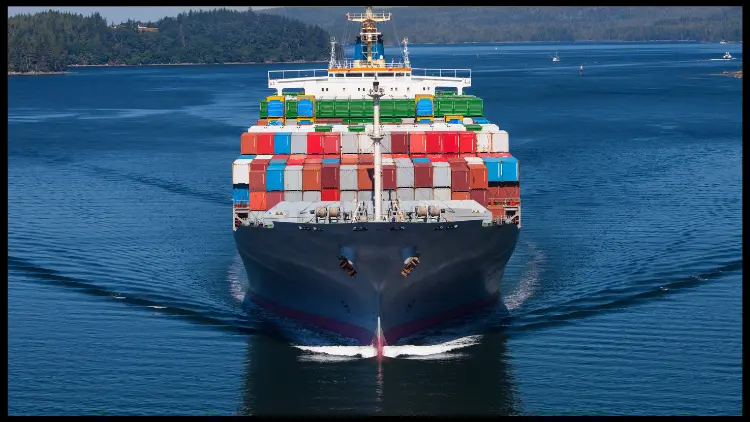
Maersk said global container volumes are rising, and it lifted the lower end of its full-year 2025 profit outlook. Third-quarter results beat expectations on revenue and EBITDA, helped by stronger China-led exports, but average freight rates fell and the company cautioned its ocean unit could post a fourth-quarter loss if rates stay weak. Management also expects Red Sea reroutings to persist, keeping transit times longer even as fuel costs have eased. Investors sold the stock on the warning despite higher volumes.
Click here for 30 second summary
Simple Summary in 30 Seconds
Maersk reported higher liftings and nudged guidance upward, but average freight rates fell and ocean earnings face near term pressure. Red Sea diversions continue to lengthen voyages, tying up capacity even as fuel prices have eased. Shares slipped as the company warned margins could stay tight if rates do not improve.
📈 What changed
Volumes improved and the lower end of full year guidance was raised. At the same time, average rates moved lower and management flagged risk to ocean profitability into the fourth quarter.
⏱️ Cost and time effect
Ongoing Red Sea rerouting adds days to round trips and soaks up capacity. Cheaper bunkers help, but not enough to fully offset weaker revenue per FEU on many lanes.
📊 Market signal
More boxes are moving but at thinner yield. Expect cautious chartering and price discipline while contracts reset and routing constraints persist.
📌 Bottom line: Demand is healing, yet pricing and longer routes are the swing factors. Near term margins look fragile until rate support or faster transits return.
Maersk Signals Container Headwinds Despite Volume Growth: Industry Impact
Item
Summary
Business Mechanics
Bottom-Line Effect
Guidance and demand
Maersk raised the lower end of 2025 EBITDA guidance to about $9–9.5b and now sees global container growth around 4% in 2025. Q3 demand rose 3–5% year on year, led by East Asia exports.
Higher liftings help utilization and terminals throughput even with softer pricing.
📈 Volume tailwind for integrated players and major ports.
Freight rates and Q4 risk
Average freight rates fell sharply in 2025. Management warned the ocean business could post a Q4 loss if rates remain low, and shares fell on the update.
Spot and contract resets dilute revenue per FEU faster than cost cuts can offset.
📉 Pressure on liner margins and on time-charter appetite for third-party owners.
Q3 result versus last year
Q3 EBITDA of about $2.7b and revenue around $14.2b beat forecasts, but EBITDA was down about 44% and revenue down about 10% year on year.
Compares against a higher-rate base period. Operating leverage turns negative when rates slide.
🔁 Sequential improvement, but year-on-year still softer on pricing.
Trade mix signal
Exports from East Asia, especially China, drove volume growth. Imports firmed in Europe, Africa, Latin America and West Central Asia, while North America-bound shipments from China declined.
Lane mix matters for allocation and yield; US-bound softness trims high-value headhaul exposure.
🔁 Neutral to mixed by region for carriers and boxship lessors.
Disruptions and costs
Red Sea diversions are expected to continue. Fuel costs eased, but higher volumes and longer routes keep operating costs elevated.
Cape routings add days and capacity soak; lower bunker prices only partly offset.
📉 Schedule and cost drag while detours persist.
Investor take
Despite higher volumes and a guidance lift, equity reaction was negative on warnings about near-term earnings.
Markets price in weaker ocean margins through Q4 and early 2026.
📉 Higher risk premium for liners; caution for lease renewals.
Segment diversification
Management highlighted integrated logistics and terminals as buffers, but ocean remains the earnings swing factor.
Non-ocean units smooth volatility, yet pricing in mainline trades drives the group outcome.
🔁 Partial cushion, not a full shield, for group profit.
Notes: Data reflect Maersk Q3 2025 disclosures and media coverage on Nov 6–7, 2025. Demand, guidance and region mix per company. Rate declines and Q4 ocean loss risk per Reuters, WSJ and market reports. Effects vary by lane, contract mix and bunker prices.
Combination to watch: higher volumes with weaker yield and longer routes
Lane tension
Indicative pressure on schedules and yield
Asia to Europe
Transpacific
Intra Asia
Bars are qualitative gauges for planning context
Quick scan
Terminal throughput supported by higher volumesLower bunkers soften detour costContract resets can stabilize yield laterSpot and contract rates under pressureCape routings add days and fuelInvestor caution on ocean earnings
What is moving P&L
Average revenue per FEU trending lower on many headhaul lanes
Detours around the Red Sea lengthen round voyages and tie up capacity
Unit cost relief from fuel helps but does not offset rate compression everywhere
Trade mix shifts change yield by region and service
Rate move impact mini calculator
Contracted FEU this quarter
Average rate per FEU (USD)
Expected rate change (%)
Revenue per FEU change
-$112
Total revenue change
-$2,800,000
Simple estimate: FEU × rate × percent change
Maersk’s update leaves the sector on a cautious footing. Liftings are higher, but softer rates and longer routings continue to weigh on ocean earnings into the fourth quarter. The next contract cycle and any change in Red Sea diversions will set the tone for 2026 margins. For cargo interests, pricing relief continues, while schedules remain stretched on key east to west lanes.