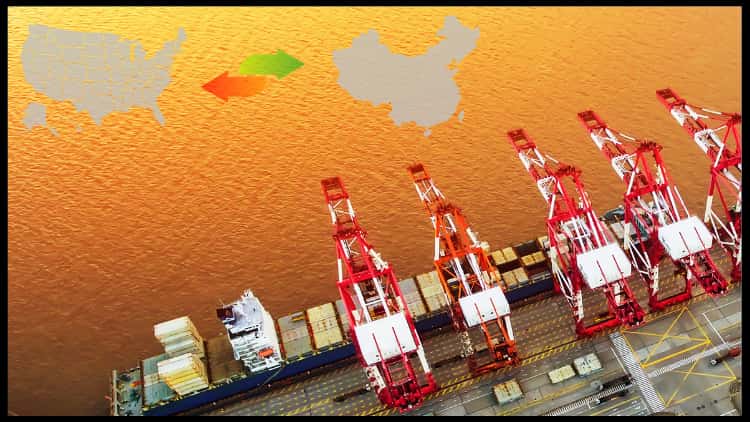
Washington and Beijing are stepping back from a costly fee fight. The United States will suspend for one year, starting November 10, 2025, the Section 301 port entry fees aimed at China and the new 100% tariffs on ship-to-shore cranes and intermodal chassis. China has said it will pause its own retaliatory port fees once the US pause starts. USTR has opened a brief public comment window and says the pause is meant to enable talks. For operators, the near-term effect is cleaner invoices and lower call costs on US-linked routes, with scope details still being clarified.
Click here for 30 second summary
Simple Summary in 30 Seconds
Washington will pause for one year, starting November 10, 2025, the US port fee on China-linked calls and the 100% tariff on ship-to-shore cranes and intermodal chassis. Beijing has said it will pause its own port fees once the US change takes effect. A short public comment step preceded the start. For carriers and terminals the near-term result is lower call costs, fewer invoice disputes, and clearer pricing for planned crane buys.
⏸️ What changed
From November 10, 2025 the US suspends for one year the China-linked port fee and the 100% duties on ship-to-shore cranes and chassis. China says it will pause its own port fees once the US action starts.
⏱️ Cost and time effect
Fee lines drop from PDAs during the window; absorbed fees become direct savings and pass-through surcharges disappear. Terminals can time crane buys with clearer pricing and delivery.
📊 Market signal
The truce lowers near-term friction but is time-limited. Budget for fees to return if no longer settlement is reached.
📌 Bottom line: The pause removes a visible expense and steadies terminal buying plans for a year. The benefit is real but temporary.
US–China Fee Pause: Industry Impact
Issue
Summary
Business Mechanics
Bottom-Line Effect
What changed
US will pause Section 301 port entry fees on China-linked ships for one year from Nov 10, 2025. Tariffs on ship-to-shore cranes and chassis are also paused. China has said it will pause its retaliatory fees when the US pause starts.
USTR announced a short public comment window and signaled negotiations with China under Section 301.
📈 Lower immediate port-call costs and cleaner PDAs for affected operators.
Scope signal
Coverage tied to USTR annexes that defined which ships, operators and equipment were targeted by the fees and tariffs.
Lloyd’s List notes the pause will apply across the annexed ship categories and to Chinese-built cranes and related equipment.
📈 Relief felt by lines using Chinese-built or Chinese-linked ships and by terminals planning crane purchases.
Invoice impact
Fee lines that were added to port-call estimates fall away for the pause period. Some carriers had not passed the charges through, others did.
Cleaner billing reduces disputes. For carriers that absorbed fees, the pause lifts a direct cost. For pass-throughs, shipper costs drop.
📈 Margin relief for some operators; 📈 customer goodwill where surcharges are removed.
Terminals and capex
Pause on crane and chassis tariffs reduces near-term uncertainty for terminal procurement.
Projects on hold may move forward with clearer pricing during the pause window.
📈 Potential acceleration of terminal upgrades and maintenance buys.
Company read-through
Matson told investors it had expected about $20m in fees in Q4 2025 and about $80m a year in 2026–2027 before the pause.
Matson had indicated fees would not be passed to customers, so the pause removes an expense line directly.
📈 Clear P&L tailwind for firms with similar exposure profiles.
Market behavior
Earlier fees pushed some charterers to avoid Chinese-linked ships. The pause eases that constraint.
More flexible vessel selection and routing for US calls during the pause.
🔁 Neutral to slightly positive for fleet utilization as vessel choice widens.
Open questions
Final scope language and any carve-outs remain to be tested in notices and contracts.
Operators still await guidance on edge cases and how any previously assessed fees are treated.
🔁 Some legal and billing ambiguity until administrative notices settle.
Time limit
The suspension is slated for one year with negotiations in parallel.
Policy could shift with talks or if either side restarts fees after the pause.
🔁 Benefit is time-boxed; exposure could return if the truce lapses.
Notes: Start date and one-year term per White House and USTR updates in early November 2025. China signaled a reciprocal pause when the US suspension begins. Scope and annex references per trade press. Matson guidance from investor remarks this week. Effects vary by route mix and prior pass-through policy.
Start
Nov 10, 2025
Term
One year
Scope signal
Pause on China-linked port fees and 100% duties on STS cranes and chassis
Reciprocity
China said it will pause its fees when the U.S. pause starts
Invoice impact quick view
Line item
Before pause
During pause
US port fee (China-linked)
Applied per USTR annex
Removed for one year
China retaliatory fee
Applied to US-linked ships
Paused when US pause starts
Crane and chassis duty
100% tariff planned
Suspended for one year
Notes: Specific coverage follows USTR notices and related annexes. Final scope and any edge cases depend on the published implementing guidance.
Numbers you can use
Comment deadline listed by USTR as Nov 7, 2025 at 5 pm Eastern
Effective window Nov 10, 2025 through Nov 9, 2026 if unchanged
Cranes and chassis duty set at 100% was part of the paused package
Company read-through
Matson signaled about $20m expected in Q4 2025 fees and about $80m per year in 2026 and 2027 before the pause. Removal of fee lines is a direct relief where carriers were not passing costs through.
Positive scan
Lower call costs where fees were absorbed by carriers
Cleaner PDAs and fewer invoice disputes for agents and shippers
Terminal capex planning clearer with crane duty on hold
Negative scan
Relief is time limited and could revert after one year
Contract wording may need updates to reflect paused fee lines
Edge cases may create short term billing ambiguity
Quick math example
If a carrier expected $150,000 in cumulative port fee lines on 3 US calls next month under the prior policy, the pause removes that estimate for the window, improving voyage cash flow by the same amount if those fees were not passed through.
Quick Savings Estimator
US calls during pause window
Fee per call before pause (USD)
Share absorbed by your company (%)
Equipment base value in pause window (USD)
Paused tariff rate on equipment (%)
Share of that purchase occurring in window (%)
Results updated
Voyage fee savings to operator
$0
Calls × fee per call × absorbed share
Tariff avoided on equipment
$0
Base value × tariff rate × purchase share
Estimated total relief in the pause window
$0
Estimates depend on your inputs. Fee lines and tariff scope follow official notices for the pause period.
The fee pause removes a visible cost line on U.S. calls and takes pressure off crane and chassis purchases for a year. It also simplifies invoices and reduces short term disputes while talks continue. The benefit runs with the window and depends on how much exposure each operator or terminal had to the suspended charges.