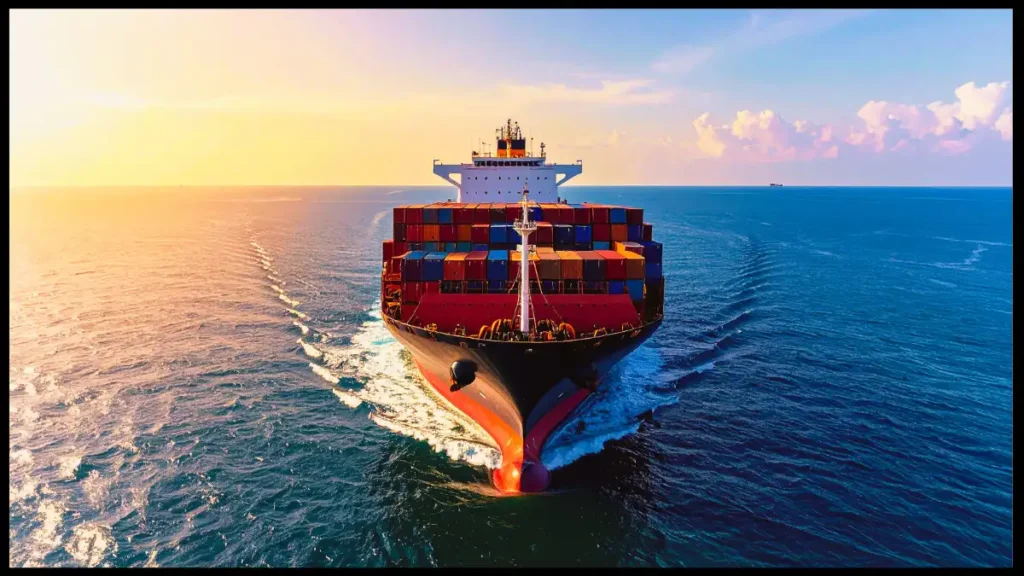
Member states postponed formal adoption of the IMO’s Net-Zero Framework until 2026 after failing to reach consensus this October. The framework pairs a global fuel standard with an emissions pricing mechanism, approved in principle in April 2025, but now pushed back for at least one year. Regional rules like the EU ETS and FuelEU Maritime still proceed on schedule, which keeps compliance costs rising on Europe trades even while global rules wait.
IMO Net-Zero Framework: Adoption Deferred to 2026
Story
Summary
Business Mechanics
Bottom-Line Effect
Adoption delayed to 2026
An extraordinary MEPC session in October ended without adopting the Net-Zero Framework. Talks resume in 2026, pushing the global rulebook at least one year later than planned.
Timeline slip for global fuel standard and pricing mechanism. Entry into force shifts accordingly.
📉 Policy uncertainty for newbuilds and retrofits. 📉 Slower board approvals for green capex.
What the framework includes
The package approved in principle at MEPC 83 pairs a global fuel greenhouse-gas standard with a worldwide emissions pricing mechanism for ships over 5,000 GT.
GHG intensity limits plus a price signal to steer fuel choices and operations.
📈 Once adopted, higher OPEX for fossil-heavy fleets and a premium for efficient or dual-fuel tonnage.
Carbon price decision deferred
The vote on a global carbon price was postponed by one year amid divisions among major economies.
Pricing design unresolved. Credit allocation and revenue use remain open questions.
📉 Investment pause for some alternative fuel offtake and bunkering hubs. 📉 Unclear pass-through to freight rates.
Regional rules march on
EU ETS phase-in and FuelEU Maritime proceed on schedule. Owners calling EU ports face rising carbon and fuel-intensity compliance regardless of IMO timing.
EU ETS surrender: 40% for 2024 emissions, 70% for 2025, 100% from 2026. FuelEU GHG intensity targets start in 2025.
📉 Higher voyage costs on EU trades now. 📈 Commercial edge for lower-intensity fleets in Europe.
Project pipeline at risk
Analysts warn that many ammonia and methanol projects tied to an IMO price signal face delays or downsizing after the 2025 setback.
Fuel producers, ports, and shipowners reassess offtake contracts and timelines.
📉 Slower near-term supply of alternative fuels. 📈 Potential tightness if regional demand grows faster than supply.
Funding for climate-vulnerable states
Expected revenues earmarked for small island and developing states will not materialize until a pricing mechanism is adopted.
Delay in channeling proceeds to transition and resilience programs.
📉 Fewer grants and incentives near term. 📉 Slower uptake of clean tech in early adopter corridors.
Contracts and clauses
With global rules in flux, charter parties lean more on ETS and FuelEU pass-through clauses, with green performance warranties tied to regional regimes.
Allocation of carbon costs, pooling under FuelEU, and bunker quality documentation.
📉 Margin leakage if clauses are weak. 📈 Better TCE protection where cost pass-throughs are clear.
Who gains and who pays
Delay lowers immediate global compliance costs, but widens policy patchwork. Owners optimized for EU rules can still monetize efficiency premiums.
Regional variance in carbon and fuel rules shapes routing and asset values.
📈 Selective rate support for efficient ships on EU routes. 📉 Uncertainty discount for speculative green newbuilds.
Notes: Table summarizes public outcomes and timelines from October 2025 deliberations. Regional compliance details reflect EU sources.
Net-Zero Snapshot
Global rule status
Adoption deferred to 2026. Talks resume next year.
Carbon price decision
One-year postponement. Design still open.
EU ETS phase-in
40% of 2024 by Sep 2025, 70% of 2025 in 2026, 100% from 2027.
FuelEU Maritime targets
2% GHG intensity reduction in 2025 toward 80% by 2050.
Two-Track Compliance Reality
Area
EU trades
Global trades
Carbon cost
EU ETS surrender ramps to 100% of reported emissions from 2027, with 50% coverage on extra-EU legs.
Global carbon price unresolved until at least 2026 adoption.
Fuel intensity rules
FuelEU Maritime starts 2025 at 2% reduction vs 2020 baseline. Increasing in steps to 2050.
IMO fuel GHG standard agreed in principle. Timing to be set after 2026 decision.
Scope
Ships ≥5000 GT calling EU ports. CH4 and N2O join from 2026.
Ships ≥5000 GT under MARPOL Annex VI once adopted. Details under negotiation.
Winners near term
Owners outside EU lanesConventional newbuild slotsEfficiency retrofits with fast payback
Losers near term
Fuel projects banking on IMO pricePorts planning early RFNBO bunkeringSpeculative green newbuilds
Audit trail for bunker data and well-to-wake reporting.
Investment Certainty
Alt-fuel projects
Pipeline faces delays without a global price signal.
Efficiency retrofits
Stronger case on EU routes where costs are immediate.
The slip lowers near-term global compliance pressure but locks in a two-track world. Costs keep climbing on EU routes while the global package is reworked. Owners that keep tightening efficiency and preserve optionality on fuels should be best positioned when the IMO framework finally moves from principle to adoption.