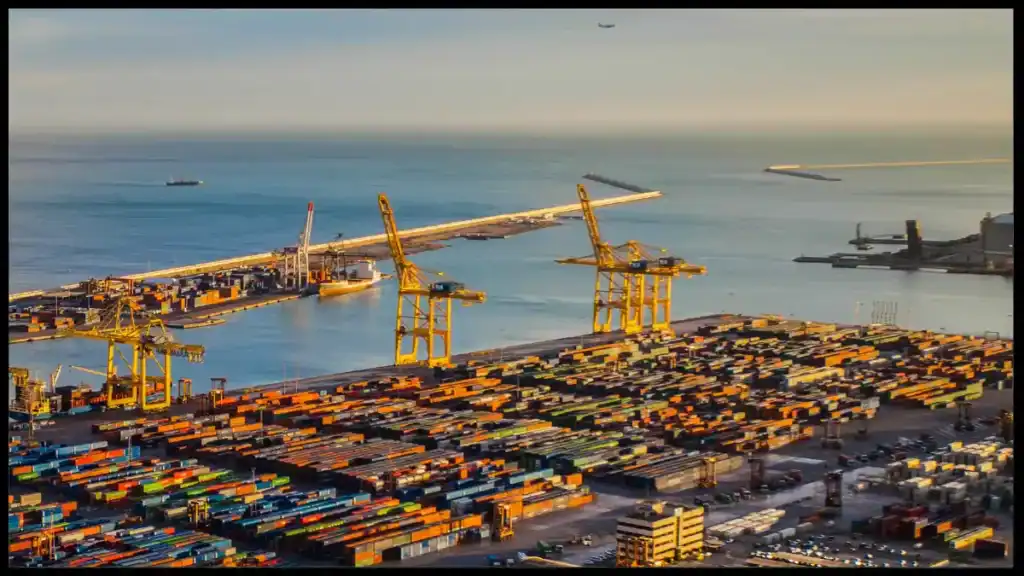
Starting October 14, 2025, U.S. Customs and Border Protection (CBP) will enforce new Section 301 port-entry fees on vessels that are Chinese-owned/operated (Annex I) and on Chinese-built ships (Annex II), with payment due before arrival and the operator responsible for determining liability. CBP says vessels without proof of payment risk denial of lading/unlading or withheld clearance; it “strongly recommends” initiating payment ~3 business days ahead of the call. Annex I begins at $50 per net ton and steps up annually through 2028; analysts estimate per-call exposure can exceed $1M on large boxships.
Heads-up: Policies, fees, and enforcement guidance can change quickly. Confirm current requirements with official CBP notices, carrier advisories, and terminal agents before acting.
US Port Fees on China-Linked Ships: Industry P&L Impact
Story
Impact
Business Mechanics
Bottom-Line Effect
Effective date & operator liability
Fees apply to qualifying vessels calling the US from Oct 14, 2025; the operator must determine and pay.
Set up Pay.gov workflows and internal checklists to assess vessel status (ownership/operation/build) for each call.
📉 New recurring per-call cash outflow; 📈 admin workload to prove determinations.
📈 Revenue protection for carriers if surcharges hold; 📉 higher landed cost for cargo owners.
Network & routing implications
Operators may reassign non-exposed hulls to US services; exposed vessels pivot to other trades.
Model loop redesigns, transshipment shifts, and call reductions where fee impact is heaviest.
↔ Lane capacity mix changes; 📉 possible schedule reshuffles and knock-on costs.
Documentation, audits, & proof
Higher scrutiny on ownership chains, build documentation, and evidence of payment.
Maintain yard certificates, charterparty disclosures, Pay.gov receipts, and agent attestations.
↔ Compliance cost up; 📈 reduces risk of operational holds and penalties.
Time-charters & third-party tonnage
Operators on-hire vessels still bear the fee determination and payment burden.
Embed fee clauses in COAs/charters; ensure counterparties supply build/ownership data.
📉 Unbudgeted charges if terms are silent; 📈 recoverability improves with clear language.
Market ripple & competitiveness
Non-exposed fleets gain a relative cost edge on US legs.
Expect sales outreach around “clean” rotations; watch share shifts on certain trades.
📈 Potential volume gains for exempt operators; 📉 exposed operators face tender headwinds.
Note: Summary reflects CBP guidance and trade reports. Specific fee computations depend on vessel characteristics and the applicable Annex at time of call.
📈 Winners
📉 Losers
Operators with exempt fleets/rotations: relative cost edge on US legs where Annex exposure is zero.
BCOs/NVOs contracted with exempt carriers: fewer fee pass-throughs and lower landed-cost volatility.
Korean/Japanese/European newbuild yards: preference shift toward non-Chinese builds on US services.
Compliance-savvy agents and advisors: demand for liability determinations, documentation, and audit trails.
Banks/insurers with strong KYC frameworks: increased appetite for counterparties with clean ownership/build proofs.
Data providers & registries: higher value for verified build yard, ownership, and operator records.
Ports and terminals with streamlined pre-arrival checks: faster greenlights attract calls from fee-ready operators.
Carriers with flexible fleet assignment: ability to swap in exempt hulls to preserve US loops and yields.
Chinese-owned/operated vessels (Annex I) on US calls: recurring per-call fees and heightened scrutiny.
Chinese-built vessels (Annex II) regardless of operator: broader net of liability; difficult to avoid without reassignment.
Time-charterers lacking pass-through clauses: unbudgeted charges where contracts are silent.
Spot shippers on exposed services: fee recovery surcharges, higher premiums, and routing uncertainties.
Mixed-fleet carriers with heavy Annex exposure: complex rotations, admin overhead, and margin pressure.
Late payers or documentation-light operators: risk of delayed clearance, idle time, and missed berthing windows.
Procurement teams tied to Chinese yard deliveries: long-tail fee exposure on otherwise competitive tonnage.
Trade lanes with few exempt alternatives: reduced competition and higher all-in costs for cargo moving to/from the US.
Annex Finder — What Triggers a Fee?
Annex I
Chinese-owned or Chinese-operated vessels
Applies based on owner/operator status
Operator responsible for determination & payment
Fee due prior to US arrival
Annex II
Chinese-built vessels (yard of build)
Applies even if non-Chinese owned/operated
Build documentation and class records are key
Fee due prior to US arrival
Start date: Oct 14, 2025 · CBP indicates operator liability and pre-arrival payment with proof at the call.
Clarifies who pays and how recovery is applied on US legs
Information covenants
Ensures timely owner/operator/build disclosures
Change-in-law/tariff provisions
Provides a basis for adjustments if the regime evolves
The new fee regime changes voyage math on US calls where Annex I or II applies. The near-term P&L effect comes from pre-arrival cash outlays, tighter documentation workflows, and potential schedule friction if proofs aren’t aligned at the berth. Fleets with clean ownership/build profiles gain a relative edge, while mixed or exposed fleets will look to reassign hulls or pass through costs where market conditions allow.