8 Hull Coatings and Foul Release Systems Shipowners Are Using to Cut Fuel Burn in 2026
April 8, 2026
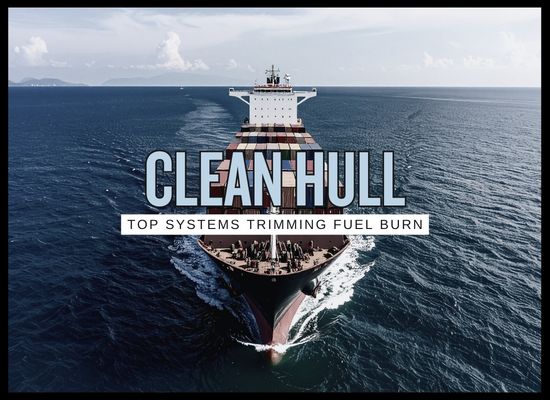
Fuel Burn Decision Report
The coating choice is now a performance system choice
Shipowners are no longer buying just a paint film. They are choosing a hydrodynamic strategy. Some want a premium foul-release surface that sheds slime easily. Others still prefer advanced self-polishing antifoulings with wide trade-pattern flexibility. A growing group now wants integrated coating and grooming compatibility because keeping the hull clean through the full docking cycle is turning into a direct fuel-burn strategy, not only a maintenance preference.
Premium foul release
Fastest growth story
Popular where owners want low friction, low slime pick-up, and a stronger decarbonization narrative.
Advanced antifouling
Still core market
Chosen where trading flexibility, idle tolerance, and proven broad-use behavior matter more than a pure foul-release story.
Integrated grooming
Rising quickly
Owners are increasingly pairing compatible coatings with robotic cleaning or grooming programs to preserve performance.
Big filter
Trade pattern fit
Idle time, route predictability, cleaning access, and docking interval still decide whether a premium system pays back.
Underwater leader board
The products below are the names most visible in today’s owner fuel-efficiency conversation
The most important distinction is not brand first. It is system type first. Owners are generally choosing between premium silicone or fluoropolymer foul-release systems, advanced self-polishing antifoulings built around lower friction and stronger slime control, and newer hard foul-release concepts designed to work with proactive grooming. That is why the same owner may choose one answer for a liner, a different answer for a tanker, and another for a vessel with more idle time or stricter biofouling compliance exposure.
Silicone foul release
Fluoropolymer foul release
Low-friction antifouling
Grooming-compatible
Idle-time sensitivity
Fuel-burn focus
What owners are really buying
Surface smoothness
Lower initial roughness and slower roughness growth over time.
Lower initial roughness and slower roughness growth over time.
Slime control
Because light slime can quietly erode fuel performance long before heavy fouling appears.
Because light slime can quietly erode fuel performance long before heavy fouling appears.
Trade-pattern resilience
How the system behaves through slow steaming, waiting time, warm water, and variable activity.
How the system behaves through slow steaming, waiting time, warm water, and variable activity.
Cleaning compatibility
Whether the coating can be groomed or cleaned without destroying the very efficiency it was supposed to preserve.
Whether the coating can be groomed or cleaned without destroying the very efficiency it was supposed to preserve.
8 coating and foul-release systems drawing the most owner attention
This table is built to be scanned first and then scrolled. It separates the headline selling point from the real owner-use fit.
| # | System | Coating type | Why owners are looking at it | Best fit profile | Main caution |
|---|---|---|---|---|---|
| 1️⃣ |
Hempel Hempaguard
Premium silicone hull coating platform
|
Hybrid silicone foul-release style system | Widely positioned as a fuel-saving premium hull answer for vessels that want low friction plus strong fouling defence across varied conditions. | Owners wanting a proven premium system for mixed trading patterns, including ships that still need solid behavior beyond ideal liner-like activity. | Premium capex needs to be justified against vessel value, docking interval, and the owner’s confidence in measured performance follow-up. |
| 2️⃣ |
AkzoNobel International Intersleek 1100SR
Biocide-free foul-release system with slime release positioning
|
Fluoropolymer foul-release coating | Attracts owners who want a biocide-free premium surface and a strong low-slime performance pitch tied directly to lower drag. | Liners, tankers, and owners leaning into a premium efficiency narrative with a willingness to pay for a very smooth underwater surface. | Best economics still depend on activity level, application quality, and the owner’s ability to preserve the hull condition over time. |
| 3️⃣ |
Jotun SeaQuantum X200
Flagship advanced antifouling
|
High-performance self-polishing antifouling | Draws owners who want verified long-term hull performance without moving fully into a premium silicone foul-release approach. | Deep-sea operators who want a proven mainstream antifouling with strong speed-loss credentials and broad operational familiarity. | It is still a high-end antifouling, not a biocide-free foul-release solution, so the environmental and cleaning story differs from silicone systems. |
| 4️⃣ |
Jotun SeaQuantum Skate with HullSkater
Integrated coating and robotic grooming concept
|
Antifouling plus compatible robotic cleaning system | Owners like the idea of an approved full-system answer that treats performance preservation as an active process, not just a coating purchase. | Fleets that want proactive hull management and have the organizational discipline to run inspection and grooming on schedule. | The value is system execution dependent. A strong coating story will underperform if the owner never follows through with the active management side. |
| 5️⃣ |
PPG SIGMAGLIDE 2390
Biocide-free silicone-based foul release
|
Silicone foul-release coating | Competes hard in the premium efficiency category and is pitched for long-lasting low-friction performance with strong power-saving claims. | Owners prioritizing premium smoothness, a biocide-free narrative, and vessels where hydrodynamic drag reduction can pay for itself. | As with other premium foul-release systems, owner discipline on application quality, hull condition, and operating pattern matters a great deal. |
| 6️⃣ |
CMP SEAFLO NEO CF PREMIUM and newer SEAFLO NEO variants
Ultra-low-friction antifouling family
|
Low-friction self-polishing antifouling | Appeals to owners who want a lower-friction antifouling route rather than jumping straight into a premium foul-release system. | Operators wanting broad-use antifouling economics, fuel-efficiency support, and a familiar antifouling maintenance philosophy. | The upside is often steadier than spectacular, so owners should not model these products like a premium silicone system. |
| 7️⃣ |
Nippon Paint Marine FASTAR and LF-Sea lineage
Nano-domain antifouling and low-friction family
|
Advanced antifouling with low-friction emphasis | Draws owners looking for lower drag, regulated biocide release, and a strong fuel-efficiency message without abandoning antifouling familiarity. | Owners that want an efficient modern antifouling for varied operating conditions and a more gradual step up from conventional systems. | Performance still needs to be judged ship by ship, especially where owners are comparing it against more expensive foul-release alternatives. |
| 8️⃣ |
GIT Coatings XGIT systems
Graphene-based hard foul-release platform
|
Hard foul-release coating designed for proactive cleaning strategies | Gets attention from owners who want a newer non-biocide route built around durability, cleanability, and performance preservation through grooming. | Operators prepared to adopt a proactive hull-management model rather than relying only on passive antifouling behavior. | The system makes most sense when the owner truly intends to manage hull condition actively instead of buying it and forgetting it. |
Owner playbook
The products are different, but the buying logic usually falls into a few repeatable patterns
1️⃣ Premium silicone route
Chosen when drag is the main enemy
This is where Hempaguard and Sigmaglide tend to sit in owner thinking.
Owners usually go this route when they want the strongest low-friction story, a premium decarbonization narrative, and a hull surface designed to stay smoother for longer. It is easiest to justify on ships with meaningful annual fuel bills and enough remaining life to turn coating performance into real money.
Best use case
High fuel spend and premium mindset
Works best when
Fuel cost is large enough that small efficiency gains compound into meaningful savings.
Fuel cost is large enough that small efficiency gains compound into meaningful savings.
Most common mistake
Assuming the premium coating pays off automatically without tracking real hull and fuel performance.
Assuming the premium coating pays off automatically without tracking real hull and fuel performance.
2️⃣ Verified antifouling route
Chosen when owners want performance with familiar operating logic
This is where Jotun SeaQuantum and several advanced antifouling families remain strong.
Many owners still prefer a top-tier antifouling rather than a premium foul-release system because it fits their fleet habits, trade patterns, and maintenance philosophy. The appeal rises when long-term speed-loss behavior is verified and the coating avoids the perceived complexity of a more delicate premium foul-release decision.
Best use case
Broad trade flexibility
Works best when
The owner wants strong mainstream performance with fewer internal objections around operating fit.
The owner wants strong mainstream performance with fewer internal objections around operating fit.
Most common mistake
Underestimating how much slime control and hull monitoring still matter even with a premium antifouling.
Underestimating how much slime control and hull monitoring still matter even with a premium antifouling.
3️⃣ Slime release route
Chosen when microfouling is treated as a major fuel threat
This is a big part of the Intersleek value story.
Some owners are focusing more heavily on slime because light microfouling can quietly raise fuel burn well before crews see dramatic marine growth. This makes low-slime, ultra-smooth premium surfaces attractive where owners want to protect performance between dockings without relying on an aggressive biocidal route.
Best use case
Low-slime performance focus
Works best when
The vessel profile rewards very low roughness and the owner is willing to pay for premium underwater smoothness.
The vessel profile rewards very low roughness and the owner is willing to pay for premium underwater smoothness.
Most common mistake
Buying the story but not preserving the condition through the full operating cycle.
Buying the story but not preserving the condition through the full operating cycle.
4️⃣ Low-friction antifouling route
Chosen when owners want a practical middle path
This is where CMP and Nippon’s advanced antifouling families often fit.
These systems appeal to fleets that want measurable efficiency support and strong antifouling performance without fully stepping into the highest-cost premium foul-release category. They can be especially attractive where owners value fleet standardization and controlled upgrade economics.
Best use case
Balanced performance and capex
Works best when
The owner wants improved hydrodynamics but still values classic antifouling behavior and broader comfort internally.
The owner wants improved hydrodynamics but still values classic antifouling behavior and broader comfort internally.
Most common mistake
Expecting a balanced antifouling to perform like a top-end foul-release coating in every scenario.
Expecting a balanced antifouling to perform like a top-end foul-release coating in every scenario.
5️⃣ Coating plus grooming route
Chosen when owners want fuel performance managed actively
This route is becoming more important as biofouling rules and performance monitoring tighten.
A growing number of owners no longer trust passive performance alone. They want a coating that can live inside a proactive grooming or robotic cleaning regime, because preserving the hull condition over time may matter more than headline new-paint smoothness. This is why integrated and approved system pairings are becoming more commercially interesting.
Best use case
Active hull management fleets
Works best when
The owner has the discipline, vendor access, and data culture to actually run the cleaning strategy.
The owner has the discipline, vendor access, and data culture to actually run the cleaning strategy.
Most common mistake
Buying a grooming-compatible concept but never executing the hull-management plan tightly enough.
Buying a grooming-compatible concept but never executing the hull-management plan tightly enough.
6️⃣ Newer hard foul-release route
Chosen when durability and cleanability are the pitch
This is where graphene-based hard foul-release concepts are getting attention.
Hard foul-release systems are drawing interest from owners who want a non-biocide efficiency platform but also want more comfort around robustness and regular cleaning compatibility. This is less about a passive do-nothing hull and more about preserving a low-friction surface through a deliberate program.
Best use case
Durability plus cleanability
Works best when
The owner views hull efficiency as a continuously managed asset rather than a once-per-drydock decision.
The owner views hull efficiency as a continuously managed asset rather than a once-per-drydock decision.
Most common mistake
Expecting a new-technology coating to compensate for weak follow-through on inspection and cleaning.
Expecting a new-technology coating to compensate for weak follow-through on inspection and cleaning.
Selection filters that matter more than brand marketing
These are the practical questions that decide whether a fuel-saving hull system actually saves fuel
Annual fuel spend
Premium systems make more sense when the vessel burns enough fuel for even small efficiency differences to matter financially.
Premium systems make more sense when the vessel burns enough fuel for even small efficiency differences to matter financially.
Idle time and waiting time
Some vessels have enough inactivity to change how the hull system behaves and how much active management may be needed.
Some vessels have enough inactivity to change how the hull system behaves and how much active management may be needed.
Trade predictability
Predictable liner-like activity and stop-start mixed trading do not always reward the same hull answer.
Predictable liner-like activity and stop-start mixed trading do not always reward the same hull answer.
Cleaning access
Owners who can plan grooming or cleaning more easily have more system choices available.
Owners who can plan grooming or cleaning more easily have more system choices available.
Proof discipline
The best buyers increasingly want ISO 19030-style evidence, trend monitoring, and real fuel-follow-up rather than generic brochure promises.
The best buyers increasingly want ISO 19030-style evidence, trend monitoring, and real fuel-follow-up rather than generic brochure promises.
Biofouling compliance exposure
More ports and jurisdictions are turning clean-hull management into an access and risk topic, not just an efficiency topic.
More ports and jurisdictions are turning clean-hull management into an access and risk topic, not just an efficiency topic.
Interactive owner tool
Hull Coating Fuel Burn Estimator
This tool gives readers a simple way to compare the money side of cleaner hull performance. It is intentionally directional, not a substitute for vessel-specific monitoring.
Vessel assumptions
Estimated annual fuel saved
1,440 t
A simple fuel-tonnage view of the coating effect using the selected savings assumption.
Estimated annual fuel-cost savings
$936,000
Useful for comparing a premium hull system against docking-cycle capex decisions.
Five-year gross savings view
$4.68M
A simple long-cycle view before financing, off-hire, application quality, and condition drift.
At this burn rate, even a mid-single-digit performance improvement can become a meaningful money decision. This is why premium hull systems are being judged less as paint upgrades and more as underwater efficiency assets.
The real differentiator is not only the fresh-paint fuel gain. It is whether the owner can preserve low drag through the whole service interval using the right coating, the right trading fit, and where relevant the right cleaning or grooming plan.
We welcome your feedback, suggestions, corrections, and ideas for enhancements. Please click here to get in touch.