15 Signs Shipping Complexity Is Becoming a Bigger Moat Than Fleet Size
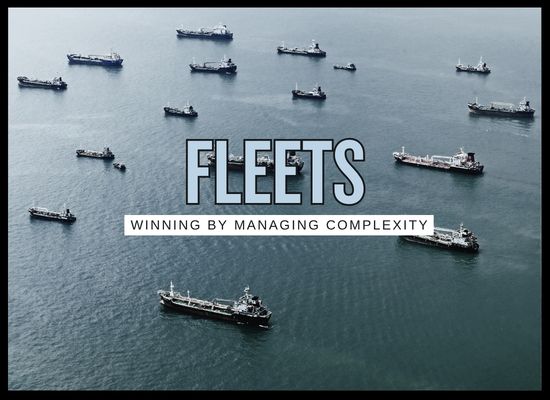
Fleet size still matters, but it is becoming a less complete measure of shipping strength. A growing share of competitive advantage now sits in things that are harder to see from the outside and harder to copy quickly: rerouting discipline, port-call timing, emissions handling, data quality, financing flexibility, contract control, and the ability to keep ships commercially executable when the route on paper no longer matches the voyage in reality. UNCTAD says the average maritime voyage haul rose from 4,831 miles in 2018 to 5,245 miles in 2024 as security concerns reshaped trade patterns, while its 2025 freight-cost work says rerouting increased voyage distances, absorbed vessel demand, delayed frequency and reliability, and raised operating costs. IMO-backed just-in-time work also keeps stressing that ships still waste hours, days, or even weeks waiting outside ports, which means the operator that can manage complexity better can often create more value than the operator that simply owns more tonnage.
| # | Sign | Points to a moat | How it shows up commercially | Larger fleets often still get wrong | Alternatives | Impact tags |
|---|---|---|---|---|---|---|
| 1 |
Route management is now a profit center, not just an operating function
Longer voyages make better decisions worth more.
|
When average haul length rises and rerouting absorbs more vessel time, the operator that can consistently choose the better route, speed profile, and fallback option is creating value that does not depend on owning the most ships. | Better route choices show up in lower fuel burn, stronger schedule integrity, cleaner substitute-port logic, and more disciplined use of scarce vessel days. | A large fleet can still underperform if route decisions are slow, siloed, or based on static plans while the operating picture changes daily. | Stronger operators treat routing as a live commercial decision with faster escalation, clearer fallback playbooks, and tighter connection between weather, risk, fuel, and charter exposure. | Routing Fuel discipline Execution moat |
| 2 |
Port-call timing quality is now a serious competitive weapon
Waiting outside port destroys more value when voyages are already longer.
|
IMO-backed just-in-time guidance keeps stressing that ships still spend hours, days, or even weeks waiting outside ports. In that world, the operator with cleaner ETA discipline and better berth-readiness coordination can outperform a larger rival that still sails fast and then waits. | The payoff shows up through lower idle-time cost, lower fuel waste, reduced emissions, stronger service reliability, and fewer rolled cargo or missed-window problems. | More ships do not fix poor synchronization between chartering, voyage management, terminals, and agents. Bigger networks can even hide the waste longer. | Better operators push hard on arrival discipline, live port-call data, and actual decision rights around slowing down rather than preserving the illusion of punctuality. | JIT arrival Port data Delay control |
| 3 |
Data quality is becoming a harder moat than raw tonnage
The ship on the water is only as good as the data around it.
|
As routing, timing, emissions, insurance, and financing all become more data-sensitive, clean operational data becomes harder to copy than vessel ownership itself. UNCTAD and IMO-linked work both point to the growing role of port and fleet performance indicators and better time-stamp discipline. | Good data shows up as faster exception handling, fewer duplicate service bookings, cleaner claims defense, better bunker decisions, and stronger KPI-linked financing or commercial reporting. | Larger fleets often carry more fragmented systems, more manual overrides, and more inconsistent event data than smaller operators assume. | Better operators are closing the gap between actual ship events, port-call information, commercial decisions, and post-voyage learning instead of letting each sit in a separate system. | Data quality KPIs Operational memory |
| 4 |
Emissions and compliance handling is now commercially differentiating operators
EU ETS and FuelEU make inefficient execution more visible in money terms.
|
Once route inefficiency and delay widen fuel burn on EU-linked trades, compliance cost becomes more operational and less theoretical. The operator that can model and manage ETS and FuelEU implications better is building a capability moat, not just a reporting function. | This shows up in route selection, bunker choice, charterparty recovery, better voyage economics, and a stronger ability to explain costs to cargo owners or lenders. | Larger fleets can still underperform if compliance sits in a reporting silo instead of influencing live route and fuel decisions. | Stronger operators are pricing carbon and fuel-compliance drag inside everyday voyage choices rather than waiting for the compliance team to explain the damage later. | EU ETS FuelEU Carbon economics |
| 5 |
Insurance navigation is becoming a moat of its own
Cover logic can now decide whether a voyage is executable.
|
In stressed corridors, the operator that manages notices, insurer comfort, routing documentation, and war-risk allocation more cleanly has an advantage that scale alone cannot buy quickly. | The gain appears in fewer failed fixtures, faster voyage approvals, cleaner premium recovery, and less time lost between “possible” and “actually insurable.” | Big fleets can still trip over insurance timing, documentation gaps, or poor charter wording if operating and legal teams are not tightly aligned. | Better operators keep clean written rationale, pre-negotiate cost allocation where possible, and treat insurability as a live operating variable rather than a back-office box. | War risk Documentation Cover timing |
| 6 |
Crew continuity and relief execution are starting to separate stronger operators from weaker ones
Human reliability is turning into a structural moat.
|
As route stress, disruption, and uncertainty rise, the operator that can keep crews supported, rotated, and willing to stay becomes harder to copy than one simply adding ships. | The commercial payoff appears through better retention, fewer operational errors, stronger safety culture, lower disruption from relief failures, and cleaner execution in stressful corridors. | Larger fleets often assume crewing scale solves crewing resilience, but crewing resilience depends more on support quality, planning discipline, and reputation than headcount alone. | Stronger operators are treating welfare, relief planning, and family communication as operating controls rather than soft extras. | Crew resilience Relief planning Human moat |
| 7 |
Contract execution is becoming more valuable than raw charter coverage
A good fixture can still lose money if the contract chain is weak.
|
In a more volatile routing and cost environment, the operator with stronger war clauses, off-hire handling, notice discipline, and cost-recovery logic holds a moat that does not show up on a fleet list. | This shows up as better cost pass-through, fewer expensive disputes, cleaner rerouting rights, and stronger commercial control when a voyage deteriorates. | Large owners and operators still leave money behind when legal, chartering, and operations teams are not aligned on how the contract behaves under stress. | Stronger operators are designing for enforceability, documenting decisions live, and managing contracts as operational tools rather than only as legal paperwork. | Charterparty Cost recovery Legal execution |
| 8 |
Financing flexibility is now a bigger moat than more steel
Capital structure is becoming part of operating strength.
|
With bank lending recovering only selectively and non-bank finance still influential, the operator with cleaner refinancing options, better lender comfort, and stronger transition-readiness can often move faster and safer than a larger but more rigid fleet owner. | The benefit shows up in acquisition timing, refinance optionality, lower funding friction, and more ability to absorb shock without being forced into bad commercial choices. | Bigger fleets with rigid leases, expensive capital, or weaker transition stories can become less agile precisely when agility matters most. | Better operators are managing refinancing paths, climate-linked financeability, and structure flexibility as competitive tools rather than only treasury topics. | Refinancing Capital flexibility Finance moat |
| 9 |
Service-cluster access is becoming more valuable than simple port access
The useful port is increasingly the port plus everything around it.
|
UNCTAD’s recent work on rerouting highlights that operators seek deep-water ports along alternative routes that offer additional services. That means access to repair, bunkering, husbandry, logistics, and inland connectivity is becoming part of the moat. | This advantage appears through faster recovery from disruption, cleaner substitute-port decisions, better spares and stores handling, and lower cost of keeping the voyage commercially intact. | A larger fleet can still be trapped by weaker service geography if it lacks access to the right support clusters along rerouted or stressed corridors. | Stronger operators cultivate port and service-cluster relationships, not just berth access, and treat those ecosystems as part of their real network strength. | Service clusters Port strategy Network depth |
| 10 |
Operational memory is now a moat
The operator that learns faster compounds advantage faster.
|
In a market shaped by repeated disruption, the ability to remember which ports overrun, which agents add leakage, which clauses fail, and which routing calls actually saved money is turning into a durable edge. | This shows up through better repeat-port economics, cleaner future PDAs and FDAs, better routing playbooks, and less reinvention every time a similar problem returns. | Big organizations often have more experience but weaker retrieval of that experience because knowledge stays trapped in teams, inboxes, or individual memory. | Better operators are turning past voyages into reusable commercial and operational playbooks instead of letting lessons die after the voyage closes. | Learning loop Repeat advantage Institutional memory |
| 11 |
Complexity handling is starting to preserve margin better than extra capacity
Not all earnings quality comes from fleet scale anymore.
|
When longer routes absorb effective capacity, a fleet owner can look large and still leak margin badly through poor delay decisions, weak bunker logic, and bad substitute-port economics. The better moat is often cleaner margin retention under stress. | This appears in stronger TCE preservation, fewer unpriced overruns, cleaner premium recovery, and lower cost creep on voyages that still complete under disruption. | Bigger fleets can mistake rate opportunity for profitability while losing too much in the execution layer underneath. | Better operators calculate the full voyage stack earlier and do not confuse nominal freight strength with actual commercial quality. | Margin retention TCE quality Cost control |
| 12 |
Transition-readiness is becoming a moat because uncertainty itself now has value
Fuel and regulatory uncertainty favor flexible operators.
|
DNV has been clear that fleet readiness is moving ahead of fuel supply. That means the operator that can finance, retrofit, document, and commercially position vessels through uncertain transition pathways is building a harder moat than one simply adding more conventional capacity. | The commercial impact appears through stronger financeability, better charterer confidence, more resilient residual-value stories, and lower risk of being cornered by faster-than-expected rule tightening. | Larger fleets with weaker transition narratives may look powerful in tonnage terms while becoming less attractive in financing or chartering terms. | Better operators are focusing on flexibility, measured readiness, and realistic transition planning instead of vague future-proofing language. | Transition readiness Financeability Residual value |
| 13 |
Smaller specialist operators are competing above their weight more often
Complexity tends to reward focus.
|
As data, contracts, corridor choices, and port execution become more important, well-run specialists can outperform broader fleets in certain lanes because they understand the complexity stack better. | The gain shows up in better customer communication, more disciplined route economics, tighter port execution, and faster adaptation when the market changes. | Larger fleets can assume specialization is a scale disadvantage when, in many stressed niches, specialization actually reduces complexity leakage. | Better specialists are monetizing clarity, not just capacity, and customers often reward that when disruption makes predictability scarce. | Specialization Focused execution Niche moat |
| 14 |
Customer-facing predictability is getting more valuable than nominal transit time
Shippers increasingly pay for reliability, not just advertised speed.
|
UNCTAD’s freight-cost work highlights reliability damage from rerouting. When that happens, the operator that can give customers a more believable service promise gains an advantage that is hard for a larger but less predictable rival to neutralize. | This shows up through stronger customer retention, less claim friction, better premium justification, and more room to price reliability as a service. | Large networks can still disappoint customers if published schedules and real operating behavior keep diverging. | Better operators are selling and managing to realistic promises, building buffers intelligently, and treating credibility itself as a commercial asset. | Reliability Customer trust Service moat |
| 15 |
The best operators are increasingly acting like systems managers, not ship owners
That may be the clearest sign the moat has moved.
|
The strongest edge now often lies in coordinating ships, ports, routes, data, contracts, crews, finance, compliance, and service clusters as one system. That systems capability is much harder to replicate quickly than fleet count. | Commercially, it appears as lower friction, better cost control, cleaner recovery from disruption, and stronger capital and customer confidence in the operator’s ability to keep trading under pressure. | Bigger fleets can still be run as disconnected asset pools, which leaves a lot of their potential stranded in operational silos. | Better operators are integrating commercial, operational, legal, port, finance, and compliance logic tightly enough that complexity starts compounding in their favor rather than against them. | Systems moat Cross-functional control Hard to copy |
| Capability lane | Current strength | Importance | What improves the moat fastest |
|---|---|---|---|
| Route and voyage control | Reviewing | Longer routes and more disruption increase the value of better decisions. | Faster reroute logic and cleaner fuel timing. |
This scorecard is most useful when readers want to test a management claim like “scale matters most” against what the current market is actually rewarding. The strongest operators now tend to win by turning complexity into repeatable control, not only by owning more steel.
We welcome your feedback, suggestions, corrections, and ideas for enhancements. Please click here to get in touch.