12 Unseen Costs in Maritime Logistics That Are Quietly Growing
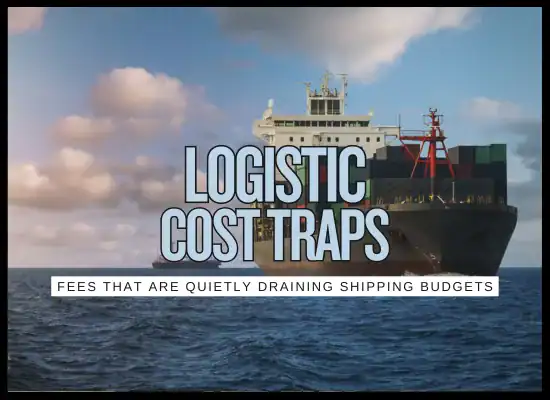
Global maritime logistics has always run on a complex mix of visible and hidden expenses, but in 2025, the balance is shifting. While fuel prices and freight rates dominate headlines, a growing number of less obvious costs are quietly chipping away at profitability across the supply chain. From surprise surcharges at ports to compliance fees tied to new carbon regulations, shipowners and cargo operators are facing a wave of creeping expenses that weren’t on the radar just a few years ago.
In this report, we unpack twelve of the most significant hidden costs now emerging across global shipping routes, ports, and intermodal connections. These aren’t just minor annoyances, they’re reshaping operational budgets and forcing a rethinking of logistics strategy in real time.
Let’s break them down.

We welcome your feedback, suggestions, corrections, and ideas for enhancements. Please click here to get in touch.
- Post-pandemic trade patterns remain uneven, especially on backhaul legs.
- Carriers incur high costs to relocate empties to high-demand regions like Southeast Asia.
- Surge in North American exports is constrained by limited container availability inland.
- Shippers report repositioning fees of $300–$800 per container on certain routes.
- 2025 container leasing rates have jumped 20% due to surging equipment demand in India and Vietnam.
- New surcharges include “container imbalance recovery fees” tacked on without prior notice.
- Negotiate transparency clauses in contracts to identify hidden repositioning charges.
- Use near-real-time equipment availability data to avoid peak fee windows.
- Consider alternative ports or carriers with balanced flows for backhaul cargo.
- Free time windows have shrunk, especially in congested ports with limited operational capacity.
- Delays from customs inspections, paperwork errors, labor shortages or terminal slot shortages are more frequent.
- Many carriers now enforce penalties more strictly, with minimal notifications before charges begin.
- Typical demurrage charges range from about $75 to $300 per container per day, depending on port and carrier.
- Detention fees often fall between $75 and $100 per container per day once free time expires.
- A recent industry benchmark reported that charges have risen by over 100% compared to pre‑pandemic levels in some markets. The U.S. remains among the most expensive ports globally.
- Negotiate longer free time clauses or transparent penalty caps in contracts.
- Track container movements proactively using real‑time visibility platforms to flag potential late pickups or returns.
- Audit invoices carefully, dispute if timestamp data (like arrival or gate‑out times) are incorrect or misaligned.
- Average fuel costs for very low‑sulphur fuel oil (VLSFO) surged to around $440–$494 per ton by May 2025.
- BAF tariffs were officially updated effective July 1, 2025, after carriers tracked rising bunker price averages since February.
- When carrier margins were threatened, emergency bunker surcharges (EBS) were added on top of standard BAF across key trades.
- BAF charges increased by $150–$400 per container, depending on trade lane and container size.
- EBS was imposed by major carriers (Maersk, MSC, CMA CGM) on selected routes starting June, with delayed implementation on FMC‑regulated U.S. lanes effective July.
- Shippers in Europe and Asia complained and regulatory bodies, including the European Shippers’ Council and EU Commission, began pressing for greater transparency on EBS mechanics.
- Negotiate BAF ceilings or fixed-rate clauses in long‑term contracts to limit volatility exposure.
- Request clear documentation of BAF and EBS methodology during rate discussions.
- Monitor fuel indices and engage with carriers proactively before effective dates to anticipate cost changes.
- Repeated Houthi strikes on commercial vessels have spiked risk levels in critical chokepoints like Bab el‑Mandeb.
- U.S.‑led naval and air operations (Operation Prosperity Guardian, Aspides) signal persistent instability in the region.
- Insurance pricing is highly dynamic, shifting weekly based on flare‑ups between Iran and Israel. Insurers now charge 0.05%–1.0% of vessel or cargo value depending on region.
- For a typical Red Sea transit, war risk surcharges of $100 per 20′ container and $200 per 40′ container are now standard.
- Hull and machinery premiums have jumped by up to 60% for transits through the Gulf of Aden or Hormuz.
- Cargo insurance premiums have risen 15%–30%, with additional war risk loading at 0.10%–0.15% of cargo value on routes via the Red Sea.
- Prevent surprises by requesting detailed breakdowns of war risk surcharge methodology from carriers.
- Consider alternate routing—even if longer—to reduce exposure to surge premiums.
- Negotiate contract terms that clarify premium responsibilities and cap sudden spike effects.
- Panama Canal’s new Long-Term Slot Allocation (LoTSA) system launched in January 2025 imposes reservation fees and auction-based surcharges.
- Freshwater shortages forced transit caps during drought seasons in 2023–24, reducing daily crossings and elevating pricing.
- Suez Canal surcharges and risk premiums rose as carriers reverted to it after Red Sea re‑entry, reinstating premium routing charges.
- Panama Canal slot reservation surcharges now range from $40 per TEU for Asia‑US East/Gulf trades, up to $150–$400 per container for Latin America routes.
- Slot auction bids for Panamax and Neopanamax locks have reached as high as $100,000–$220,000 depending on vessel size and urgency.
- Panama transit fees have increased 30 %+ in some vessel classes since May 2023, with tolls ranging $200,000–$500,000 per transit for larger ships.
- Secure long‑term slot agreements where possible to cap surcharges or avoid auctions.
- Track canal water level forecasts and booking trends to anticipate peak surcharge windows.
- Explore alternative routing via Cape of Good Hope or Panama‑adjacent logistic hubs if slots are tight or auction costs spike.
- Escalating U.S.–China tariff tensions have distorted demand and caused carriers to collapse sailings on trans-Pacific and Asia–Europe routes.
- Overcapacity and trade unpredictability make it financially rational for carriers to withdraw service loops, preserving rate structures.
- Port congestion and shifting cargo flows amplify network fragility, making last-minute cancellations more frequent.
- Scheduled capacity on Asia–North America West Coast fell by roughly 12 % over six weeks; East Coast capacity fell by 14 % as of mid‑April 2025.
- Blanked capacity jumped from ~60,000 TEUs to 368,000 TEUs within a few weeks on critical lanes.
- Cancellation rates spiked to 24 % of planned Trans-Pacific voyages, leading to extended port delays up to 7–10 days and inflated costs for port warehousing and demurrage.
- Ports like Los Angeles and Long Beach faced major congestion, leading to drastic rises in nearby warehouse rental costs (up 30 % in a month).
- Select carriers or service alliances with better schedule reliability records and fewer blank sailings.
- Plan shipments with flexible buffers, especially during periods prone to tariff-driven volatility.
- Use real-time visibility tools to track service cancellations early and rebook cargo proactively.
- Incorporate contractual flexibility or buffer allowances in routing agreements to mitigate rebooking expenses.
- As of January 2024, the EU ETS applies to large vessels (≥ 5,000 GT) calling at EU ports, charging fees on CO₂ emissions from voyages partially or fully within the EU.
- The IMO approved a Net-Zero Framework in April 2025, launching the world’s first global carbon pricing for shipping, with penalties starting in 2028 at approximately $100/tCO₂ equivalent for non‑compliance.
- FuelEU Maritime rules mandate emissions reduction thresholds in EU ports, with penalties and premium fuel standards now in effect.
- Charterers in Europe are seeing surcharges between €45 and €75 per tonne of CO₂ emitted on applicable routes.
- Compliance costs for a 3,000 TEU Panamax containership are estimated at $2.5 million in 2025, rising steeply in coming years unless low-carbon fuel adoption accelerates.
- An IMO-agreed global carbon levy of $100/tCO₂eq will apply from 2028 for ships failing to meet specified emissions intensity bands.
- Negotiate contractual clauses that allocate carbon cost responsibilities clearly between charterer, carrier, and consignor.
- Invest in lower-carbon fuel options or technology (e‑methanol, ammonia, wind‑assisted propulsion) to reduce payable emissions allowances.
- Join emissions pooling schemes or surplus-unit programs to ease exposure to penalty pricing under EU ETS and IMO frameworks.
- Major cyberattacks on U.S. ports—like the 2024 Port of Seattle incident—triggered disruption, data breaches, and massive response expenses.
- The U.S. Coast Guard’s final rule (effective July 16, 2025) mandates Cybersecurity Plans, designated Cyber Officers, and incident response systems on U.S‐flagged vessels and port facilities.
- Industry surveys show widespread underinvestment, leaving rapid regulatory catch-up costs and cyber-insurance claims looming in 2025.
- Average cost of a maritime cyber incident now is around **$550,000**, with ransom demands averaging over **$3 million**.
- The maritime cyber market is expanding fast, with operators spending six-figure sums annually on audits, compliance training, penetration tests, and endpoint security.
- Smaller terminals and operators face regulation‑driven compliance costs—new cybersecurity staffing, reporting tools, third-party audits, and technology upgrades—all squeezing margins.
- Conduct a cybersecurity risk assessment and develop a formal Cybersecurity Plan as required—align it with U.S. Coast Guard rules if applicable.
- Designate or train a Cybersecurity Officer, and commit to regular audits, phishing simulations, and tabletop incident drills.
- Implement layered defenses: MFA, network segmentation, OT/IT separation at terminals, and secure credential management.
- Budget for cyber-insurance, incident recovery drills, regulatory reporting workflows and compliance training to avoid disruptive post-breach costs.
- Uneven distribution and long dwell times tie up chassis at inland facilities and terminals.
- Tariffs on imported chassis (especially from China) since 2018 elevated equipment prices and slowed manufacturing.
- Demand surges from the U.S. West Coast through summer peak season put renewed strain on chassis availability.
- Chassis and drayage premiums now common at ports like Los Angeles/Long Beach, with waitlists across chassis pools stretching months.
- Lost productivity and increased dwell times contribute to docks being unable to clear containers quickly—leading to related demurrage or detention claims.
- Chassis purchase prices nearly doubled from $10k–$12k in 2019 to $19k–$21k by early 2025, inflating leasing rates accordingly.
- Secure chassis directly via term leases or proprietary pools to reduce exposure to shared-pool scarcity.
- Coordinate with carriers and terminals to minimize chassis dwell—use drop-off protocols and enforce return timelines.
- Build contractual flexibility to shift between rail, truckload, or transloading options when chassis capacity tightens.
- Monitor chassis pool waitlists and plan shipments proactively when capacity constraints are projected.
- Stricter visa screening, staggered flights, and health testing requirements at disembarkation ports.
- Crew rotations mismatched to port call schedules require repositioning flights or hotel quarantines.
- Logistics providers absorb additional costs for emergency charter flights or last‑minute rerouting.
- Airfare for emergency crew replacement often ranges between $1,200 and $2,500 per person per flight.
- Quarantine hotel stays add $100–$250 per night per crew member depending on location.
- Delays can cost operators 6–10 hours per crew change event, which translates into demurrage risk or operational downtime.
- Coordinate crew change planning well in advance and build buffer days into voyage schedules.
- Use specialized maritime crew logistics services that handle visas, testing and charter operations efficiently.
- Consider changeover hubs with fewer protocol requirements to avoid high-cost ports during rotation windows.
- Negotiate with charters to cap emergency crew change expenses in charterparty or voyage contracts.
- Logistics data API usage is now widely monetized, especially for real-time visibility, rate shopping, tracking, or port congestion data.
- Legacy systems migrating to SaaS models introduce tiered pricing for advanced API access and dashboards.
- Many platforms charge per API call or usage band rather than just per-user or license, pushing up costs in high-volume operations.
- Monthly platform subscription fees now range from $500 to $2,000 for basic access, and tiered volume pricing applies beyond that.
- Providers may charge up to $0.01–$0.05 per API call, with average mid-sized forwarders paying several thousand dollars monthly.
- Integration projects can incur initial setup fees of $10,000–$50,000, plus recurring maintenance or data licensing costs.
- Negotiate clear API usage caps and pricing tiers in contracts to avoid unexpected overage charges.
- Opt for flat-rate or bundled subscription packages where predictable volume is achievable.
- Audit your usage logs regularly, and reroute or throttle data calls to stay within plan limits.
- Use multi-platform dashboards sparingly or switch to callback/webhook models when high-frequency polling is costly.
- Warehouse providers now enforce minimum monthly activity thresholds, charging idle fees when volume falls below those levels.
- Penalty surcharges apply for long-tail goods and slow-moving inventory, especially when exceeded free storage windows.
- Inbound truck surcharges and appointment fees have become more common, particularly at high-density logistics hubs.
- Idle pallet charges range from $5 to $10 per pallet per month, adding up quickly for large volumes.
- Inbound appointment fees often cost between $25 and $75 per truck, while lift-gate or expedited handling surcharges add further costs.
- Slow-moving stock exceeding free storage windows can incur penalties up to 3%–5% of inventory value per month.
- Negotiate clear free-storage periods and idle fee triggers in warehousing contracts.
- Use demand forecasting and inventory rotation to prevent slow-moving inventory dwell spikes.
- Audit inbound logistics charges like appointment or lift fees and consolidate delivery windows where possible.
- Leverage multi-client warehousing deals or shared-use scenarios to dilute individual idle cost exposure.
As global shipping enters a new era of unpredictability, these hidden and quietly rising costs are no longer background noise, they’re becoming core factors that can make or break a supply chain strategy. From carbon compliance to API access, from war risk to warehouse dwell time, the logistics playbook is evolving fast.
Shipowners, forwarders, and cargo operators who treat these fees as “minor” or “temporary” are missing the deeper shift: cost volatility is now structural, not seasonal. The winners in 2025 will be those who bake transparency, foresight, and contract agility into every leg of their supply chain.
Stay alert. Stay flexible. And never underestimate the cost of what you don’t see coming.