10 Crew Welfare Moves That Matter Most When Seafarers Are Stuck in a Conflict Zone
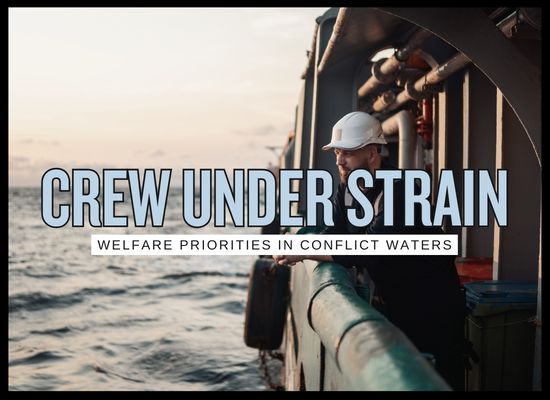
Crew welfare stops being a side issue very quickly when crews cannot rotate, cannot repatriate, and cannot trust that the next call will make things easier. In a conflict zone, fatigue, stress, family pressure, documentation delays, and uncertainty about safe transit all start compounding at the same time. That is why current seafarer guidance puts much more weight on practical protections than on slogans: rapid incident reporting, clear repatriation responsibility, access to mental health support, financial security under the Maritime Labour Convention, and stronger onboard communication and welfare routines when a voyage is prolonged by conflict or operational paralysis. The point is no longer just to keep the ship moving. It is to keep the crew functioning, informed, paid, and protected while the ship is stuck in a risk environment it did not choose.
| # | Welfare move | Current Importance | How failure shows up on board | Operator Alternatives | Teams should watch | Impact tags |
|---|---|---|---|---|---|---|
| 1 |
Build a repatriation and relief plan before the crew reaches the breaking point
Relief planning matters more when conflict disruption makes routine rotation assumptions unreliable.
|
In a conflict zone, the normal crew-change chain can fail in several places at once: airport closures, visa delays, insurer restrictions, port constraints, security concerns, or sudden routing changes. Once that happens, a crew issue quickly becomes a fatigue, retention, and compliance problem rather than a simple HR inconvenience. | Extended tours, rising agitation about relief dates, distraction on watch, increased tension between officers and ratings, and a bridge or engine room that starts absorbing uncertainty as a daily mental burden. | They pre-map alternate relief ports and transit corridors, identify documentation bottlenecks early, keep families updated, and treat failed rotation as a contingency that requires escalation, not just delay. | Over-contract service days, relief slippage by rank, missed travel windows, and number of unresolved repatriation blockers per vessel. | Repatriation Fatigue Retention |
| 2 |
Protect wages, allotments, and immediate cash support
Financial uncertainty hits morale and family stability very fast when a ship is trapped or operating under stress.
|
ILO abandonment guidance is explicit that shipowners remain responsible for wages, maintenance, support, and repatriation. In conflict-zone conditions, the welfare effect is immediate because family anxiety rises quickly when seafarers fear delayed pay, interrupted allotments, or unclear owner responsibility. | More family-distress calls, declining concentration, growing resentment toward management, and pressure on senior crew who have to answer questions they cannot resolve from board. | They confirm wage continuity early, keep allotment channels tested, provide emergency cash or family assistance pathways where needed, and communicate clearly about who pays what if the voyage deteriorates further. | Payment delays, failed allotments, emergency-cash requests, unresolved wage claims, and family support cases per vessel. | Wages Family support Trust |
| 3 |
Make mental-health support active, not theoretical
Stress support matters more when crews cannot simply “wait it out” or count on an early handover.
|
Seafarer welfare organizations and union-linked support networks keep emphasizing that conflict exposure, uncertainty, and prolonged separation can sharply worsen mental-health strain. A helpline or poster is not enough if the crew cannot access support confidentially or feels pressure to stay silent. | Sleep disruption, irritability, withdrawal, watchkeeping distraction, reduced social cohesion, and more visible tension after near-miss reporting, security alerts, or news from home. | They provide confidential access to mental-health support, normalize its use through onboard leadership, and make sure the ship can connect crew quickly with real people rather than static welfare material. | Welfare-contact usage, fatigue complaints, sleep-related concerns, reported stress indicators, and follow-up completion after incidents. | Mental health Confidential support Stability |
| 4 |
Tighten communication with families and shore management
Silence and rumor can destabilize a crew almost as fast as the operational risk itself.
|
In a conflict zone, families often see headlines before the ship gets a clean operational update. If the operator does not provide structured communication, fear fills the gap. That family pressure flows straight back on board through calls, messages, and emotional strain. | Crew members becoming preoccupied with external news, repeated requests for reassurance, inconsistent understanding of the ship’s real situation, and erosion of confidence in management. | Stronger operators run scheduled updates, family liaison channels, and plain-language explanations of route status, security posture, relief prospects, and next decision points. | Update frequency, unresolved family queries, communications blackouts, and mismatch between shipboard understanding and shore-side messaging. | Family contact Morale Clarity |
| 5 |
Run fatigue management as an emergency control, not a paperwork exercise
Conflict-zone exposure makes normal work-rest assumptions much less reliable.
|
Security alerts, route changes, heightened watchkeeping, welfare strain, and uncertainty about next calls all add to fatigue risk. Once fatigue rises, crew welfare and navigational safety start degrading together rather than separately. | Poor rest quality, repeated deviations from planned work-rest patterns, degraded decision-making, lower patience, and rising likelihood of error in bridge, engine, cargo, or security-sensitive tasks. | They review watch patterns, reduce non-essential workload, protect rest windows more aggressively, and treat the human element as a live safety control when the operating environment becomes unstable. | Work-rest exceptions, elevated watch burden, near misses linked to fatigue, overtime concentration, and cumulative strain by department. | Fatigue Watchkeeping Safety link |
| 6 |
Give crews a realistic security picture, not just generic reassurance
People cope better with danger when they understand the plan, the limits, and the next decision points.
|
In a conflict zone, vague reassurance usually backfires. Crews can see traffic disruptions, hear rumors, follow news from home, and notice changes in routing or watchstanding. If management provides only abstract comfort language, uncertainty fills the gap and morale deteriorates faster. | Rumor-driven stress, uneven understanding of the ship’s actual risk posture, growing distrust of shore management, and a crew culture where informal speculation becomes more influential than official direction. | Stronger operators give plain-language security briefings, explain why a route or delay decision was made, clarify what protection measures are in place, and update crews when the operating picture changes instead of waiting until the next major event. | Briefing frequency, crew questions left unresolved, mismatch between bridge understanding and crew understanding, and signs that unofficial information channels are outrunning formal updates. | Security clarity Morale Trust |
| 7 |
Protect food, water, medicines, and welfare supplies as a live operational priority
A prolonged conflict-zone stay turns onboard logistics into a welfare issue very quickly.
|
When a ship is stuck, delayed, or rerouted unpredictably, onboard stocks become more than a provisioning matter. If food quality declines, medicines run tight, or key welfare items become hard to replace, stress rises faster and the crew’s sense of abandonment deepens. | More complaints about meals and stores, anxiety around medicine availability, quiet rationing behavior, and a sharper sense among crew that the ship is being left to manage on shrinking margins. | Better operators review stock endurance early, identify resupply alternatives before normal channels fail, prioritize essential medicines and welfare consumables, and avoid treating provisioning delay as a minor hotel-services issue. | Days of endurance by category, medicine shortfalls, resupply lead time, and number of welfare-critical items without clear replenishment options. | Supplies Endurance Health risk |
| 8 |
Use onboard leadership deliberately, not passively
When crews are under strain, the master and senior officers become welfare stabilizers as much as operational leaders.
|
In prolonged conflict exposure, crew welfare depends heavily on whether onboard leadership notices strain early, sets a steady tone, and keeps the vessel from splitting into anxious informal camps. Leadership quality often becomes the difference between a tense but functioning crew and a deeply fragmented one. | Isolation by department or nationality, growing friction around workload and information access, lower willingness to speak up, and a general sense that the ship is coping tactically without anyone really holding the human side together. | Stronger operators brief masters and senior officers to lead actively on welfare, not just compliance. That includes visible check-ins, fair information flow, quick escalation of welfare issues, and attention to quieter crew members who may not raise concerns directly. | Welfare check-in cadence, unresolved interpersonal issues, escalation lag for crew concerns, and whether the same individuals are carrying most of the emotional and operational load. | Leadership Cohesion Escalation |
| 9 |
Keep documentation and shore support ready for fast extraction if a window opens
A relief opportunity can disappear quickly if visas, travel documents, and shore coordination are not ready.
|
In unstable regions, the practical barrier to getting crew home is often not willingness but readiness. Even when a safe transfer opportunity appears, crews can miss it if travel documents, visas, shore transit, or owner-side approvals are not already lined up. | Short notice opportunities missed, repeated rebooking, administrative frustration, and rising anger from crew who see narrow exit windows lost because shore support was too slow or too fragmented. | Better operators maintain document readiness dashboards, keep relief files current by crew member, and coordinate crewing, security, agent, and travel functions before the opportunity exists rather than after it appears. | Validity of passports and visas, medical and travel document completeness, relief-readiness status by person, and missed extraction opportunities caused by paperwork or shore delays. | Relief readiness Documentation Execution speed |
| 10 |
Treat welfare reporting as a management system, not a sentiment check
If the company cannot see welfare deterioration early, it usually reacts late and expensively.
|
Conflict-zone welfare problems rarely appear all at once. They build through smaller signs: fatigue exceptions, repeated family concerns, sleep disruption, more onboard friction, delayed relief, cash issues, and reduced confidence in the company response. Without a structured reporting loop, these signals stay scattered until the situation is much harder to stabilize. | Shore management becoming aware only after a serious welfare event, fragmented records across crewing, HSQE, and operations, and a pattern of recurring crew strain that looks surprising only because nobody tracked it as one connected picture. | Stronger operators create a live welfare dashboard for conflict-exposed voyages, combining relief status, fatigue exceptions, family issues, medical concerns, pay disruptions, and mental-health escalations into one management view. | Open welfare cases, escalation response time, repeat strain indicators by vessel, combined welfare-risk score, and closure rate for crew support actions. | Reporting Early warning Management control |
This tool is meant to force practical prioritization. In a conflict zone, the biggest welfare improvements usually come from the basics done quickly and clearly: realistic relief planning, wage certainty, family communication, mental-health access, stores security, and fatigue control that actually changes life on board.
We welcome your feedback, suggestions, corrections, and ideas for enhancements. Please click here to get in touch.