Top Strategies Shipowners Can Use to Survive & Thrive in a World of Lower U.S. Imports
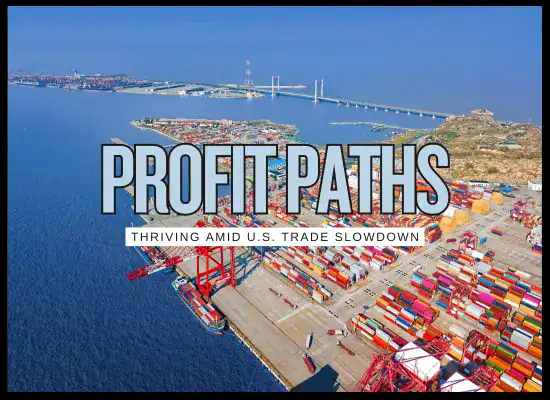
The U.S. has long been the beating heart of global container demand, but that rhythm is slowing. Imports into American ports have dipped sharply in recent months, with forecasts warning of deeper contractions ahead. For shipowners, this could be a new operating environment where empty boxes, canceled sailings, and shifting trade flows are becoming the norm. Yet disruption also creates opportunity. Those who adapt fastest can not only protect margins but also capture new lanes, monetize premium services, and emerge stronger from the downturn.
1️⃣ Practice Strict Capacity Discipline (Blank Sailings and Slower Speeds)
➕ Expand details
🔎 Strategy Snapshot
Reduce operated capacity on weak weeks by blanking selected loops or voyages. Combine this with speed optimization so vessels arrive on workable windows without idle waiting at anchor. The aim is to keep load factors healthy, protect pricing, and trim bunker consumption while staying compliant with CII and EEXI.
🏦 P&L Impact
- Supports rate integrity by avoiding under-filled sailings.
- Cuts fuel cost per voyage through slow steaming and fewer rotations.
- Improves emissions intensity metrics which can lower regulatory costs over time.
🧭 Where It Works Best
- Headhaul corridors with volatile bookings below target load factors.
- Weeks with known seasonal dips or front-loading distortions.
- Networks that can reroute via hubs without excessive transshipment penalties.
⚙️ How To Execute
- Publish a rolling blank-sailing plan 4–6 weeks out and consolidate cargo onto protected departures.
- Set speed targets by leg to meet berth windows and reduce anchorage time.
- Coordinate with terminals and feeders so connections still work after plan changes.
- Offer automatic rebooking and clear alternatives in the booking portal for affected customers.
- Align sales on MQC allocations so contract cargo is prioritized on operated sailings.
📊 Signals To Watch
- Two to four week booking forecasts versus sailing capacity.
- Load factor and revenue per TEU trend on operated departures.
- Bunker price movements and weather windows that influence optimal speeds.
- Schedule reliability and rollover rates after consolidation.
⚠️ Risks and Mitigations
- Customer dissatisfaction from cancellations. Mitigate with early notice, priority options, and guaranteed rebooking rules.
- Connection failures at hubs. Build buffer time and pre-clear transshipment windows.
- Reefer and time-sensitive cargo constraints. Pair with priority handling and active monitoring.
- Crew and maintenance knock-on effects. Lock a cadence for hull cleaning and minor works during blanked weeks.
Tip: combine speed optimization with Just-In-Time arrival practices to cut idle fuel burn and to improve berth readiness.
2️⃣ Redeploy Tonnage to Faster-Growing Corridors (LatAm, Asia-Europe, Intra-Asia)
➕ Expand details
🔎 Strategy Snapshot
Latin America trades posted steady growth in 2025, with carriers increasing service frequency into East Coast South America and Central America. Asia–Europe remains the largest east–west corridor, still drawing tonnage despite volatility, while intra-Asia lanes benefit from ongoing manufacturing shifts to Vietnam, India, and Southeast Asia. Redeploying tonnage toward these trades can offset lost liftings on the Trans-Pacific.
🏦 P&L Impact
- Higher utilization rates on growing lanes compared to over-supplied Trans-Pacific services.
- Diversifies revenue streams away from overreliance on U.S. import demand.
- Improves contract stability by capturing regional shippers seeking reliable long-term liftings.
🧭 Where It Works Best
- East Coast South America and West Coast South America services with strong reefer export flows.
- Asia–Europe lanes with balanced backhaul cargo that reduces empty repositioning.
- Intra-Asia corridors tied to nearshoring and shifting factory bases (Vietnam, India, Indonesia).
⚙️ How To Execute
- Reassign midsize vessels (5,000–10,000 TEU) from underutilized Trans-Pacific loops to Latin American or intra-Asia strings.
- Leverage vessel-sharing agreements or slot exchanges to quickly enter faster-growing trades.
- Coordinate with reefer exporters (fruit, meat, seafood) in LatAm to secure base cargo commitments.
- Work with forwarders and NVOCCs active in Southeast Asia for predictable intra-Asia volumes.
📊 Signals To Watch
- Latin American ports reporting higher throughput (e.g., Santos, Cartagena, Callao).
- Asia–Europe spot rates holding firmer than Trans-Pacific equivalents.
- Export growth data from Vietnam, India, and Mexico indicating stronger intra-Asia and north-south flows.
- Reefer demand trends (bananas, avocados, beef, fish) driving stable LatAm liftings.
⚠️ Risks and Mitigations
- Port infrastructure limits in Latin America can cause congestion; mitigate with feeder partnerships and staggered arrivals.
- Currency volatility in emerging markets; price contracts in USD where possible.
- Potential overcapacity spillover if too many carriers redeploy at once; defend with MQC contracts and service differentiation.
Sources: Drewry and Alphaliner reports showing steady growth in Latin American trades and rising intra-Asia volumes in 2025; Vietnam and India export data highlighting ongoing manufacturing shifts.
3️⃣ Lean into Reefer & Pharma (Stickier, Premium Cargo)
➕ Expand details
🔎 Strategy Snapshot
Reefer trades—covering fruits, meat, seafood, and dairy—have grown steadily, especially on north–south corridors from Latin America, Oceania, and Africa. Pharmaceuticals, moved under GDP-compliant cold chain standards, continue to expand as global healthcare demand rises. These verticals offer stable revenue streams that outperform cyclical dry container demand.
🏦 P&L Impact
- Premium freight rates for controlled atmosphere and temperature-sensitive cargo.
- Higher retention as shippers prioritize reliability over price sensitivity.
- Improved balance of headhaul vs. backhaul utilization, especially on north–south lanes.
🧭 Where It Works Best
- Latin America exports of bananas, avocados, beef, poultry, and fish to North America and Europe.
- Pharmaceutical flows from India, Europe, and North America into Asia, Africa, and Latin America.
- East Coast South America–Europe and intra-Asia cold chain routes with high reefer density.
⚙️ How To Execute
- Invest in modern reefer fleets with remote monitoring and controlled atmosphere (CA) technology.
- Expand pharma-certified reefer units that comply with Good Distribution Practice (GDP) standards.
- Offer guaranteed space and 24/7 cargo care desks for time-sensitive shipments.
- Bundle value-added services such as real-time tracking, temperature logs, and compliance certificates.
- Market sustainability benefits of optimized cold chain efficiency (lower spoilage, fewer emissions per unit).
📊 Signals To Watch
- Seasonal harvest cycles in Latin America, Africa, and Oceania that drive reefer peaks.
- GDP and health-sector trade forecasts in emerging markets fueling pharma logistics growth.
- Carrier announcements of new reefer service strings or pharma-certified container fleets.
- Rate stability for reefer cargo vs. volatile dry container rates.
⚠️ Risks and Mitigations
- Technical failures in reefer units → mitigate with proactive maintenance and real-time monitoring.
- Port infrastructure limits for reefer plugs → plan rotations to terminals with sufficient reefer capacity.
- Regulatory compliance (pharma) → maintain strict GDP certification and auditable cold chain records.
- Higher capital cost of reefer fleets → offset with long-term contracts and premium surcharges.
Sources: Drewry and Seabury data showing resilient reefer growth in 2024–2025; industry announcements from CMA CGM, Maersk, and Hapag-Lloyd expanding pharma-certified reefer services.
5️⃣ Optimize EU Port Calls and Routings for ETS and FuelEU Costs
➕ Expand details
🔎 Strategy Snapshot
Since January 2024, carriers must surrender EU Allowances (EUAs) for 50 percent of emissions on voyages into or out of the EU and 100 percent of emissions on intra-EU voyages. FuelEU Maritime also requires improvements in carbon intensity. By choosing cost-efficient ports, redesigning rotations, and leveraging transshipment hubs, shipowners can reduce exposure while still serving European markets.
🏦 P&L Impact
- Reduces ETS costs by minimizing time spent within EU zones.
- Helps avoid penalties under FuelEU Maritime by planning efficient port combinations.
- Defends freight rates by lowering cost per TEU on EU services.
🧭 Where It Works Best
- Asia–Europe services with multiple EU calls where hub consolidation can cut emissions exposure.
- Intra-Europe feeder networks that can shift part of the routing outside high-cost ETS zones.
- Deep-sea loops touching both EU and non-EU ports (e.g., Morocco, UK, Turkey) that can act as cost buffers.
⚙️ How To Execute
- Evaluate rotations to reduce the number of EU ports directly called, shifting some to feeders.
- Use non-EU hubs such as Tangier Med or Port Said for transshipment where feasible.
- Align berth windows with Just-In-Time arrival to minimize fuel waste while in EU waters.
- Invest in emissions monitoring tools to model costs under different rotation scenarios.
- Negotiate terminal incentives in EU ports that offset some ETS-related costs.
📊 Signals To Watch
- EU Allowance (EUA) prices, which directly drive compliance costs.
- FuelEU Maritime carbon intensity thresholds and upcoming tightening schedules.
- Carrier announcements of new rotations bypassing or consolidating EU port calls.
- Shifts in spot and contract rates on Asia–Europe reflecting ETS cost pass-through.
⚠️ Risks and Mitigations
- Regulatory scrutiny if routings appear designed only to avoid ETS → maintain transparency and show operational logic.
- Potential congestion at chosen EU hubs → stagger arrivals and secure berthing windows in advance.
- Customer concerns about longer transit times → communicate the cost benefits and provide visibility tools.
- Complexity in feeder scheduling → invest in digital planning and partner with regional carriers.
Sources: European Commission ETS and FuelEU Maritime regulations, carrier announcements in 2024–2025 adjusting Asia–Europe rotations and leveraging non-EU hubs to manage compliance costs.
6️⃣ Increase the Share of Long-Term / MQC Contracts (Stabilize Utilization)
➕ Expand details
🔎 Strategy Snapshot
MQCs are contractual commitments where shippers agree to move a defined cargo volume over a set period, typically one year. By increasing the share of long-term contracts relative to spot exposure, carriers protect load factors, lock in predictable cash flows, and reduce the need for disruptive blank sailings. This strategy works especially well when overall demand is uneven or declining.
🏦 P&L Impact
- Improves revenue visibility through fixed volumes and agreed rate structures.
- Stabilizes utilization, reducing the cost impact of half-empty sailings.
- Supports credit and financing by demonstrating contracted cash flow.
🧭 Where It Works Best
- Trades with large retailers and manufacturers that value stability over chasing spot lows.
- High-volume corridors such as Trans-Pacific, where MQCs remain standard in service contracts.
- Customer segments with strong year-round demand such as FMCG, automotive, and electronics.
⚙️ How To Execute
- Prioritize MQCs during annual contract negotiations with anchor accounts.
- Bundle MQC agreements with value-added services such as guaranteed space and digital tracking.
- Offer flexible clauses that balance shipper needs while ensuring base volumes are locked.
- Monitor contract compliance closely to ensure booked vs. lifted cargo aligns with commitments.
- Leverage data analytics to identify customers most likely to renew or expand MQCs.
📊 Signals To Watch
- Share of liftings under contract vs. spot market exposure.
- Shipper contract rollover rates and renewal terms.
- Freight rate stability between contract and spot benchmarks.
- Booking-to-lifting ratios indicating MQC compliance.
⚠️ Risks and Mitigations
- Shippers defaulting on MQCs during downturns → enforce claw-back or penalty clauses.
- Risk of being locked into below-market rates if demand recovers → maintain a healthy spot exposure balance.
- Administrative complexity in monitoring MQCs → invest in contract management platforms.
- Potential pushback from smaller customers → segment offerings to balance large contracts with flexible spot services.
Sources: Carrier contract practices reported by FMC filings and analyst data showing that higher contract share buffers utilization during U.S. import downturns.
7️⃣ Exploit Alliance and Hub-and-Spoke Reliability Gains (e.g., Gemini)
➕ Expand details
🔎 Strategy Snapshot
Strategic vessel-sharing agreements and hub-and-spoke designs allow carriers to pool capacity, consolidate port calls, and optimize feeder connectivity. Gemini, the planned Maersk–Hapag-Lloyd cooperation starting 2025, aims to deliver high reliability by using major hubs with fast-turn feeder links. Improved reliability increases customer stickiness, especially for cargo that values schedule certainty.
🏦 P&L Impact
- Defends revenue by reducing rollover costs and compensation for delays.
- Lowers unit costs through shared assets, reduced duplication, and efficient hub operations.
- Improves retention and premium capture with shippers who pay more for reliability.
🧭 Where It Works Best
- Asia–Europe and Trans-Pacific lanes with high capacity and recurring congestion issues.
- Networks with sufficient feeder infrastructure (Mediterranean, North Europe, Middle East, Asia).
- Customer segments like automotive, retail, and pharma that penalize late deliveries.
⚙️ How To Execute
- Leverage alliance slot exchanges to maintain port coverage while reducing direct calls.
- Use major hubs such as Rotterdam, Singapore, and Tanjung Pelepas for consolidation.
- Invest in digital coordination with alliance partners to avoid duplicated port stays.
- Market high schedule reliability as a differentiator to premium shippers.
- Ensure customer service teams proactively communicate updated routing options.
📊 Signals To Watch
- Schedule reliability metrics published monthly by Sea-Intelligence.
- Performance updates from Gemini and other alliance networks.
- Shipper surveys and procurement feedback prioritizing reliability over price.
- Trends in premium product uptake linked to on-time performance.
⚠️ Risks and Mitigations
- Regulatory concerns about alliances reducing competition → maintain compliance with FMC and EU rules.
- Congestion at hub ports can undermine the model → diversify hubs and stagger arrival windows.
- Customer resistance to added transshipment → offset with guaranteed delivery windows and digital visibility.
- Operational complexity of multi-carrier coordination → invest in integrated IT and shared planning tools.
Sources: Public announcements of the Maersk–Hapag-Lloyd Gemini Cooperation targeting 90 percent on-time reliability in 2025; Sea-Intelligence schedule reliability reports showing industry averages closer to 50 percent.
8️⃣ Follow Production Shifts (Vietnam, India) and Nearshoring-Adjacent Flows
➕ Expand details
🔎 Strategy Snapshot
Multinationals are shifting manufacturing to Southeast Asia and South Asia to reduce dependence on China and to benefit from cost and trade incentives. Vietnam’s exports surged in electronics, textiles, and furniture, while India is becoming a key hub for automotive and electronics assembly. In parallel, nearshoring trends under USMCA are lifting Mexico’s export flows. Adapting networks to these shifts ensures steady growth opportunities despite weaker U.S. import demand from China.
🏦 P&L Impact
- Secures high-growth cargo flows tied to global brands relocating production.
- Improves vessel utilization by serving rising export markets in Asia and Latin America.
- Diversifies exposure away from overreliance on a single trade corridor.
🧭 Where It Works Best
- Vietnam exports of electronics, textiles, and furniture bound for North America and Europe.
- India exports of smartphones, automotive parts, and pharma into Europe, Africa, and Asia.
- Mexico exports into the U.S. market supported by nearshoring and reshoring trends under USMCA.
⚙️ How To Execute
- Adjust rotations to include emerging Southeast Asian hubs such as Haiphong, Cai Mep, and Ho Chi Minh City.
- Expand services at Indian gateways including Mundra, Nhava Sheva, and Chennai.
- Develop north–south services linking Mexico with U.S. Gulf and East Coast ports.
- Partner with logistics providers offering integrated services from factories in new production zones.
- Use feeder connections to aggregate regional exports into mainline services.
📊 Signals To Watch
- Export growth data from Vietnam and India across electronics, textiles, and automotive sectors.
- Announcements from multinational corporations about new factory openings outside China.
- Rising cross-border flows under USMCA between Mexico and the U.S.
- Trade policy updates offering incentives for diversification away from China.
⚠️ Risks and Mitigations
- Port congestion and infrastructure gaps in emerging hubs → invest in partnerships with local terminals and feeders.
- Political or trade policy shifts that affect incentives → diversify across multiple emerging markets.
- Volatile export volumes during transition phases → secure anchor contracts with large manufacturers.
- Higher repositioning costs when shifting capacity → balance redeployments with long-term growth outlooks.
Sources: Trade data showing Vietnam’s double-digit export growth in 2024–2025; Apple and other multinationals shifting production to India; USMCA-driven nearshoring flows boosting Mexico–U.S. trade.
9️⃣ Slash Empty Repositioning via Street-Turn and Matchback Programs
➕ Expand details
🔎 Strategy Snapshot
Globally, the industry spends an estimated 20 billion dollars per year moving empty containers. Street-turns allow import boxes to be delivered directly to an exporter near the consignee instead of returning to a depot. Matchbacks coordinate one-way hauls to reduce deadhead trips. Digital platforms and APIs now make it easier to automate these matches, providing efficiency gains at scale.
🏦 P&L Impact
- Reduces trucking and depot costs tied to empty returns.
- Cuts repositioning of empties across ocean services, lowering fuel and handling spend.
- Improves asset utilization and availability for paying cargo.
🧭 Where It Works Best
- High-volume import/export markets with overlapping flows, such as U.S. West Coast, Rotterdam, and Singapore.
- Trade corridors where imbalance leads to large numbers of empties, e.g., Trans-Pacific and Asia–Europe.
- Regions with strong trucking networks and digital platforms that connect importers and exporters.
⚙️ How To Execute
- Implement digital tools that link import box availability with export bookings.
- Partner with logistics platforms and forwarders to expand matchback opportunities.
- Offer incentives to truckers and shippers who participate in street-turn programs.
- Monitor container flow data in real time to identify imbalance hotspots.
- Develop regional agreements with depots to streamline regulatory approvals for street-turns.
📊 Signals To Watch
- Depot congestion levels and trucking wait times for empty returns.
- Ratio of empty repositioning moves to total container moves in key corridors.
- Adoption rates of digital matchback platforms by shippers and carriers.
- Carbon savings reported from avoided empty repositioning trips.
⚠️ Risks and Mitigations
- Customs and regulatory restrictions in some jurisdictions → work with authorities to pre-approve street-turn protocols.
- Operational complexity in aligning timing of imports and exports → rely on digital visibility and predictive tools.
- Potential disputes over container condition → standardize inspection and liability rules.
- Resistance from depots that lose handling fees → develop revenue-sharing models or alternative compensation.
Sources: Industry estimates showing 20 billion USD annual cost of empty repositioning; adoption of street-turn programs in U.S. ports, Europe, and Asia supported by digital logistics platforms.
🔟 Accelerate Low-Capex Efficiency Tech and Maintenance
➕ Expand details
🔎 Strategy Snapshot
Incremental upgrades such as weather routing software, hull and propeller cleaning, and energy-saving devices like air lubrication or propeller boss cap fins can yield measurable improvements in fuel burn. Combined with a disciplined maintenance program, these solutions help carriers cut costs, reduce emissions, and comply with regulatory targets while avoiding large capital commitments.
🏦 P&L Impact
- Fuel cost reductions from 3 to 10 percent depending on the measure.
- Improved CII ratings that reduce compliance risk and potential penalties.
- Better vessel availability through fewer unplanned maintenance off-hire days.
🧭 Where It Works Best
- Fleets with mixed vessel ages where small upgrades create outsized impact.
- Ships trading into the EU or other regulated markets where emissions compliance costs are high.
- Operators with high bunker spend looking for short payback periods.
⚙️ How To Execute
- Adopt weather routing and voyage optimization software to align speed and routing with forecast conditions.
- Implement scheduled underwater hull and propeller cleaning to maintain smooth surfaces and reduce drag.
- Retrofit cost-effective energy-saving devices such as propeller boss cap fins or silicone hull coatings.
- Set up a monitoring system that tracks fuel efficiency KPIs per voyage and feeds back into operational planning.
- Coordinate with class societies to document efficiency improvements for regulatory credit.
📊 Signals To Watch
- Fuel consumption trends per TEU-km before and after efficiency upgrades.
- Vessel-specific CII ratings and improvement trajectories.
- Spot bunker price movements that change ROI on efficiency measures.
- Charter market preferences for vessels with documented efficiency profiles.
⚠️ Risks and Mitigations
- Short-term service interruptions during upgrades → plan installations during routine port stays or dry dockings.
- Technology performance variability → pilot test across a subset of vessels before fleet rollout.
- Data collection gaps that limit ROI measurement → invest in reliable onboard sensors and reporting tools.
- Initial skepticism from crews and managers → provide training and show quick wins through measured results.
Sources: IMO case studies and carrier announcements highlighting 3–10 percent fuel savings from hull cleaning, weather routing, and low-cost energy-saving retrofits; industry reports on short payback cycles for efficiency technologies.
We welcome your feedback, suggestions, corrections, and ideas for enhancements. Please click here to get in touch.