The Top Overlooked Port Costs That Quietly Drain Profits
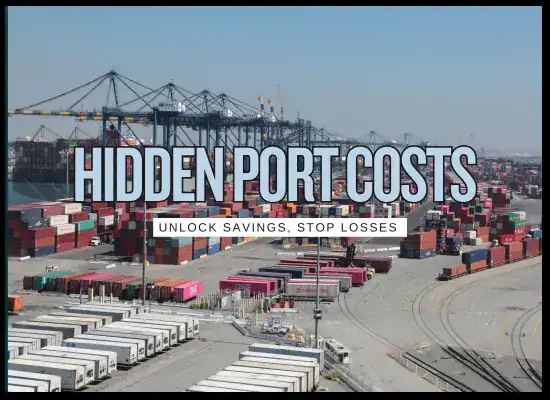
Port calls often look predictable until the invoice arrives. Small line items stack up, rules change by port, and “included” services turn out to be base access only. For shipowners, these overlooked costs can erase the margin on an otherwise solid voyage plan. This report highlights the most common profit leaks and how to quote, control, and benchmark them before you fix the call.
1️⃣ Harbour/Port Dues + Waste Fee (combined invoice)
➕ Expand details
What triggers the charges
- Harbour or port dues set by the port authority. Often GT or NT based with daily or tiered bands.
- Waste reception base fee required for MARPOL compliance. Grants access to reception but removal is usually separate.
- Billing cycle per call with step ups after free time or after calendar day turnovers.
- Extras for actual volumes of garbage, sludge, bilge and special waste collected alongside.
Ask the agent if waste is bundled with port dues on one invoice or billed separately by a licensed contractor.
Owner takeaway
- Quote harbour dues and waste separately. Small line items add up when delays extend time in port.
- Confirm the basis used by the port. Some use GT, others NT or LOA to compute dues.
- Verify what the base waste fee includes. Removal is usually priced by type and cubic metre.
- Model a plus 24 hours case. Harbour dues that look small at 18 hours can climb at 26 hours.
Worked example
- Harbour dues: 0.12 dollars per GT per day on 80,000 GT for one day = 9,600 dollars.
- Base waste fee: 600 dollars per call.
- Actual waste removal: 12 m³ mixed garbage at 40 dollars per m³ = 480 dollars.
- Total combined line: 10,680 dollars for a one day call.
- At plus 24 hours the harbour dues double. The combined line becomes 20,280 dollars.
Checklist before fixing
- Ask the agent for the current harbour dues schedule and which basis applies to your vessel.
- Request the waste reception base fee and separate per category removal rates.
- Confirm free time and day changes. Price one extra day and one shift move as a sanity check.
- Capture all quotes in your pro forma. Keep harbour, waste base and removal in separate lines.
Two quotes from different agents reduce the risk of missing a local surcharge or calendar rule.
2️⃣ Pilotage: Fixed “S” + Route “T” components
➕ Expand details
How pilotage is billed
- Standard **S component**: fixed pilotage fee per movement, often based on GT.
- Variable **T component**: calculated on distance in nautical miles or transit time inside port limits.
- Separate charges for inbound, outbound, and each shifting move.
- Night and holiday surcharges are common and can add 25–50 percent.
Always cross-check the port’s official tariff book and confirm whether shifting counts as a separate pilotage act.
Owner takeaway
- Budget for at least two pilotage charges per call, more if shifting is likely.
- Check vessel dimensions carefully since tariffs often scale by GT or beam.
- Ask for written confirmation of route lengths used in the “T” component.
- Negotiate inclusive packages when multiple shifts are expected.
Worked example
- Port A pilotage tariff: S = 5,000 dollars, T = 2.50 dollars per GT per nautical mile.
- 85,000 GT vessel, 10 nm transit.
- T charge = 85,000 × 2.50 ÷ 100 = 2,125 dollars.
- Total inbound pilotage = 5,000 + 2,125 = 7,125 dollars.
- If one shift move is required, add another 7,125 dollars. That doubles the line item.
Checklist to manage pilotage costs
- Obtain tariff pages directly from Rosmorport or the local authority.
- Confirm whether distance is measured one-way or round trip inside port.
- Ask the agent about exemptions for small vessels or short shifts.
- Build one or two extra shift scenarios into the voyage estimate.
- Pre-arrange pilotage with agents to avoid premium overtime callouts.
Pilotage is compulsory and can double or triple with extra shifts. Owners who insist on transparent quoting capture savings before fixing.
3️⃣ Towage / Tug Assistance
➕ Expand details
How towage charges work
- Tariffs usually combine a minimum call-out fee with a per-hour or per-manoeuvre rate.
- Large vessels or high wind/current conditions may require extra tugs.
- Standby time is often billed at a reduced but still material rate.
- Some ports (e.g. German seaports, see gdws.wsv.bund.de) publish separate tariff bands for day, night, and weekend services.
Towage is non-optional at many Arctic and European ports. Misjudging tug needs is a common source of cost overruns.
Owner takeaway
- Always confirm tug requirements by vessel size, draft, and berth location.
- Request detailed quotes showing number of tugs, bollard pull, and hourly rates.
- Ask about overtime, standby, and cancellation charges.
- Negotiate fixed-price tug packages for predictable calls when possible.
Worked example
- Port B tariff: minimum call-out 8,000 dollars per tug, plus 2,000 dollars per extra hour.
- Two 50-ton bollard pull tugs ordered for berthing.
- Planned: 1 hour → 16,000 dollars. Weather delay adds 2 hours of standby at 1,000 dollars per tug-hour.
- Final bill = 16,000 + (2 × 2 × 1,000) = 20,000 dollars.
- Overrun = 25 percent above the initial estimate.
Checklist to manage towage costs
- Verify mandatory tug numbers and bollard pull with the harbour master.
- Ask agents for tariff extracts from official sources (gdws.wsv.bund.de).
- Clarify standby and cancellation billing terms in advance.
- Where possible, negotiate bundled rates for inbound, shifting, and outbound services.
- Track actual tug hours to contest any discrepancies.
Even small changes in tug deployment or waiting time can add six-figure costs across a season.
4️⃣ Mooring / Unmooring and Linesmen
➕ Expand details
How mooring fees are charged
- Flat fee per mooring and unmooring operation, often scaled by vessel GT or length overall.
- Charged again for each berth shift or relocation inside port limits.
- Overtime premiums for nights, weekends, and public holidays can raise the bill 25%–100%.
- Some ports require both shore-based line gangs and line boats, doubling the line item.
In ports such as Portsmouth International Port, line-handling tariffs are published but extras like holiday rates or double-time penalties can be easy to miss.
Owner tips
- Ask for a detailed breakdown of mooring, unmooring, and shifting costs.
- Confirm if pilotage and tug charges are triggered by each additional move.
- Plan cargo ops to minimize berth shifts and avoid weekend or night hours.
- Check whether your agent includes line-handling in their quote or bills it separately.
Worked example
- Daytime mooring + unmooring: 1,200 dollars each → 2,400 dollars total.
- Two berth shifts required: 2 × 1,200 = 2,400 dollars extra.
- One shift occurs on Sunday with 100% overtime premium → 2,400 dollars instead of 1,200.
- Total mooring/linesmen charges for the call = 6,000+ dollars.
- Failure to plan for shifts doubled expected spend from 3,000 to 6,000 dollars.
Checklist to manage mooring costs
- Check tariff basis (per GT, LOA, or per operation).
- Ask agent to confirm line-boat needs in advance.
- Align cargo ops to minimize berth shifts inside port.
- Factor in overtime and holiday multipliers in the pro forma.
- Audit final invoices against logbook times for each movement.
Mooring and linesmen fees look small but repeat with every move. Owners who model shifts and overtime avoid surprise line-item inflation.
5️⃣ Light Dues / Aids-to-Navigation Levy
➕ Expand details
How light dues work
- Levied by government agencies such as Trinity House (UK).
- Charged per GT/NT with seasonal or voyage-based caps.
- Often applies once per voyage or once per month regardless of calls.
- Indexed annually to inflation or regulatory updates.
Not always visible in port agent pro formas. They can be charged directly to shipowners via national authorities. See UK regulations.
Owner tips
- Check whether light dues are charged per call, per voyage, or per tonnage block.
- Ask your agent if local port charges already include AtoN levies.
- Track annual indexation changes — UK light dues rates are reviewed each year.
- Include likely caps in budget modelling to avoid overstating exposure.
Worked example
- UK light dues 2024: £0.44 per GT up to 35,000 GT, capped at ~£19,000 per vessel per year.
- A 90,000 GT bulk carrier pays ~£19,000 after the cap, not £39,600.
- Calling twice within the same month does not double the fee due to voyage caps.
- Without checking the cap, budgeters may overstate by 20,000+ dollars annually.
Checklist to manage light dues
- Identify which countries impose light or AtoN dues on your voyage.
- Verify the charging basis (per call, per voyage, or capped annual fee).
- Cross-check tariff updates published by the authority each year.
- Ensure internal voyage estimates reflect caps rather than raw GT × tariff.
- Keep records of paid dues to avoid duplicate billing within the same period.
Light dues are non-negotiable but predictable. Knowing the caps ensures you do not overstate costs or double-count fees.
6️⃣ ISPS / Port Security Fees
➕ Expand details
How fees are applied
- Fixed fee per vessel call, often based on gross tonnage or vessel length.
- Some ports (e.g., Port Houston, many AAPA members) publish separate ISPS tariffs.
- Overtime charges apply for security services outside normal hours.
- Fees can be levied by port authority or by terminal operators directly.
ISPS compliance is compulsory. Charges can vary widely between ports and are not always included in initial agent pro formas.
Owner tips
- Request the published ISPS tariff table from local port authorities or agents.
- Check if fees are per call, per GT, or per 24 hours alongside.
- Clarify overtime surcharges for nights, weekends, or holidays.
- Benchmark ISPS charges across competing ports when choosing call options.
Worked example
- Base ISPS fee: 0.04 dollars per GT.
- For a 50,000 GT tanker → 2,000 dollars per call.
- Weekend security surcharge +30 percent adds 600 dollars.
- Total ISPS cost for a Sunday call = 2,600 dollars.
- Across 10 annual calls, poor planning could add 6,000 dollars in extra security charges.
Checklist to manage ISPS costs
- Confirm if ISPS fees are invoiced per call or included in port dues.
- Plan arrivals to avoid overtime periods where possible.
- Review terminal-specific security surcharges, especially in North America and EU ports.
- Include ISPS and any incident-driven security charges as separate lines in your cost models.
Security costs are unavoidable but manageable. Transparency and timing can prevent thousands of dollars in unplanned charges.
7️⃣ Waste Reception / MARPOL Services Beyond the Base Fee
➕ Expand details
How fees are structured
- Base fee per call for providing reception facilities (often $500–2,000).
- Actual disposal charged by type and volume (e.g. oily water, sludge, garbage, cargo residues).
- Hazardous or special waste commands higher per-m³ rates.
- Late booking or urgent callouts may add overtime surcharges.
Example: Rosmorport and other European ports publish waste reception tariffs, but they often separate “availability” from “disposal” lines.
Owner tips
- Clarify whether base fee includes actual removal or just access.
- Request per-category, per-m³ rates for sludge, bilge, and garbage.
- Plan discharge to avoid weekend/holiday multipliers.
- Benchmark alternative ports for cheaper waste handling packages.
- Track disposal receipts to dispute inflated billing.
Worked example
- Base waste reception fee: 700 dollars per call.
- Discharge 15 m³ of oily water at 35 dollars/m³ = 525 dollars.
- Discharge 8 m³ of garbage at 45 dollars/m³ = 360 dollars.
- One after-hours callout adds 25 percent = 396 dollars.
- Total waste charges = ~1,580 dollars (more than double the base fee).
Checklist to manage waste fees
- Check the port’s MARPOL Annex I–VI tariff tables with the agent.
- Confirm sludge and garbage removal volumes in advance.
- Plan tank cleaning and sludge landing for business hours.
- Track all receipts to reconcile against the base fee already paid.
- Negotiate annual waste packages where ports offer them.
Waste fees may seem minor, but variable disposal charges and overtime add-ons can quickly escalate into a five-figure annual cost if unmanaged.
8️⃣ Berthage / Dockage After Free Time + Lay-By
➕ Expand details
How these charges are applied
- Calculated per gross tonnage (GT) or length overall (LOA) per 24 hours.
- Many ports grant a fixed “free time” (often 24 hours) before surcharges start.
- Beyond free time, charges typically double for each extra 24-hour period.
- Lay-by berths may charge daily rates even when no cargo ops occur.
Example: Portsmouth International Port and other European ports publish detailed berthage tariffs that include step-ups after free time.
Owner tips
- Check how free time is defined — calendar day vs 24-hour clock makes a cost difference.
- Model likely weather or congestion delays to budget extra days alongside.
- Ask about lay-by berth daily rates before arrival; they can equal or exceed active berth fees.
- Consider nearby alternative ports with lower day-rate structures.
- Negotiate for consolidated handling windows to avoid extra mooring/unmooring charges.
Worked example
- Port C berthage: 0.20 dollars per GT per 24h.
- 70,000 GT vessel → 14,000 dollars for first 24h (covered by free time).
- Delay forces 36h stay → charged for 2 full days = 28,000 dollars.
- Unexpected berth shift adds 3,000 dollars for new mooring/unmooring.
- Total cost = ~31,000 dollars, more than double the initial plan.
Practical checklist
- Obtain the exact port tariff with free-time clauses highlighted.
- Ask agents how “day” is defined (calendar day vs rolling 24h).
- Secure berth windows early to avoid lay-by charges.
- Account for local congestion patterns in voyage planning.
- Track time alongside precisely to contest misapplied overtime or overstay billing.
Berthage overruns are a classic hidden cost — a single delay can erase voyage savings if not budgeted and managed.
9️⃣ Shifting Moves Inside Port Limits
➕ Expand details
How shifting fees work
- Each berth shift is treated as a separate act of pilotage (“S + T” again).
- Shifting also triggers **new mooring/unmooring** and usually **additional tug call-outs**.
- Night or holiday shifts may cost significantly more (25%–100% surcharge).
- Some ports charge a flat “shifting fee” in addition to the repeated service tariffs.
German seaports and canal authorities (see gdws.wsv.bund.de) and other European ports detail these charges in tariff schedules.
Owner tips
- Plan cargo ops to avoid unnecessary berth shifts.
- Ask the agent how many movements are expected — budget both mooring and pilotage per shift.
- Confirm if internal repositioning (e.g. changing from berth to anchorage) counts as a full shift.
- Check if shift fees include tug services or if billed separately.
- Model extra shifts into your pro forma to prevent surprise costs.
Worked example
- Port D pilotage S fee = 4,500 dollars; T fee for 5 nm = 1,200 dollars.
- One extra berth shift → new pilot boarding (4,500) + 1 tug call-out (7,000).
- Total unexpected shift cost = ~8,200–10,000 dollars.
- Two shifts in a congested port can push overruns beyond 20,000 dollars per call.
Practical checklist
- Request tariff pages for shifting moves from local authorities or agents.
- Identify potential for shifting based on berth availability and cargo sequencing.
- Plan efficient port rotations to minimize berth changes.
- Negotiate “all-in” packages covering shifts, mooring, and tug use where possible.
- Track actual tug hours to ensure no double-billing on shift invoices.
Shifting may seem minor, but each move can replicate major port costs. Owners who plan and negotiate ahead can save substantial amounts per voyage.
🔟 Tariff Indexation, Surcharges and Discount Changes
➕ Expand details
How these charges work
- Annual tariff indexation — common in Europe, often tied to CPI or fuel indices.
- Surcharges applied for environmental compliance, congestion, or infrastructure funds.
- Green rebates (e.g., ESI or EEOI incentives) can change or be suspended year to year.
- Unexpected revisions mid-year in some jurisdictions raise unpredictability.
See official notices from European ports or canal authorities, e.g. Port of Rotterdam tariffs or national tariff circulars.
Owner tips
- Review the latest tariff circulars before every voyage — don’t rely on last year’s rates.
- Track eligibility for Environmental Ship Index (ESI) or similar green rebates.
- Build in a buffer for mid-year surcharge changes, especially in Europe and Asia.
- Confirm if tariffs are charged on GT, NT, LOA, or net tonnage to avoid mispricing.
- Coordinate with agents to ensure discount claims are correctly filed and applied.
Worked example
- Base port dues (2023): 0.50 EUR/GT.
- 2024 indexation: +5% → 0.525 EUR/GT.
- 70,000 GT vessel, 2 days alongside → ~73,500 EUR (vs 70,000 EUR expected).
- Loss of 10% green rebate adds 7,350 EUR.
- Total variance vs budget = 10,850 EUR on one call.
Practical checklist
- Download the current tariff book before fixing (Port of Rotterdam example).
- Track CPI/fuel indexation announcements annually.
- Re-validate green incentive eligibility quarterly.
- Model both “with” and “without” rebates in voyage estimates.
- Review past invoices to catch tariff misapplications.
Annual adjustments and changing rebates are easy to miss but can move your cost base by tens of thousands per year.
The real drain on profitability often isn’t the headline port tariff everyone negotiates, it’s the hidden extras that creep onto the final invoice. Harbour dues blended with waste fees, compulsory pilots and tugs for short shifts, or overlooked light and security levies can quietly eat into margins. Shipowners who treat these line items as negotiable and predictable, by demanding transparent breakdowns, checking official tariff sources, and modeling delays or surcharges in advance, consistently avoid surprises. At the end of the day, controlling these “small” costs across a trading year can make the difference between a tight voyage and a profitable one.
We welcome your feedback, suggestions, corrections, and ideas for enhancements. Please click here to get in touch.