Methanol to Hydrogen Reformers Made Simple: 2025 Update
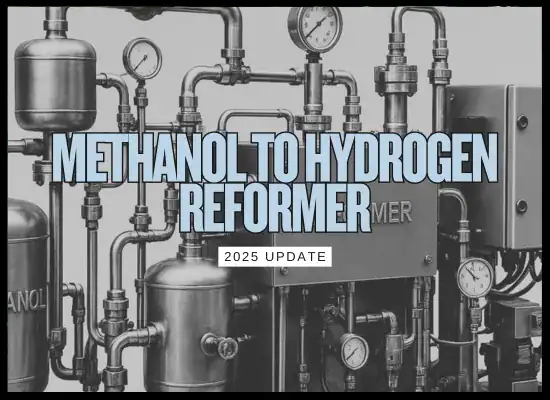
As the push toward zero-emission shipping intensifies, methanol is stepping into a new role, not just as a clean fuel, but as a hydrogen carrier. Methanol-to-hydrogen reformers allow ships to store easy-to-handle liquid methanol and convert it onboard into hydrogen, powering fuel cells for electric propulsion. In 2025, interest in this technology is surging across both new builds and retrofits as operators look for efficient decarbonization solutions without massive infrastructure changes.
🧪 What is a it and Keep it Simple...
Imagine a compact chemistry lab onboard your ship that turns methanol into hydrogen whenever and wherever you need it.
The system mixes methanol with water, heats it to about 300 °C, and uses a catalyst to produce hydrogen and CO₂. A purifier filters out everything except hydrogen, which then feeds fuel cells that generate clean electricity, without massive tanks or complex bunkering.
That means you can fuel with liquid methanol (stored at room temperature), convert it onboard, and run silently, emission-free—no hydrogen lockers, no dry ice, no cryogenics required.
2025 Snapshot: Are Methanol to Hydrogen Reformers Really Working?
🧪 Is It Really Working?
- ✅ Field Performance: Trials show stable hydrogen output and reliable fuel cell integration on multiple vessel types.
- ⚙️ Reliability: Catalyst durability is improving, but lower-grade methanol can still cause issues like fouling and degradation.
- 🌊 Operational Feedback: Crews report quiet, low-maintenance systems, especially when paired with hybrid electric setups.
- 🔋 Efficiency Trade-Offs: Methanol reformers lose ~20–30% energy in conversion compared to direct hydrogen use, but eliminate cryo tank needs.
- 🚦 Practical Limits: Startup times and slow ramp-up under variable loads remain a drawback, especially for peak shaving or quick response needs.
- 📌 Summary: Reformers are working, especially for routes without hydrogen bunkering, but their true environmental value depends on green methanol availability.
⚙️ Methanol-to-Hydrogen Reformer ROI Calculator
Estimate how long it will take for your investment in an onboard methanol reformer system to pay for itself, based on operational variables and current fuel economics.
We welcome your feedback, suggestions, corrections, and ideas for enhancements. Please click here to get in touch.