Marine Thruster in 2026, What’s Working, What’s Not, and What to Verify
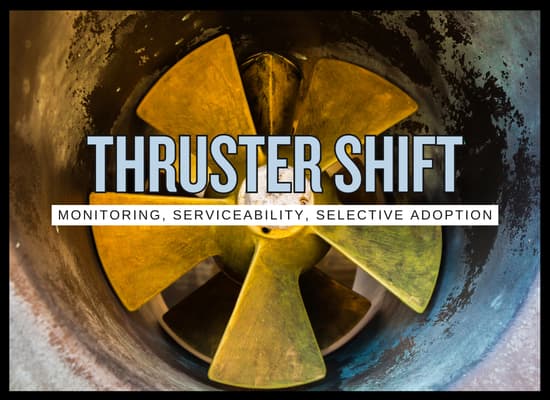
Marine thruster tech in 2026 is not about a single breakthrough, it is about owners getting more predictable uptime through smarter azimuth designs, more embedded condition monitoring, and service models that reduce downtime risk. The “new and working” themes are showing up in real orders and product line updates, especially around permanent-magnet azimuth thrusters with built-in sensors, condition-based maintenance platforms, and rim-drive deployments in noise-sensitive segments like research and specialized vessels.
| # | Working change | Operational reality | Best-fit context | Owner upside | Impact tags |
|---|---|---|---|---|---|
| 1 |
Built-in sensors move from add-on to baseline
Thruster OEMs are embedding monitoring in the product, not bolting it on later.
|
Azimuth and transverse thruster packages increasingly include onboard sensor sets for condition monitoring and clearer maintenance planning signals.
The practical value is earlier warning and more predictable service windows, not perfect prediction.
|
Offshore, ferries, tugs, DP-driven operations, any owner prioritizing uptime and controlled maintenance windows. | Fewer surprise failures, better planning, clearer evidence when discussing warranty or service interventions. | Uptime Maintenance |
| 2 |
Permanent-magnet azimuth thrusters on real orders
Efficiency and serviceability claims are being attached to specific product lines and deliveries.
|
Permanent magnet motor technology is being positioned alongside built-in sensors and underwater-mounting or serviceability features in modern azimuth thruster ranges.
This shows up most clearly in offshore support and DP-adjacent applications.
|
Offshore support, drilling-related assets, DP vessels, high-hours duty cycles where efficiency and reliability both matter. | Lower operating losses and steadier performance, plus a clearer maintenance narrative tied to the OEM toolset. | Efficiency Reliability |
| 3 |
Condition-based maintenance platforms are operational
More owners are buying service outcomes, not just hardware.
|
OEM services focus on monitoring core propulsion components, translating data into actionable advice and maintenance reporting, and supporting interval planning.
The working value is triage and trend visibility, not “zero unplanned downtime.”
|
Fleet operators that can standardize processes, owners with mixed-age assets needing better visibility, operators with thin engineering teams. | Reduced maintenance guesswork, better spares timing, improved planning for drydock and off-hire minimization. | Lifecycle Planning |
| 4 |
Rim-drive keeps expanding in noise-sensitive segments
2026 orders reinforce that this is not only a prototype story.
|
Rim-drive thrusters are being selected for vessels where acoustic signature and operational smoothness are top priorities.
Recent contracts describe rim-drive packages for specialized research-focused builds.
|
Research and acoustic work, specialized naval or survey profiles, projects where low noise is a core requirement. | Stronger acoustic performance narrative, plus clearer differentiation for specialized charter or mission roles. | Noise Specialty |
| 5 |
OEM lifecycle support is getting more structured
Spares positioning and maintenance project management are part of the offer.
|
Thruster suppliers are emphasizing global spare positioning and maintenance project management as a package, aiming to reduce downtime exposure and simplify execution.
This is a commercial change as much as a technology change.
|
Operators with global trading footprints, offshore fleets, owners sensitive to long lead times for major assemblies. | Less downtime risk, better predictability for major interventions, fewer logistics surprises. | Service Downtime |
| 6 |
Monitoring systems tied to specific vessel programs
Not just “available,” but specified as part of deliveries.
|
Monitoring and condition-based maintenance are being called out in project announcements for new vessel series, positioned as supporting operational readiness and service interval optimization.
This is one of the strongest signals that owners and operators are budgeting for it.
|
Ferries and workboats with demanding operating profiles, owners wanting predictable availability under tight schedules. | Better schedule confidence, improved maintenance timing, fewer last-minute operational disruptions. | Availability CBM |
| 7 |
Faster steering response paired with harsh-duty readiness
Manoeuvring performance is being engineered as a deliverable.
|
Some new ferry and workboat projects specify thruster steering responsiveness and monitoring as part of the operational readiness package, especially in demanding routes and weather windows.
This has a direct tie to schedule reliability, not just handling feel.
|
Route-constrained ferries, harbor and escort work, DP-adjacent profiles that need precise positioning. | Better positioning accuracy, fewer missed operating windows, stronger reliability for tight schedules. | Handling DP |
Marine thruster tech in 2026 has real progress, but there is still a gap between what works reliably in a defined operating envelope and what gets marketed as universally “solved.” The areas that are not quite there yet usually show up when owners expect plug-and-play electrification, perfect prediction from condition monitoring, or broad adoption of newer architectures like rim-drive outside the niche profiles they are currently being ordered for.
| # | Not quite there yet | Why it is appealing | Where it tends to break | Owner downside | Impact tags |
|---|---|---|---|---|---|
| 1 |
Rim-drive as a broad default choice
Real orders exist, but adoption is still concentrated in specific profiles.
|
The pitch is strong, fewer mechanical elements in the water, low noise positioning, and a differentiated propulsion story for specialized vessels. |
The best documented traction is in noise-sensitive and next-generation offshore or specialty use cases, not a universal fit across every vessel class and duty cycle.
Owners still need to validate integration, service model, and whole-life cost in their specific operating envelope.
|
Higher capex risk if the vessel profile does not fully benefit, and higher integration risk if yard and crew experience is limited. | Design risk Lifecycle |
| 2 |
Condition monitoring as true prediction
Monitoring is real, perfect prediction is not.
|
Owners want fewer surprises, better drydock planning, and fewer consequential failures, especially on high-hours assets. |
OEM offerings often emphasize real-time advice and regular reporting based on vibration, oil condition, and operational parameters, which supports planning.
But prediction quality still depends on sensor coverage, baselines, thresholds, and how crews react to early warnings.
|
False alarms or missed alarms can cause either wasted work or late interventions, and both erode trust in the system. | Maintenance Downtime |
| 3 |
Underwater mounting equals minimal downtime every time
Serviceability is improving, but outcomes depend on readiness and conditions.
|
The promise is clear, swap or service without long off-hire windows, and avoid full docking impacts for certain interventions. |
Even when a thruster range is engineered for underwater mounting and removal, practical downtime depends on planning, spares availability, diver or tooling access, and local conditions.
Owners still need a proven execution pathway, not just a feature description.
|
Overestimated savings, poorly timed interventions, and schedule risk if the service execution plan is not mature. | Service Off-hire |
| 4 |
Electric and hybrid thruster integration as plug-and-play
Electric ferry programs show progress, integration is still a project.
|
Electric and hybrid architectures can improve controllability and simplify parts of the drivetrain, plus they align with emissions goals and port pressures. | Real ferry programs are being built with advanced thruster systems and monitoring, but the heavy lifting is system integration, power management, redundancy design, and service readiness across the whole propulsion train. | Commissioning delays, unexpected tuning work, and higher complexity in fault handling if responsibilities are unclear across vendors. | Integration Delivery |
| 5 |
Fleetwide benchmarking across OEM data silos
Owners want one view, the market still sells many dashboards.
|
A single fleet KPI view across thruster vendors would improve spares strategy, failure-mode comparison, and investment decisions. | OEM monitoring offerings are valuable, but they are typically built around that OEM’s ecosystem and reporting. Cross-fleet normalization remains a governance and data-integration challenge for many operators. | Extra analyst workload, fragmented insights, and slower learning across the fleet. | Data Ops |
Key 2025 to 2026 anchors behind the “monitoring and serviceability” direction include Kongsberg Maritime’s UUC PM azimuth thruster range updates and emphasis on built-in sensors and underwater mounting and removal, plus its January 2026 rim-drive contract for an acoustic research vessel, along with Wärtsilä’s propulsion condition monitoring service description and Schottel’s MariHub monitoring positioned for condition-based maintenance on new electric ferries.
We welcome your feedback, suggestions, corrections, and ideas for enhancements. Please click here to get in touch.