AI Feet Management Software – the pros, cons, and where we’re headed
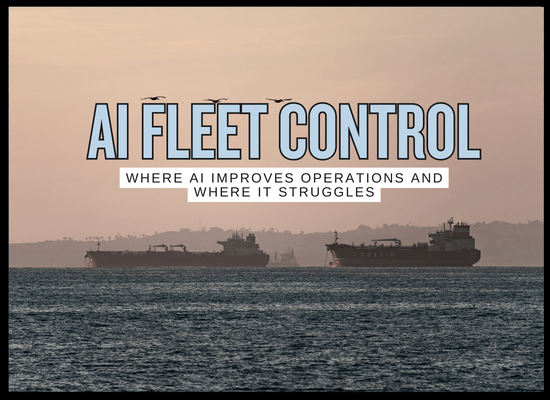
AI-driven fleet management software has moved quickly from experimental dashboards to operational tools used by shipping companies to monitor vessel performance, fuel efficiency, regulatory compliance, and maintenance risk across entire fleets. Instead of reviewing reports days after a voyage, operators now receive real-time analytics that highlight abnormal fuel consumption, route inefficiencies, engine performance deviations, or carbon intensity trends. Several maritime technology vendors have built platforms that combine vessel sensor data, weather information, voyage data, and machine learning models to support fleet operations teams on shore. While the actual results depend heavily on data quality and operational discipline, the systems that are working well today tend to focus on practical decision support rather than full automation.
| # | Capability | Operational description | Where fleets see the biggest benefit | Operational impact | Operators verify before buying |
|---|---|---|---|---|---|
| 1 |
Fuel
Analytics
AI fuel performance analysis
Continuous monitoring of vessel fuel efficiency.
|
AI systems analyze sensor data such as fuel flow, engine load, weather conditions, and vessel speed to detect abnormal fuel consumption patterns. The software highlights voyages where fuel burn deviates from predicted models. | Large fleets operating long ocean voyages where small fuel efficiency gains can produce large cost savings. | Fleet operators can identify underperforming vessels and operational inefficiencies earlier, often leading to measurable reductions in fuel consumption. | Accuracy of vessel performance models, integration with onboard sensors, and frequency of data updates. |
| 2 |
Maintenance
Predictive
Predictive equipment monitoring
Machine learning models flag equipment anomalies.
|
AI models monitor vibration, temperature, pressure, and engine performance trends to detect early signs of equipment degradation. | Engine-intensive vessels such as tankers, LNG carriers, and bulk carriers with complex propulsion systems. | Early detection of mechanical issues reduces the risk of major failures and costly off-hire incidents. | Sensor reliability, historical data volume used to train models, and integration with planned maintenance systems. |
| 3 |
Voyage
Optimization
Fleet-wide voyage analytics
Centralized voyage performance monitoring.
|
Fleet managers can compare voyage performance across multiple ships and identify route inefficiencies, speed management problems, and weather exposure risks. | Operators managing diverse fleets across multiple trade routes. | Improves operational consistency and helps shore teams identify best practices across vessels. | Quality of voyage data integration and compatibility with existing voyage planning systems. |
| 4 |
Compliance
Carbon
Automated emissions monitoring
Tracking of regulatory carbon metrics.
|
AI platforms track emissions indicators such as CII, EU ETS exposure, and voyage carbon intensity using automated data pipelines. | Ships operating in regulatory environments such as Europe where emissions reporting is increasingly strict. | Reduces manual compliance workload and helps operators forecast carbon performance earlier. | Compatibility with regulatory reporting frameworks and accuracy of emissions calculations. |
| 5 |
Operations
Decision
Shore-based fleet decision dashboards
Centralized operational intelligence.
|
Fleet operations centers use AI dashboards to monitor vessel status, fuel performance, voyage progress, and operational anomalies in real time. | Large operators running centralized fleet control rooms. | Improves visibility across the fleet and supports faster operational decisions. | Data latency, integration with existing fleet management tools, and reliability of onboard data streams. |
| 6 |
Benchmarking
Analytics
Fleet performance benchmarking
Compare ships against fleet averages.
|
AI systems analyze performance data across the fleet to highlight which ships are performing better or worse under similar conditions. | Fleet operators seeking to standardize operational performance. | Identifies operational practices that reduce fuel consumption or improve voyage efficiency. | Quality of benchmarking methodology and normalization of operational variables. |
Even though AI fleet management software is gaining traction across the industry, the systems are far from perfect. Many shipping companies discover that the biggest challenges are not the algorithms themselves but the realities of ship data quality, sensor reliability, crew adoption, and integration with existing operational systems. In some cases, AI dashboards produce impressive analytics but fail to change real operational behavior. Understanding these limitations is critical for operators evaluating whether a platform will actually deliver measurable value across a fleet.
| # | Challenge | Operational reality | Where the problem shows up most | Operational impact | Operators investigate |
|---|---|---|---|---|---|
| 1 |
Data quality
Poor sensor data reliability
AI depends heavily on vessel sensor accuracy.
|
Many ships still rely on manual noon reports or inconsistent sensor feeds. If the underlying data is incomplete or inaccurate, AI models can produce misleading recommendations. | Older vessels with limited digital instrumentation. | Incorrect analytics can lead to poor operational decisions or loss of trust in the system. | Quality of onboard sensors, calibration routines, and how often data is validated. |
| 2 |
Integration
Complex integration with ship systems
Connecting AI platforms to existing ship equipment can be difficult.
|
Fleet management platforms often require integration with multiple onboard systems such as ECDIS, engine monitoring, fuel flow meters, and satellite communications. | Mixed fleets with vessels from different shipyards and equipment suppliers. | Deployment timelines become longer and implementation costs increase. | Compatibility with onboard data networks and integration costs before signing contracts. |
| 3 |
Adoption
Crew and shore adoption challenges
Technology does not automatically change behavior.
|
Even when AI tools generate useful insights, crews and fleet managers may not consistently act on the recommendations. | Organizations with limited training or unclear operational procedures. | Software becomes a reporting tool rather than a decision-making tool. | Training programs and operational procedures supporting system use. |
| 4 |
Model limits
AI models struggle with unusual voyages
Machine learning models rely on historical patterns.
|
When ships operate on unusual routes, extreme weather conditions, or nonstandard operating profiles, AI predictions can become less accurate. | Specialized vessels, seasonal trades, or new operational routes. | Incorrect performance predictions or unrealistic voyage guidance. | Model training data and the ability to override AI recommendations. |
| 5 |
Cost
High software and integration costs
Enterprise fleet platforms can be expensive.
|
Advanced AI fleet systems can cost tens of thousands of dollars per vessel annually once integration, sensors, and software licensing are included. | Smaller ship operators with limited digital budgets. | Return on investment becomes harder to justify without measurable fuel or maintenance savings. | Full lifecycle cost including hardware, software, and integration services. |
| 6 |
Cyber risk
Expanded cyber exposure
More connected systems increase attack surfaces.
|
AI fleet platforms rely on continuous data exchange between ships and shore systems, increasing cyber risk if networks are not properly secured. | Highly connected fleets using multiple digital platforms. | Potential vulnerability to cyber incidents affecting vessel operations. | Cybersecurity standards, vendor security architecture, and system monitoring. |
We welcome your feedback, suggestions, corrections, and ideas for enhancements. Please click here to get in touch.