HomeAdvanced Hull Coatings Made Simple: 2026 Update
Advanced Hull Coatings Made Simple: 2026 Update
December 18, 2025
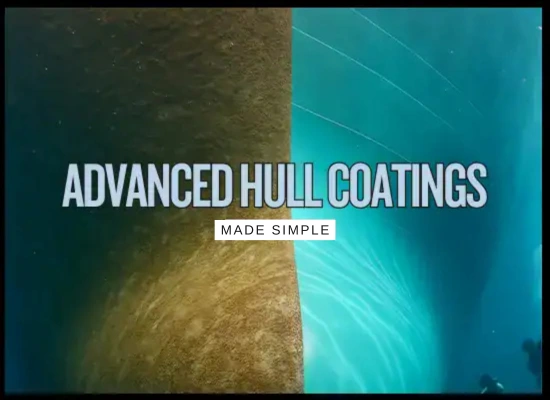
Advanced hull coatings are becoming a front-line efficiency tool because they target one of the most stubborn fuel drains in shipping: hull roughness and biofouling drag. The “latest” shift going into 2026 is not just new paint chemistry, it is the full package: coatings chosen to match a ship’s operating profile and idle time, proof of performance using better monitoring, and tighter alignment with biofouling and anti-fouling rules. IMO’s anti-fouling framework (AFS Convention) continues to restrict harmful substances, including controls on cybutryne that entered into force 1 January 2023, while IMO’s 2023 Biofouling Guidelines and the 2025 in-water cleaning guidance are pushing owners toward ship-specific hull management and cleaner cleaning practices. Independent industry analysis has also put more spotlight on silicone foul-release systems for emissions reduction, while noting that application quality and mechanical durability still make or break results.
🐚
What is it and Keep it Simple...
Advanced hull coatings are specialized underwater paint systems that keep the hull smoother and cleaner for longer,
so the ship needs less power to hold speed. Less slime and growth means less drag, and less drag usually means less fuel burned.
There are two big goals: slow down fouling, and control surface roughness between dry docks. Modern options include updated
self-polishing antifouling systems, slick foul-release systems (often silicone-based), and newer hybrids that aim to hold up better
during idle time while staying compatible with responsible cleaning.
On the technical side
The coating is a layered system (primer, tie coat, antifouling or foul-release topcoat). Some systems slowly “wear” in a controlled way,
others rely on a low-stick surface so growth sheds more easily. Performance depends heavily on surface prep, film thickness control,
curing, and how the ship actually operates (speed, idle days, water temperatures, and how often niche areas foul).
For owners it means…
Better odds of holding fuel performance through the docking interval, fewer surprise speed losses, and a clearer plan for
inspections and cleaning. The “win” is usually coating selection plus a hull management routine, not just buying the most expensive paint.
Advanced Hull Coatings: Advantages and Disadvantages
Category
Advantages
Disadvantages
Notes / Considerations
Fuel and speed
✅ Lower drag can reduce fuel burn and help a ship hold service speed with less engine load.
✅ Can reduce “performance drift” between dockings if paired with a sensible cleaning plan.
❌ Results can be hard to prove without good baseline data and consistent operating comparisons.
❌ A great coating can still underperform if the hull is damaged, rough, or poorly applied.
Compare the ship to itself over time with consistent data windows and the same operating mode.
Idle time and slime
✅ Newer systems increasingly target slime resistance and easier cleaning after idle periods.
✅ Helpful for trades with anchorage time, congestion, or seasonal layups.
❌ Idle-heavy ships can foul quickly if the coating chemistry does not match the profile.
❌ Some slick systems may be less tolerant of abrasion or contact points.
Choose coatings based on real idle days, not advertised “ideal” service speed assumptions.
Cleaning and grooming
✅ More owners are building routines around proactive, lighter cleaning to keep performance stable.
✅ Coatings designed for cleanability can reduce the “scrub hard” temptation that increases roughness.
❌ Aggressive cleaning can shorten coating life and increase roughness if the method is wrong.
❌ Some ports allow in-water cleaning only under strict controls (often pushing capture solutions).
Align your coating choice with your cleaning method and local acceptance in your key ports.
Niche areas and appendages
✅ Better outcomes when the plan includes sea chests, thrusters, rudder areas, and other fast-fouling zones.
✅ Reduces the risk that “small areas” drive big performance losses.
❌ Niche areas are harder to coat and harder to clean without damage.
❌ Poor access and inconsistent maintenance often defeats the main-hull investment.
Treat niche areas as first-class scope, not optional scope, especially on idle-heavy trades.
Application quality
✅ Strong yard QA can produce a smoother hull that stays smoother longer.
✅ Better thickness control improves coating life and predictable performance.
❌ Surface prep shortcuts can destroy the value case quickly.
❌ Touch-ups and damage repair can create patchwork roughness if poorly executed.
Put application QA, inspection points, and acceptance criteria in the yard plan up front.
Proof and reporting
✅ Standardized performance tracking supports clearer ROI and better decision timing for cleaning.
✅ Helps separate hull effects from weather and operational noise.
❌ Bad data or inconsistent methods lead to “dashboard confidence” without real truth.
❌ Short evaluation periods can be misleading (seasonal water conditions matter).
Use a consistent measurement approach and document assumptions (many fleets lean on ISO 19030 style logic).
Regulatory direction
✅ Lower-to-no biocide concepts can reduce exposure to future substance restrictions.
✅ Strong hull plans align better with tightening biofouling expectations and inspections.
❌ Certain biocides are restricted, and requirements vary by region and port practice.
❌ Biofouling is moving toward more formal international rules, increasing documentation burden.
Keep coating declarations, inspection logs, and hull management records organized and easy to show.
Cost and lifecycle
✅ Higher upfront cost can pay back quickly when fuel and carbon exposure are significant.
✅ Some systems aim to hold smoother surfaces deeper into the docking interval.
❌ ROI collapses if the ship spends long periods idle and fouls heavily without a cleaning plan.
❌ Total cost is not just paint: it includes downtime, inspections, cleaning, and repairs.
Run scenarios: expected spread, “bad year” idle time, and your realistic access to approved cleaning.
Summary: In 2026, “advanced hull coatings” increasingly means a coating plus a hull-management routine: better selection by operating profile,
proactive inspection and cleaning that fits local rules, and stronger proof of performance. The upside is stable efficiency. The downside is that
shortcuts in application, cleaning method, or data discipline can erase the benefits fast.
✅
2025 to 2026 Advanced Hull Coatings: What’s Really Working
1) The ship can prove performance, not just claim it
The fleet uses a consistent “ship compared to itself” method (many align to ISO 19030 style thinking) and can show
that power-at-speed or speed loss improved after docking and stays stable with planned upkeep.
2) Coating choice matches the operating profile
Idle-heavy ships pick systems that tolerate idle time and slime better, and high-utilization ships pick systems that hold smoothness.
Owners that win stop treating “paint brand” as the decision and treat “trade pattern” as the decision.
3) Cleaning is proactive and coating-friendly
More programs are shifting toward light, frequent “grooming” at low fouling levels instead of waiting for heavy growth,
which can damage coatings and increase roughness.
4) In-water cleaning aligns with the new guidance
Where cleaning is used, the plan anticipates when capture is needed, and avoids “scrub anything anywhere” habits.
The direction is moving toward controlled cleaning, documentation, and environmental protection.
5) Niche areas are treated as first-class scope
Sea chests, thrusters, stabilizers, rudder zones, and other niche areas get a planned approach,
because a “good flat-bottom” does not save a ship with fast-fouling niche areas.
6) Vendor support is paired with yard QA
The best outcomes show disciplined surface prep, thickness control, curing discipline, and documented acceptance checks.
Coating performance is often “won or lost” in the yard, not at sea.
Fast reality check:
If you cannot show a stable trend in performance data, or your cleaning plan is unclear in your most common ports,
the coating will not deliver consistent savings even if the chemistry is good.
Replace with your fuel spend, docking plan, and cleaning costs
Baseline and Finance
Realization and Safety Caps
Coating Upgrade and Hull Management Plan
One-time CAPEX (premium + QA)
—
Annual hull-management cost
—
Annual fuel savings (net, capped)
—
Annual schedule value
—
Net annual benefit
—
Payback (years, discounted)
—
NPV / IRR
—
Tip: The most realistic way to use this is to treat “baseline penalty” as the cost of letting hull condition drift,
then enter a penalty reduction that matches your intended program (coating choice + inspections + proactive cleaning).
If your ports will require capture for meaningful cleaning, model that cost here rather than hoping it stays cheap.
Advanced hull coatings in 2026 are less about a single “miracle paint” and more about a repeatable program: choose a system that matches your idle time and water conditions, apply it with disciplined yard QA, then keep the hull in a low-fouling state using documented inspections and cleaning methods that your ports will actually accept. The best operators can show performance stability with consistent monitoring methods, and they budget for the real cost of hull management, including capture-based cleaning where that is becoming the expectation.