Washington Draws a New Gulf Line Around Iranian Ports
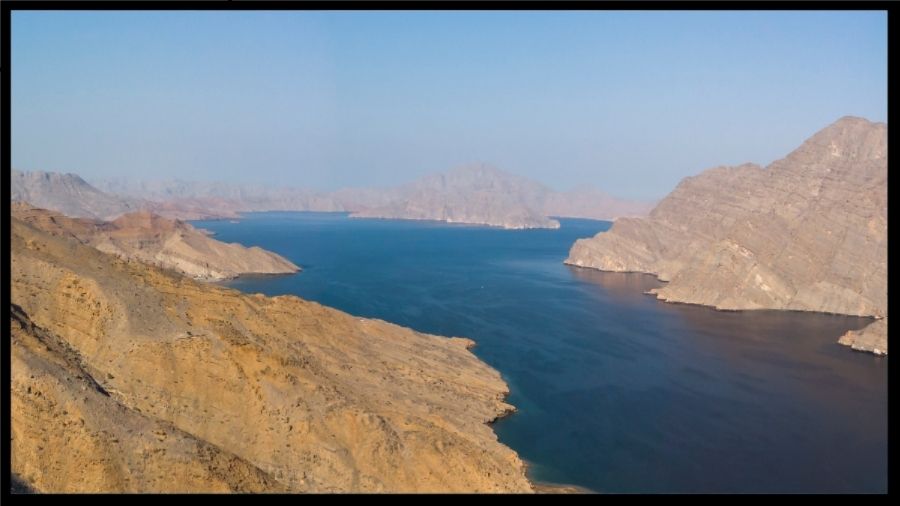
The United States has begun enforcing a naval blockade on maritime traffic entering and exiting Iranian ports, starting Monday, April 13, 2026 at 10:00 a.m. ET, after ceasefire talks with Tehran collapsed over the weekend in Islamabad. U.S. Central Command said the operation applies to vessels of any nationality calling Iranian ports on the Arabian Gulf and Gulf of Oman, but does not stop ships transiting Hormuz to non-Iranian destinations. That distinction matters because the move is not a blanket closure of all Gulf shipping. It is a targeted effort to choke off Iranian seaborne trade while leaving non-Iranian passage nominally open. Shipping markets are treating it as a major escalation anyway, because it puts roughly 2 million barrels per day of Iranian oil exports at risk, leaves a large volume of Iranian crude stranded at sea or inside the Gulf, and raises the chance that commercial routing, tanker behavior, insurance terms, and port risk calculations will all tighten again.
Subscribe to the Ship Universe Weekly Newsletter
Click here for 30 second summary of the full piece ▶
The U.S. has moved from pressure to interdiction
The latest shift in the Gulf is not a general closure of Hormuz for every ship. It is a U.S. naval blockade aimed at all maritime traffic entering and leaving Iranian ports. That leaves non-Iranian transit technically open, but it still redraws the commercial map because ships, insurers, traders, and naval planners now have to separate ordinary Gulf passage from cargoes linked to Iranian trade.
- Action now live: enforcement began on April 13 at 10:00 a.m. ET.
- Main scope: vessels calling Iranian ports on the Gulf and Gulf of Oman.
- Immediate market effect: tanker behavior, oil pricing, and regional port risk all tighten at once.
| Fast reader take | Latest confirmed signal | Operational meaning | Negative shipping consequence | Shows up first | Closest stakeholders |
|---|---|---|---|---|---|
| The U.S. blockade is narrower than a full Hormuz closure, but still severe |
CENTCOM says all maritime traffic entering and exiting Iranian ports is subject to blockade, while non-Iranian transit through Hormuz is not supposed to be impeded.
Iranian ports only
non-Iran transit allowed
effective April 13
|
Shipping is being split into two classes: Iran-linked voyages and everyone else. | Ships, traders, and insurers must now prove destination and exposure more carefully. | More screening, more routing hesitation, more charter-party friction. | Tanker owners, traders, compliance teams, insurers. |
| Iranian oil exports are the main commercial target |
The blockade is expected to interrupt roughly 2 million barrels per day of Iranian crude exports.
~2 mbpd at risk
oil flow shock
|
The move is designed to cut Iran off from seaborne export revenue rather than seal off all Gulf trade. | Oil supply tightens, especially for buyers reliant on Iranian barrels. | Higher crude prices and tighter cargo availability. | China, India-linked buyers, refiners, oil traders. |
| A large amount of Iranian crude is already trapped in the system |
Reporting says more than 180 million barrels of Iranian crude are already afloat, while about 187 laden tankers remain inside the Gulf.
180m+ barrels afloat
187 laden tankers
|
The blockade hits not just new exports but also a backlog of cargoes already moving or waiting. | Floating storage grows and discharge plans become more unstable. | More ship clustering, more reversals, more idle laden tonnage. | Tanker operators, charterers, storage traders, Gulf terminals. |
| Traffic behavior is already changing before broad clarity arrives |
Tankers have been steering clear of Hormuz or reversing course ahead of enforcement, while only limited Iranian-linked movement was still visible.
pre-blockade evasive behavior
route reversals
|
Even a narrowly defined blockade changes movement patterns well beyond the directly targeted trade. | Non-Iranian traffic can still suffer from risk aversion, bunching, and insurance friction. | Wider caution in Gulf voyage planning. | All Gulf shippers, not just Iran-linked cargoes. |
| The operation is strategically open-ended |
Analysts quoted by Reuters describe the blockade as a major military endeavor with uncertain duration and significant escalation risk.
major undertaking
open-ended risk
|
This is not a one-day signaling move. It may require sustained naval enforcement and repeated boardings or interdictions. | The longer it lasts, the more shipping systems reprice risk as structural rather than temporary. | Longer-duration freight distortion and insurance repricing. | Navies, carriers, underwriters, energy planners. |
| Iran is threatening to widen the pain |
Tehran has threatened retaliation against Gulf ports and warned of consequences for attempts to enforce the blockade.
retaliation threat
Gulf port risk
|
The risk map can spread from Iranian export points to neighboring commercial infrastructure. | Ports outside Iran may face higher perceived exposure even if they are not part of the blockade target set. | Broader regional risk pricing and more cautious port calls. | UAE, Oman, Kuwait, Saudi-linked logistics chains. |
Iran Port Blockade Impact Lab
This tool lets readers test whether the new U.S. posture behaves more like a narrow trade choke, a broad oil-market shock, or a regional shipping spillover event. It separates direct Iranian-port impact from wider Hormuz aftershocks.
Disruption inputs
Check the conditions that match the current Gulf picture, then adjust how widely the blockade is spilling into non-Iranian shipping.
Direct shock signals
Containment signals
Fine-tune the spillover picture
Operational readout
The model separates direct Iranian-port disruption from broader Gulf spillover, because that is the key distinction in the current U.S. posture.
The current picture looks like a targeted maritime choke that is already starting to spill into the broader Gulf risk map.
| Stage | Market picture | Shipping behavior | Main limitation |
|---|---|---|---|
| Stage 1 Targeted choke |
Iran-linked trade is hit directly, while others watch and wait. | Screening and destination checks dominate behavior. | Trade uncertainty |
| Stage 2 Regional caution |
The blockade starts affecting wider Gulf shipping psychology. | More reversals, slower approvals, tighter insurance terms. | Spillover fear |
| Stage 3 Market squeeze |
Oil, tanker, and regional port systems all feel the strain. | Commercial flows keep moving, but under much heavier friction. | Capacity stress |
| Stage 4 Escalation spiral |
The blockade becomes a broader Gulf disruption event. | Shipping decisions are driven more by security logic than trade logic. | Retaliation cycle |
We welcome your feedback, suggestions, corrections, and ideas for enhancements. Please click here to get in touch.