Warrants, Not Warnings: U.S. Preps a Bigger Vessel-Seizure Wave in Venezuela’s “Grey” Tanker Trade
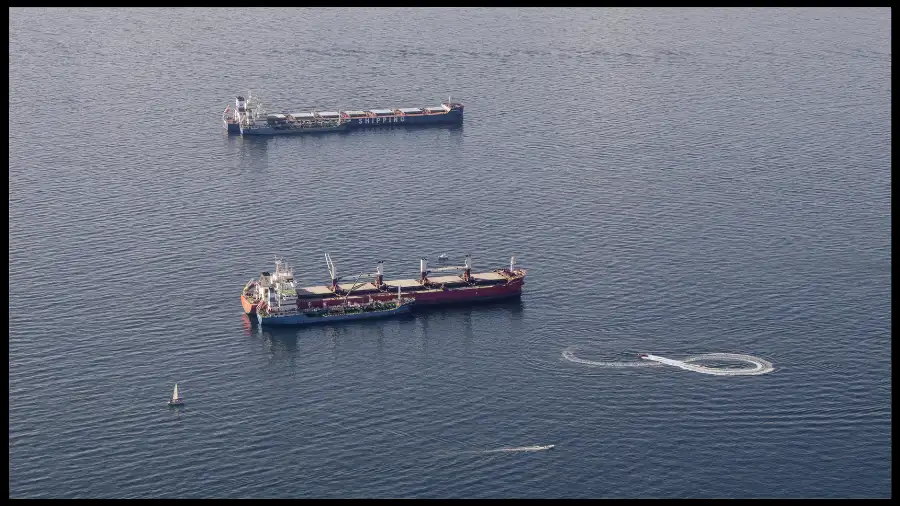
The U.S. is reported to have moved beyond one-off interdictions and into a broader court-driven campaign: filing civil forfeiture actions and seizure warrants aimed at dozens of tankers linked to Venezuelan crude movements. The shipping consequence is immediate because the target is the ship itself, which can freeze optionality overnight for owners, insurers, registries, and charterers, and it can push more trades into higher-friction routing, screening, and ship-to-ship planning.
Subscribe to the Ship Universe Weekly Newsletter
Click here for 30 second summary
Venezuela tanker trading is being repriced around “ship risk”
The U.S. is reported to have filed court warrants and civil forfeiture actions aimed at seizing dozens of Venezuela-linked tankers, an escalation that targets the vessel rather than only the cargo. The immediate shipping impact is tighter eligibility: fewer ships will quote quickly, voyages absorb more contingency time, and positioning can flip fast when operators avoid the basin or pause offshore.
-
Fast transmission into freight
More screening, more fall-through risk late in negotiations, and more waiting days per cargo can tighten effective supply without any change in global fleet size. -
Behavior shift on the water
Expect more conservative routing, more indirect movement structures, and more abrupt redeployments when a legal or insurance threshold is tripped. -
Confirmation points
Additional filings and named targets, more paused or diverted voyages, and a wider spread between low-friction and high-friction fixtures.
When warrants scale, the market reacts through workflow and eligibility first, which can move tanker positioning and pricing before any stable volume pattern becomes visible.
| Trigger | Immediate market read | Operating knock-on | Commercial pressure points |
|---|---|---|---|
| Warrants scale-up | Court actions are reported to be targeting “dozens” of Venezuela-linked tankers, shifting enforcement from selective interdiction to a pipeline of potential seizures. | Ships that were “tradable with caveats” can become instantly untradeable if counterparties fear a boarding or an asset freeze mid-voyage. | Charterers tighten screening and require cleaner documentation chains, shrinking the pool of acceptable tonnage fast. |
| Vessel, not just cargo | Taking the ship itself is a different deterrent than seizing cargo; it raises the downside for owners, lenders, insurers, and managers. | Owners become more conservative on route selection, AIS behavior, and STS participation because the ship is the collateral at risk. | Expect wider pricing gaps between low-friction voyages and high-friction voyages, even on similar distances. |
| Interdiction precedent | Recent seizures executed under U.S. court authority set a reference point for how aggressively actions can be carried out on the high seas. | Operators add “contingency time” for potential inspections, diversions, and schedule resets, which consumes extra vessel-days. | Freight can firm in the prompt window if more time is baked into each movement, even without higher volume. |
| Counterparty optics | Anything linked to Venezuelan flows draws heightened attention, including ships that carried cargo previously, not only those loading today. | Reputational and compliance risk pushes more trades into indirect structures (storage, swaps, multi-step routing) rather than direct liftings. | More intermediated chains mean more touchpoints that can delay execution and reprice deals late. |
| Flag & registry stress | Registries, class, and insurers face “decision points” faster when ships are named in legal actions or treated as enforcement targets. | Loss of cover, class complications, or registry changes can create operational standstills even before any boarding occurs. | Higher perceived administrative risk becomes a hidden premium inside freight and demurrage expectations. |
| Caribbean positioning swing | When ships exit the trade abruptly or avoid the basin, the regional tonnage list can tighten quickly, then loosen if ships re-deploy elsewhere. | More ballast repositioning and fewer “clean” prompt options changes who can lift on time at Venezuela-adjacent ports. | Short-term volatility increases: rates and availability can move on enforcement headlines, not just fundamentals. |
| Process shift | Civil forfeiture actions and warrants turn enforcement into an ongoing workflow, not a one-off decision. | Teams build “sanctions clauses + documentary checklists + routing guardrails” into every fixture touching the region. | Transaction costs rise: more legal review, more approvals, and more fall-through risk late in negotiations. |
Market transmission: why “warrants in bulk” changes behavior faster than a sanctions headline
A seizure campaign that focuses on the vessel forces an immediate re-sort of who can trade, who can insure, and who can charter without creating a legal tripwire. The near-term shipping response usually shows up as fewer straight-line voyages, more contingency time baked into fixtures, and abrupt re-positioning when ships avoid the basin or pause offshore.
How this reshapes tanker economics in practice
The “eligible ship” pool shrinks first
The fastest reaction is counterparty narrowing: charterers, banks, and insurers tighten internal thresholds, which reduces the number of ships that can be fixed quickly.
Friction days become a cost center
When operators add time for possible inspections, rerouting, or last-minute re-checks, each cargo can consume more vessel-days than its distance suggests.
Risk gets priced into process, not just voyage length
Even short-haul moves can carry a premium if documentation, counterparties, and past port calls trigger longer review cycles.
Pressure dashboard (qualitative)
Asset-seizure deterrent level
High
Screening and documentary workload
Elevated
Routing / AIS conservatism
Elevated
Positioning volatility (Caribbean ⇄ Atlantic)
Medium → Elevated
This summarizes the immediate market reaction pattern: less “normal” execution, more workflow, and faster shifts in where tonnage sits.
A short timeline that explains the escalation
-
A seizure warrant becomes the operating risk
A court-issued warrant allows boarding and seizure on the high seas, shifting the downside from “cargo disruption” to “asset loss.”
-
Civil forfeiture actions scale the campaign
When filings and warrants target many ships, it turns enforcement into a repeatable workflow rather than a rare event.
-
Trade adapts through routing and structure
The typical response is more indirect movement patterns, more checks, and more time built into schedules as participants try to reduce exposure.
Workflow cost tool: turn “extra days + extra checks” into a cost scale
This tool is a scale lens for how enforcement risk can translate into higher all-in voyage cost through time loss and added handling. It does not assume any specific fixture.
Cargo size (barrels)
1,000,000 bbl
Added time (days) from diversion / holding / inspection risk
2.0 days
Daily time value (USD/day)
$30,000/day
Extra handling cost (USD) for legal review, documentation, STS support
$150,000
Eligibility squeeze (share of “clean” ships still willing to quote)
70%
Added voyage cost scale: $0
Added cost per barrel (scale): $0.00/bbl
Eligibility squeeze indicator: when fewer ships will quote, negotiation time rises and fall-through risk increases, even if the physical route is unchanged.
In a “warrants-in-bulk” environment, the cost often shows up as time loss and failed negotiations, not as one visible surcharge.
Three watchboard signals that confirm the squeeze is spreading
- More “paused offshore” behavior and sudden re-routing as operators avoid predictable approaches and choke points.
- More conservative quoting and longer fixture cycles as documentation and counterparty checks expand.
- More divergence between straightforward voyages and higher-friction voyages, visible as wider rate dispersion for similar distances.
We welcome your feedback, suggestions, corrections, and ideas for enhancements. Please click here to get in touch.