War-Risk Insurance Cancellations Hit Hormuz as Tankers Stack Up
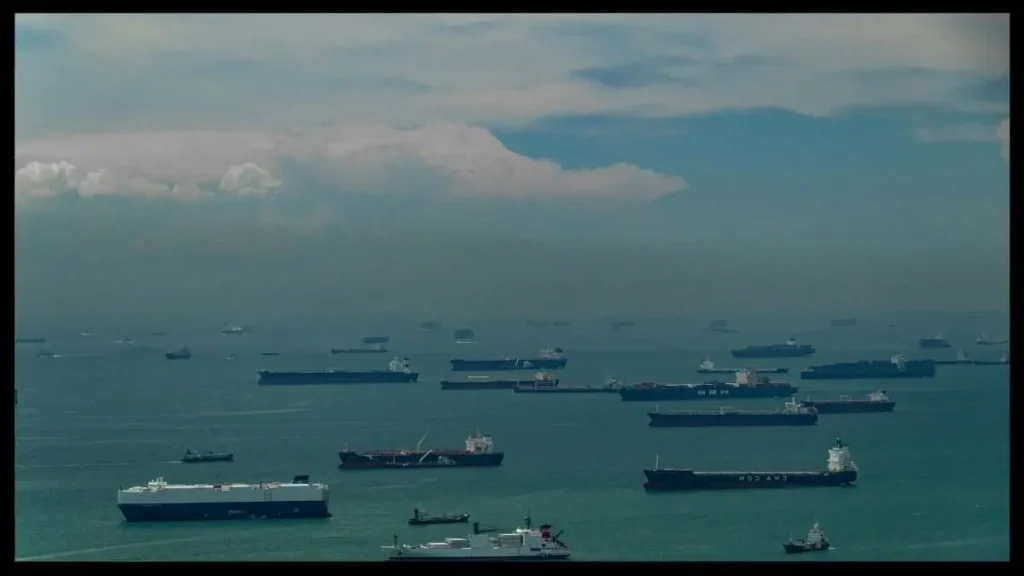
Marine war-risk underwriters and P&I-linked war-risk arrangements are issuing cancellation notices for voyages touching Iranian and nearby Gulf waters, with multiple tanker attacks and a growing cluster of ships holding position near the Strait of Hormuz turning “paper risk” into route-execution risk. The immediate consequence is simple: voyages that were insurable last week may now require buy-backs, re-priced terms, or different routing and scheduling assumptions.
Subscribe to the Ship Universe Weekly Newsletter
Click here for 30 second summary of the full piece ▶
Insurers are stepping back, not just repricing
Multiple marine insurers and clubs have issued cancellation notices for war-risk cover tied to Iranian waters and surrounding Gulf/adjacent waters, with effective dates cited for early March. This follows tanker attacks with reported damage and at least one seafarer fatality, and a visible buildup of ships holding near the Strait of Hormuz as operators reassess transit risk.
- Coverage move: War-risk exclusions/cancellations are being communicated via formal notices, with some effective March 5.
- Traffic behavior: Large numbers of vessels are holding position near Hormuz rather than transiting on normal cadence.
- Cost channel: Freight and insurance costs are rising together, tightening voyage economics on Gulf-linked barrels.
| Reader shortcut | Case facts that matter | Continuity pressure points | Stakeholders most exposed | Next proof points |
|---|---|---|---|---|
| Cancellations with a near-term effective date |
Multiple marine insurers and clubs issued cancellation notices for war-risk cover related to Iranian waters and surrounding Gulf/adjacent waters, with effective timing cited for early March (including March 5 in reporting).
Notices can shift voyages from “covered by default” to “needs new terms.”
|
Open cover assumptions break: chartering, underwriting, and voyage approvals can slow until new terms are quoted or bought back. | Owners with Gulf calls on schedule, charterers fixing prompt laycans, and finance/compliance teams signing off voyage documents. | Whether buy-back options (and pricing) are broadly offered, and whether cancellations expand to wider zones. |
| Named clubs and insurers are included |
Reports reference notices linked to major clubs/insurers including Gard, Skuld, NorthStandard, the London Club, and the American Club, with Japan’s MS&AD also cited as halting underwriting war-risk policies in the affected region.
Coverage availability can tighten fast when multiple providers move together.
|
Market capacity compresses: fewer underwriters willing to write risk means higher premiums and stricter terms even for voyages that remain insurable. | Tanker operators and LNG operators, plus cargo interests that require continuous cover as a contractual condition. | Additional insurer notices, updated trading-area wording, and any reinsurance stance changes. |
| Attacks and casualties moved the risk from theoretical to physical |
Reporting describes multiple tanker incidents with damage and at least one seafarer fatality amid escalating strikes and retaliation dynamics.
Physical loss events are a common trigger for rapid cancellation waves.
|
Underwriters re-evaluate aggregation risk and loss probability; operators re-evaluate crew safety and acceptance thresholds. | Operators with exposure-linked flags/ownership, plus vessels constrained by schedule commitments and arrival windows. | Incident tempo, official advisories, and whether damage reports expand beyond a small cluster of vessels. |
| Ships are bunching up near the chokepoint |
Large numbers of vessels were reported holding/anchoring near the Strait of Hormuz rather than transiting normally.
Congestion is a visible marker that risk posture has changed.
|
Queues create knock-on delays: missed berths, disrupted load windows, and rolling arrival uncertainty that can compound freight and demurrage exposure. | Terminals, charterers with tight discharge commitments, and any supply chains relying on time-certain deliveries. | AIS patterns: does the holding pattern shrink, or do vessels remain stacked while insurers and operators reset terms. |
| Freight is reacting alongside insurance |
Reports link the coverage pullback to rising tanker costs and elevated Middle East-to-Asia freight, with spot voyage costs discussed at very high levels as risk and scarcity price in.
Insurance premium and freight can amplify each other during shocks.
|
Higher total voyage cost tightens delivered economics for Gulf barrels and can push demand to alternative routes/supply sources. | Refiners and traders pricing delivered crude, plus owners deciding whether to accept Gulf risk at current returns. | Freight prints on benchmark routes, war-risk premium quotes, and whether high levels persist after the first cancellation wave. |
Cancellation notices are showing up at the same time as visible holding patterns near Hormuz. When both occur together, the market usually treats it as a “terms reset” moment: coverage and transit posture get re-quoted in near real time, and freight reacts quickly while uncertainty is highest.
Notices can exclude Iranian waters and nearby zones; some providers are also discussing buy-back pathways.
When vessels hold instead of transiting, schedules slip and uncertainty becomes a cost driver even before any formal closure.
Higher war-risk terms can lift all-in voyage cost while freight is already reacting to reduced willingness and disrupted rotations.
As this coverage posture resets, the market will treat the next few days as a live test of continuity: whether vessels resume normal transit cadence through Hormuz, whether underwriters reopen capacity at workable terms, and whether charterers can fix Gulf-linked voyages without building in major schedule buffers. If attacks persist or the holding pattern grows, the story shifts from higher premiums to slower voyage execution, with freight, delays, and delivery timing all tightening at once.
We welcome your feedback, suggestions, corrections, and ideas for enhancements. Please click here to get in touch.