VLCC Rates Blow Past $500,000 as Gulf Sabotage Warning Tightens the Market
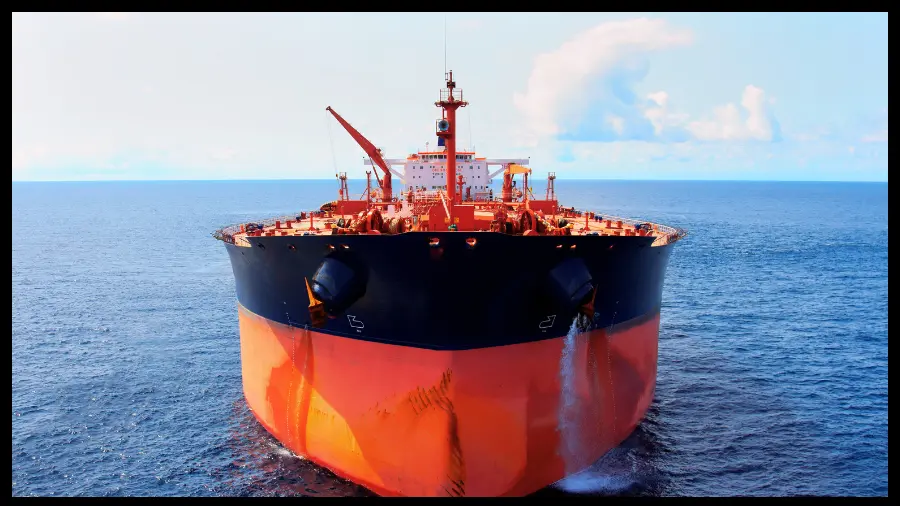
VLCC earnings have moved into extreme territory as risk gating replaces normal supply and demand in the Middle East Gulf: a US-led coalition warning flagged a credible sabotage threat to stationary vessels and those on predictable routes, regional security risk was elevated to CRITICAL in maritime advisories, and London war risk listings widened to cover more Gulf-adjacent waters. In that environment, a shrinking pool of “willing and coverable” ships is driving fixtures that have crossed $500,000 per day, with some deals reported far higher as charterers compete for available tonnage.
Subscribe to the Ship Universe Weekly Newsletter
Click here for 30 second summary ▶
VLCC pricing is being set by risk gating, not normal availability
VLCC day rates have printed above USD 500,000 as Gulf risk warnings escalate and vessels reduce stationary time and predictable routing. The market is reacting to a smaller pool of ships willing to accept Gulf exposure under tightened insurance terms and sabotage-threat advisories, creating a sudden squeeze on compliant tonnage.
- Rate signal
Fixtures above USD 500,000 a day are being reported, with some deals far higher during peak scarcity. - Risk signal
Security advisories elevate threat posture and highlight congestion, interference, and attack risk as practical operational constraints. - Knock-on
Higher freight feeds into delivered crude economics quickly, reshaping arbitrage and reducing flexibility for short-notice liftings.
| Impact lane | Trigger signal | What changes on the water | Commercial consequence | Crude economics consequence | Next gates to watch |
|---|---|---|---|---|---|
| Risk gating replaces normal supply |
Sabotage warning and elevated threat posture
Stationary vessels risk
|
Less anchorage time, fewer predictable routines, more waiting offshore and selective movement, plus heavier bridge and watch posture in constrained waters. | Charterers compete for ships that will actually accept Gulf-linked business, compressing availability into a smaller tradable pool. | Freight becomes a dominant component of delivered cost on MEG to Asia barrels during peak days. | Any new coalition guidance on movement patterns, anchorage posture, and protection measures. |
| Rates gap into extreme territory |
Fixtures reported above 500,000 per day, with peak deals higher
Scarcity pricing
|
Ships remain stuck on the wrong side of load programs, and cycle times stretch when routing is constrained or staged. | Owners gain leverage on both price and terms, while charterers pay for certainty and acceptable exposure. | Arbitrage windows narrow quickly once freight rises into double-digit dollars per barrel territory. | Whether flow resumes smoothly or releases in waves that keep the market tight for weeks. |
| Insurance becomes operational reality |
Listed area expansions and cancellation posture tighten cover
Cover confirmation
|
Transit decisions wait on paperwork and premium confirmation, not only on route safety. | Additional premium and admin friction stack onto freight, with more restrictive wording around deviations and delays. | Delivered crude costs rise even if flat price holds, pushing buyers toward barrels with fewer corridor constraints when available. | Further expansions of listed areas, revised boundaries, or new exclusions that change voyage acceptability. |
| Congestion and interference amplify risk |
High congestion risk and navigation interference cited in advisories
GNSS and AIS anomalies
|
Higher collision exposure in anchorages, harder pilotage sequencing, slower restart after any pause. | Time costs rise through waiting, demurrage exposure, and tighter laycan discipline. | Extra days remove effective fleet supply, reinforcing high earnings even without new cargo growth. | Evidence of sustained interference, plus any new incidents near anchorages that increase avoidance behavior. |
| Market second-order effects |
Freight shock transmits into broader tanker curve and derivatives
Curve distortion
|
Owners reposition to maximize optionality, leaving some basins short and others oversupplied temporarily. | Forward pricing moves as charterers hedge exposure and owners lock in risk-adjusted earnings. | Refiners reassess crude slates as freight changes netbacks, potentially shifting product balances. | Whether alternative sourcing volumes scale quickly enough to relieve pressure on Gulf-linked liftings. |
When day rates gap higher, the fastest way to judge commercial damage is to translate it into total voyage hire and dollars per barrel. This tool compares a baseline day rate to a current day rate, adds optional waiting days, and outputs the implied freight add-on per barrel for a typical two-million-barrel VLCC cargo.
We welcome your feedback, suggestions, corrections, and ideas for enhancements. Please click here to get in touch.