Venezuela tanker crackdown timeline: U.S. seizures, “oil control” messaging, and the immediate shipping knock-ons
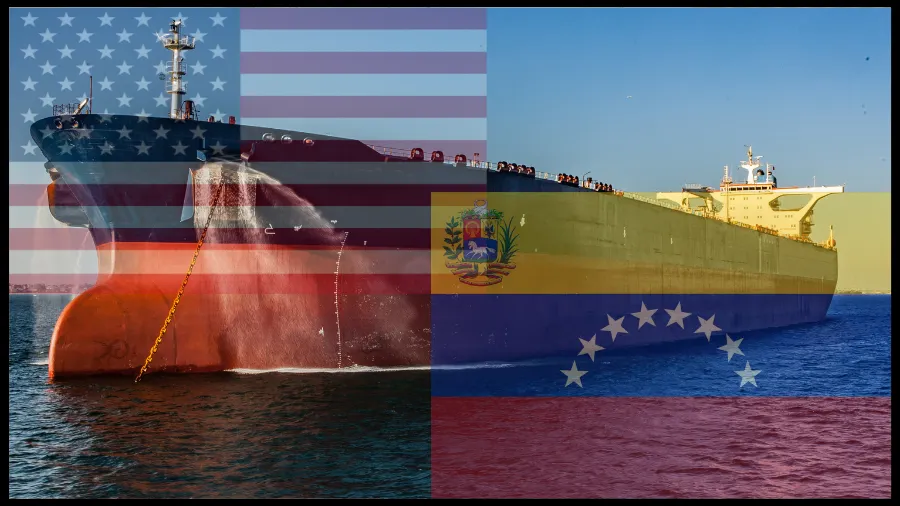
As of Friday, January 9, 2026, reporting across multiple outlets ties the U.S.–Venezuela oil dispute to a fast-moving mix of tanker interdictions/seizures, policy messaging about directing Venezuelan crude sales, and a practical “ghost fleet” enforcement problem for maritime agencies. The near-term shipping signal is less about one ship and more about an expanding inspection/seizure cadence plus risk, insurance, and counterparty-screening friction around Venezuela-linked barrels.
Subscribe to the Ship Universe Weekly Newsletter
Click here for 30 second summary
Two tanker seizures turned the U.S.–Venezuela oil dispute into an operational shipping story
This week’s reporting describes U.S. forces seizing the tanker Marinera (formerly Bella 1) after a pursuit, and also taking M Sophia in the Caribbean, while policy messaging emphasizes tighter U.S. control over Venezuelan oil sales and proceeds. The market read-through is cadence: repeated interdictions and clearer gating can change behavior before freight benchmarks react.
-
Enforcement pulse
Seizures and pursuit narratives increase the perceived probability of inspection and delay, particularly for voyages with registry noise or AIS gaps. -
Gated flow dynamic
If permitted lift continues on a controlled channel, participation can split into clean-chain versus higher-scrutiny participation, widening the premium spread. -
Routing and paperwork friction
The earliest impact tends to be documentation and insurer posture: more checks, shorter quote validity, and more timing variance around Caribbean and Atlantic legs.
The shipping signal is not a single cargo, it is enforcement cadence plus policy gating, which together can tighten effective vessel supply by stretching voyage time and raising the all-in friction cost of Venezuela-linked trades.
| Time marker | What happened (reported) | Shipping signal | What it changes next |
|---|---|---|---|
| Late Dec 2025 | Reporting described a widening U.S. enforcement posture around Venezuela-linked barrels, including pursuit dynamics tied to sanctioned/“ghost fleet” tankers. | Interdiction risk becomes a voyage variable, not a headline event. | More conservative routing, flag/ownership scrutiny, and higher documentation demands. |
| Jan 5, 2026 | Market reporting described multiple loaded tankers moving out of Venezuelan waters under sanctions-linked conditions, highlighting the “dark-mode” / AIS and registry issues in the trade. | Compliance and visibility questions move from theoretical to operational. | Counterparty screening timelines widen; freight economics get less predictable. |
| Jan 7, 2026 | U.S. forces seized the tanker Marinera (formerly Bella 1) in the North Atlantic after a prolonged pursuit, with reporting highlighting identity/flag-switching questions. | Enforcement is no longer only “near Venezuela.” | Owners/operators treat mid-ocean interdiction as plausible for flagged/registry-anomalous tonnage. |
| Jan 7–8, 2026 | U.S. also seized another Venezuela-linked tanker (reported as M Sophia) and described broader plans to direct/permit Venezuelan crude sales under U.S. terms. | “Selective permissions” can split markets into clean-chain vs. high-friction trades. | Wider premium spread for ships with clean histories, transparent ownership, and standard AIS behavior. |
| Jan 8, 2026 | Russia publicly condemned the seizure of the Russian-flagged tanker and warned of escalation risks, with detailed reporting on how the ship’s status was contested. | Geopolitical overlay lifts perceived tail risk for involved parties. | Underwriters and legal teams intensify diligence around flag status, sanctions lists, and chain-of-custody. |
| Jan 8–9, 2026 | Reporting showed Chevron-chartered tankers loading Venezuelan crude at a faster pace, amid shifting permissions and export arrangements. | Trade lanes can re-open for “permitted” barrels while others face hard stops. | Physical flows may become more “gated” by approval channels rather than port capability alone. |
| Jan 9, 2026 | U.S. Coast Guard reporting described preparations for a potential influx of seized ghost-fleet tankers, including safety/environment and repair logistics. | More seizures imply more downstream handling capacity is required. | Expect more inspections, documentation requests, and operational delays tied to enforcement processing. |
| Now watch | Signals most likely to move fast: additional seizures/interdictions, policy detail on permitted sales, and how broadly enforcement is applied offshore. | “Cadence” matters more than any single headline cargo. | Voyage instructions and insurer posture can tighten quickly if enforcement remains frequent. |
Bottom-line effect channels (how the market feels it first)
Routing + vessel-days
Longer legs and more waiting time
Interdictions and tighter checks can stretch voyages even if nominal fleet size is unchanged.
Charter friction
More clauses, more documentation moments
Voyage history, flag status, and AIS behavior can become negotiating points rather than background details.
Insurance posture
Faster caution than rate resets
Underwriters often react immediately to cadence and enforcement reach, even before freight benchmarks move.
Market split
Clean-chain premium widens
If permitted flows continue, pricing can diverge between transparent participation and higher-scrutiny participation.
Enforcement Friction Estimator
A clean “translation layer” from headline events into operational friction. Output is directional and illustrative, designed for quick internal discussion.
Friction score
0
0–100. Higher implies more checks, more delay variance, and tighter insurer posture.
Operational feel
Moderate
Plain-language label for quick internal alignment.
Delay band (illustrative)
+0 to +0 days
A simple translation from score to timing variability.
Driver bars
The dispute is now being reported as an enforcement-heavy phase: seizures at sea, registry and AIS scrutiny, and a parallel effort to define which barrels move under a permitted channel. With multiple outlets tracking the same events, the next meaningful datapoint for shipping is whether interdictions remain frequent and geographically broad, or taper as the policy channel becomes clearer.