US–India trade deal links tariff cuts to a Russian crude pullback and reshapes tanker route math
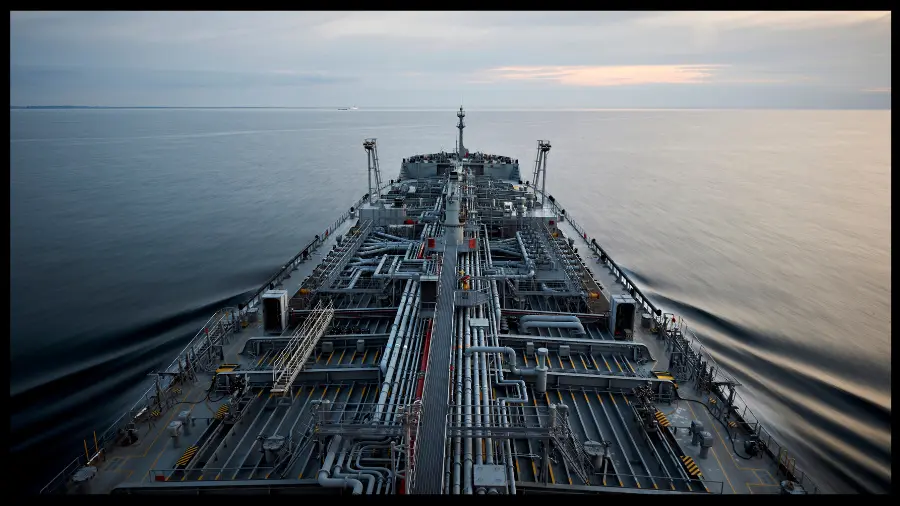
A newly announced trade arrangement between the United States and India cuts U.S. tariffs on Indian goods to 18% from higher levels, alongside commitments described by officials as India scaling back or halting purchases of Russian oil and increasing purchases of U.S. goods including petroleum. Public detail on timing and enforcement is still limited, and Kremlin said it had not heard statements from India on halting Russian oil purchases.
Subscribe to the Ship Universe Weekly Newsletter
Click here for 30 second summary
US–India trade deal in one read
Public statements describe a U.S. tariff reduction for Indian goods alongside India increasing purchases of U.S. goods, including petroleum, and scaling back Russian oil purchases. Details on timing, enforcement, and refinery implementation remain limited in initial releases, and follow-through is the main near-term watch point.
- Claims
Tariff relief is paired with a stated commitment for India to reduce or halt Russian oil buying and increase purchases from the United States, including petroleum. - Industry Watch
If Russian barrels are replaced by longer-haul origins, voyage days per cargo rise, which can change tanker utilization and positioning patterns. - Next Up
Government statements, refinery procurement behavior, and observable shifts in lifting patterns over the next cargo cycles.
The tanker impact hinges on pace and volume. A real reduction in Russia-to-India liftings, replaced by longer-haul barrels, increases ton-mile demand and can tighten effective tanker availability even without a change in fleet size.
| Fast reader anchor | Publicly stated terms | Crude route math | Products and refining link | Watchlist now |
|---|---|---|---|---|
| Tariffs tied to oil stance |
U.S. tariff rate on Indian goods is described as reduced to 18% from prior higher levels, alongside India reducing or halting purchases of Russian oil and raising U.S. purchases.
Detail on timelines and enforcement is not fully published in initial announcements.
trade leveroil clause
|
If Russian barrels drop out of the slate, India replaces volume from longer-haul suppliers, which changes ton-mile demand and vessel mix. | Refinery intake mix can shift between heavier discounted grades and lighter alternatives, affecting product yield and export patterns. | Official follow-through language, any implementation dates, and whether the change is immediate or phased. |
| Replacement barrels shortlist |
Announcements point to higher U.S. purchases, including petroleum, with separate reporting also discussing alternative supply paths.
Some reporting also frames Venezuelan barrels as a potential replacement channel if permitted.
U.S. crudealternatives
|
U.S. Gulf to West Coast India is structurally longer than typical Russian origin routes, lifting voyage days per cargo. | Different crude qualities can change refinery run plans and raise or lower product exports depending on margins. | Any explicit supplier allocation, term supply deals, or refinery-by-refinery switching signals. |
| Russian export displacement |
The public claim is that India halts or materially reduces Russian oil buying. Russia has signaled it has not heard confirming statements from India.
This gap between announcement and confirmation is a near-term uncertainty driver.
policy uncertainty
|
Displaced Russian barrels seek other buyers or longer routing, altering regional freight balances and potentially increasing repositioning. | Product trades can reconfigure if refiners lose discounted feedstock and re-optimize their export destinations. | Indian government statements, refiners’ tender behavior, and cargo tracking for a measurable intake shift. |
| Spot and period market sensitivity |
This is not a single cargo story. It is a route-pattern story that feeds into fleet utilization over time.
Impact depends on how much volume moves and how quickly.
ton-milefleet utilization
|
Longer hauls can tighten effective supply even if headline fleet size is unchanged, especially for VLCC and suezmax rotations. | If refinery economics change, product export volumes and destinations can shift, influencing MR and LR employment. | Rate reaction in Atlantic Basin crude routes, and any observable pullback in Russia-to-India liftings. |
| Who is most exposed |
Refiners, crude traders, chartering desks, and owners with exposure to long-haul Atlantic Basin crude movements.
Ports and lightering chains also watch any sustained origin swap.
|
Charterers managing arrival windows, laycans, and ballast positioning across Atlantic and Middle East supply basins. | Product tanker desks if refinery slates shift, and if export arbitrage from India changes direction. | Confirmation of volumes, then cadence: weekly liftings and sustained nominations. |
- Longer hauls can tighten effective tanker availability by increasing voyage days per cargo.
- Crude changes can ripple into product exports if refinery slates and margins shift.
- Timing matters more than headlines, especially around existing contracts and wind-down periods.
Ton-mile index: 143
Reading: higher voyage-day demand per shifted barrel under the selected origin assumption.
If India materially reduces Russian crude intake and replaces it with longer-haul barrels, tanker voyage days per delivered barrel rise, which can tighten effective supply and change ballast and positioning patterns across the Atlantic Basin, Middle East, and U.S. Gulf. The pace and scale of implementation are the key variables.
We welcome your feedback, suggestions, corrections, and ideas for enhancements. Please click here to get in touch.