Trump Tariff Reset Creates New Volatility for Ocean Shipping
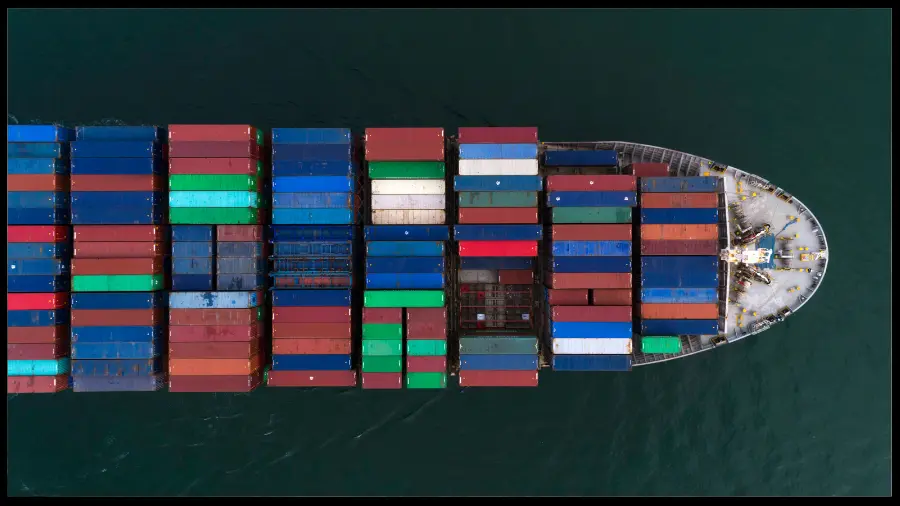
U.S. tariff policy shifted again in a way that matters immediately for shipping demand signals and forward planning. U.S. Customs and Border Protection said it will stop collecting tariffs imposed under the IEEPA after a Supreme Court ruling found those duties unlawful, while the administration rolled out a new flat 15% global tariff under a different authority. For ocean shipping, the near-term damage tends to come from uncertainty and timing risk: delayed bookings, accelerated cargo holds, and more volatile tender behavior while importers and brokers re-map classifications and landed costs.
Subscribe to the Ship Universe Weekly Newsletter
Click here for 30 second summary of the full piece
Shipyard reorganization, not a simple shutdown
The full story frames Mare Island Dry Dock’s filing as an attempt to preserve operations under Chapter 11 while the business restructures and explores a sale or partnership. The case lands after a period of financial stress linked to the loss of key Coast Guard work and a closure warning that triggered layoffs, and it now moves into a court process where budgets, vendor treatment, and any transaction milestones determine whether repair capacity can be sustained.
-
Court process
The petition discloses broad ranges for assets and liabilities and a large creditor count, setting up a vendor and cash-management challenge typical for repair yards. -
Capacity stakes
The outcome matters because a functioning West Coast drydock slot can be difficult to replace quickly once it goes dark. -
Milestone watch
Early court orders, critical vendor treatment, and any announced sale pathway are the practical indicators of stability.
The case will be judged by continuity: whether the yard can keep jobs, suppliers, and repair schedules stable long enough to restructure and land a durable operating platform.
| Fast reader take | Policy state right now | Negative shipping consequence | Shows up first | Closest stakeholders |
|---|---|---|---|---|
| Rules changed twice in one window |
CBP said it will stop collecting IEEPA-based tariffs after a Supreme Court ruling, while a new 15% global tariff was introduced under another authority.
IEEPA duties halted
15% global tariff announced
|
Booking hesitation and tender defensiveness as importers wait for clean guidance, code updates, and broker confirmation. | Spot booking volumes, weekly blank-sailing decisions, and cargo cutoffs at U.S. gateways. | Liner operators, BCOs, forwarders, customs brokers, port terminals. |
| Refund and retroactivity questions emerge |
Market commentary highlights refund exposure and uncertainty on how the transition is handled in practice.
Refund riskLegal follow-ons possible
|
Higher probability of cargo holds and post-entry corrections, with extra documentation rounds that stretch dwell time. | Port stacks, rail ramps, and inland appointment windows where delays create knock-on congestion. | Terminals, drayage, rail, warehouse operators, cargo insurers. |
| Tariffs become a timing weapon |
Sudden implementation timing can drive front-loading followed by air pockets, rather than smooth demand.
Front-load riskAir-pocket risk
|
Volatile load factors pressure network stability and can worsen schedule reliability even if total annual volume changes are modest. | Rate swings, equipment imbalances, and service string changes on U.S. import corridors. | Shipowners, chartering desks, equipment managers, depot operators. |
| Trade diversion breaks lane economics | A flat tariff structure can reshape sourcing decisions, shifting growth to alternative origins over time. | Some lanes lose density while others gain, increasing repositioning needs and reducing network efficiency. | Intra-Asia and transshipment patterns, feeder demand, and port pair competitiveness. | Regional carriers, transshipment hubs, feeder operators, port authorities. |
| Policy uncertainty becomes a cost | Unclear guidance cycles create operational “pause points” between booking, entry filing, and delivery. | More exceptions handling, more customer service load, and more claims friction when milestones move. | Customer SLAs, visibility tools, demurrage and detention disputes, on-time delivery metrics. | Shippers, forwarders, claims teams, carrier customer service, legal and compliance. |
Why this policy change hits shipping before it hits trade statistics
The shipping impact usually arrives first as volatility: booking pauses, rerouted cargo decisions, and more exceptions handling while classifications, tariff codes, and broker guidance settle.
Volatility map for ocean networks
A flat tariff plus legal churn tends to concentrate friction in a few places that matter for shipowners: load-factor stability, blank-sailing decisions, and terminal dwell time.
Rapid tariff resets tend to create demand lumps and documentation friction that reduce network efficiency, pushing carriers toward more active capacity management and raising the probability of delays and disputes at the port and inland handover layers.
Simple landed-cost sensitivity tool
A compact way to size how a flat tariff rate changes declared duty exposure on a single shipment value.
New total with duty: $0
This tool sizes duty only. It does not include VAT, port fees, broker fees, demurrage, detention, or inland costs.
We welcome your feedback, suggestions, corrections, and ideas for enhancements. Please click here to get in touch.