The Container Fleet Power Play That Just Got Real
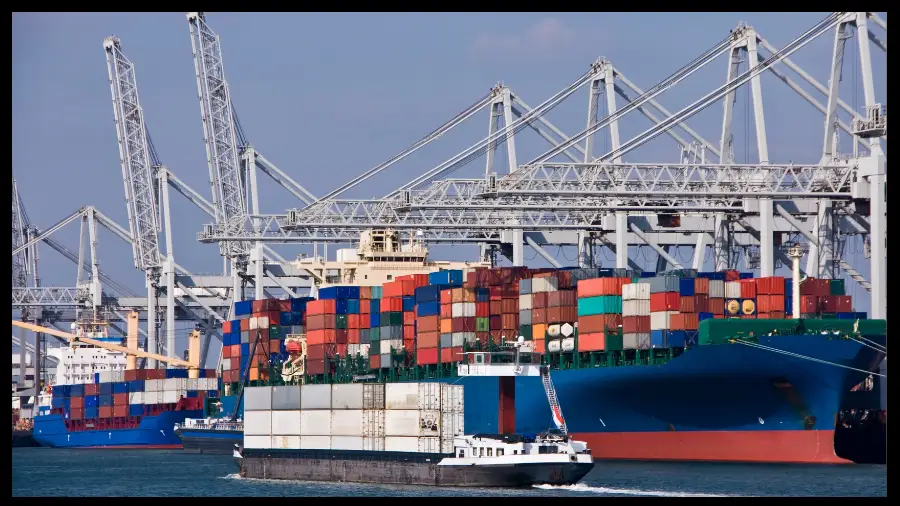
A major shift is underway in who controls the steel behind container supply. Ocean Network Express is moving to nearly 49% ownership of Poseidon, the holding company behind Seaspan, while Yangzijiang Shipbuilding is deploying about $825.7 million into the same vehicle. Together, the transactions tighten the links between a top liner, the largest containership tonnage platform, and a leading shipbuilder, with knock-on effects for long-term charter leverage, newbuilding pipeline visibility, and how container capacity gets secured in the next cycle.
Subscribe to the Ship Universe Weekly Newsletter
Click here for 30 second summary of the full piece ▶
Carrier equity moves closer to control
Ocean Network Express is acquiring an additional 23.2% stake in Poseidon Corp and will rise to 48.9% ownership, just short of majority control. Poseidon is the holding company behind Seaspan, described as the largest non-operating owner of containerships.
- Deal scale: the additional stake is reported at $28.30 per share, totaling $1.91 billion.
- Parallel capital: Yangzijiang Shipbuilding is buying 10% for about $825.7 million, and a separate private vehicle tied to its chairman is buying another 5%.
- Big picture: liner, tonnage platform, and shipbuilder incentives get more aligned across fleet access, ordering visibility, and asset strategy.
| Reader shortcut | Case facts that matter | Continuity pressure points | Stakeholders most exposed | Next proof points |
|---|---|---|---|---|
| ONE moves to 48.9% of Poseidon |
ONE is acquiring an additional 23.2% stake in Poseidon at $28.30 per share, reported at $1.91 billion, lifting ONE’s ownership to 48.9% from about 28.7%.
48.9% is 1.2% short of majority control, meaning governance and influence can tighten even without crossing 50%.
Near-control position
|
As ownership rises, the boundary between charterer and tonnage platform becomes blurrier, which can change how long-term vessel access is negotiated and prioritized. | Competing liners chartering from the same platform, and chartering desks that rely on market-bid access to prompt and forward tonnage. | Board and governance disclosures, any shareholder agreements around voting or reserved matters, and whether ONE adds further stake. |
| Yangzijiang deploys $825.7m for 10% |
Yangzijiang Shipbuilding is buying 10% of Poseidon for $825.7 million, translating to about 29.2 million shares, funded from internal cash, with strategic rationale tied to closer alignment with a key customer.
A separate private vehicle linked to its chairman is also reported buying 5% on similar terms.
Shipbuilder becomes owner
|
This can tighten feedback loops between yard capacity planning and leasing platform demand, potentially influencing order visibility and timing. | Competing yards, equipment suppliers, and owners tracking whether ordering behavior becomes more concentrated. | Any disclosed commercial collaboration plans, ordering cadence, and whether the yard increases exposure further. |
| Fairfax stake reduces but remains large |
Fairfax is reported selling a portion of its Poseidon stake and retaining a remaining holding of 22.1% after the transaction.
That leaves a meaningful non-liner shareholder still in the cap table.
Capital mix still diversified
|
A mixed shareholder base can moderate governance outcomes, depending on voting structure and reserved matters. | Investors and lenders watching how independent the platform remains relative to its largest chartering customer. | Any updated ownership disclosures and any changes in funding strategy for newbuild programs. |
| Seaspan scale is the reason this matters |
Seaspan is described as the largest tonnage provider to container shipping, with Seatrade citing a fleet of 227 vessels totaling around 2.4 million TEU.
Control over the largest platform changes the strategic balance because access to ships is often the hardest constraint in tight cycles.
Steel access advantage
|
A more integrated structure can affect allocation behavior and long-term charter pricing dynamics, particularly for forward delivery. | Liner operators and forwarders exposed to capacity swings and the cost of securing ships through the next ordering cycle. | Any changes in long-term charter tenor, pricing, or renewal pace across major liner customers. |
| Transaction timing points to a wider strategy |
The deal is expected to close in Q2 2026 subject to regulatory approvals.
Timing matters because capacity planning, charter renewals, and ordering decisions have multi-year lead times.
Cycle positioning
|
If market conditions tighten, equity-linked fleet access can become a differentiator faster than newbuilding supply can respond. | Chartering desks, ship finance, and leasing platforms competing for capital and shipyard slots. | Closing approvals, any follow-on equity moves, and whether newbuild orders accelerate after the ownership reshuffle. |
The headline numbers are clear: ONE is moving to 48.9% after buying another 23.2% stake at $28.30 per share, and Yangzijiang is buying 10% for $825.7 million. This tool converts those inputs into a simple control meter and a capital exposure snapshot that you can adjust for alternate scenarios.
At 48.9%, a small additional move can cross the control threshold, and influence can change even before 50% depending on governance terms.
Big equity checks can reduce reliance on debt funding for asset growth, but they also concentrate strategic influence around the platform.
A yard becoming an owner can improve demand visibility, but it also tightens the ecosystem link between ordering and asset ownership.
We welcome your feedback, suggestions, corrections, and ideas for enhancements. Please click here to get in touch.