Shipping Giants Rewrite the Map in 2025
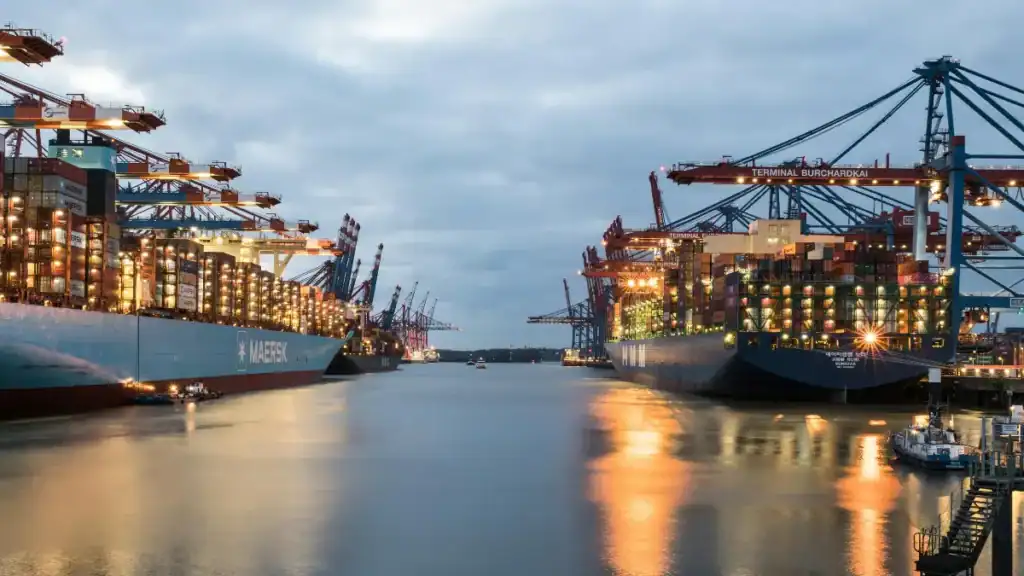
In a year marked by geopolitical tensions, shifting trade policy, and the ongoing evolution of global commerce, major shipping carriers are redrawing the logistics map in 2025. Alliance restructures, new routing strategies, and carrier-specific service overhauls are redefining the flow of goods across oceans. These decisions are not just reshaping how and where cargo moves—they are setting the tone for the next phase of global maritime competition and cooperation.
Subscribe to the Ship Universe Weekly Newsletter
Major Alliance Realignments
Three of the most influential changes in the container shipping space this year have come from the restructuring or formation of new alliances. These adjustments are reshaping east-west trade, with far-reaching consequences for shippers, ports, and supply chains.
- MSC Exits the 2M Alliance
The Mediterranean Shipping Company officially ended its longstanding 2M Alliance with Maersk in January 2025. In its place, MSC launched a fully independent East–West network, which now includes five core trades and 34 direct loops. These connect key economic hubs in Asia with North Europe, the Mediterranean, and both coasts of North America, as well as trans-Atlantic corridors. MSC has also deepened its investment in digital scheduling platforms to improve reliability in the absence of shared alliance capacity. - Maersk and Hapag-Lloyd Form the Gemini Cooperation
In response to MSC’s departure, Maersk quickly formed a new vessel-sharing agreement with Hapag-Lloyd known as the Gemini Cooperation. This alliance is designed around a hub-and-spoke architecture, with centralized transshipment points and fewer but faster long-haul sailings. The approach prioritizes service reliability, allowing both carriers to enhance schedule integrity while maintaining competitive transit times on core Asia–Europe and trans-Pacific routes. - Premier Alliance Takes Shape
Meanwhile, ONE (Ocean Network Express), HMM, and Yang Ming consolidated their operations under a new framework named the Premier Alliance. This group has effectively replaced the previous THE Alliance structure and is focusing on optimizing service frequency and port coverage across Asia, North America, and Europe. Early performance indicators suggest a noticeable uptick in on-time reliability, especially on trans-Pacific legs.
Routing Adjustments and Corridor Reconfigurations
Alongside alliance shifts, carriers have also restructured major trade lanes to mitigate risk and address demand changes. The most notable adjustments center around the Red Sea, the Suez Canal, and the Cape of Good Hope.
Just released: Check out our free Route Risk Tool here
- Red Sea Rerouting Still Active
Although there has been a partial resumption of Indian container exports through the Red Sea corridor as tensions ease, most global carriers remain cautious. Maersk, MSC, and others continue to route vessels around the Cape of Good Hope when passing between Asia and Europe to avoid renewed security threats in the Bab el-Mandeb Strait. This rerouting has extended transit times but has been viewed as a necessary operational expense to ensure safety and cargo integrity. - Cape of Good Hope Traffic Increases
The alternative southern route has seen a significant surge in container and bulk carrier traffic, leading to longer voyage durations but also creating new opportunities for bunkering and transshipment operations in southern Africa. Some carriers are now scheduling additional service calls in Durban and Walvis Bay to accommodate the altered route geometry. - Rebalancing Through the Panama Canal
Lingering drought conditions have continued to limit the number of large vessels transiting the Panama Canal. Carriers such as Evergreen and CMA CGM have rerouted vessels through the Suez Canal or deployed smaller Panamax vessels to bypass scheduling delays. The Gemini Cooperation has adjusted several North Asia–US East Coast strings to rely more heavily on transshipment in Mediterranean hubs to reduce dependency on constrained Panama traffic.
Strategic Responses to Trade and Policy Shifts
Beyond alliance moves and route reconfiguration, carriers are also responding to macroeconomic shifts and policy updates.
- Mitsui O.S.K. Lines (MOL) Adapts to New Tariff Regimes
In the wake of new U.S. tariffs on various imported goods, MOL has explored routing options through countries with favorable trade terms. This includes enhanced service to Mexican and Canadian ports to leverage trade agreements and avoid higher tariffs. The company is also expanding its LNG carrier fleet to serve growing energy demand in South and Southeast Asia. - Operational Efficiency Through Digital Tools
Several carriers, including Maersk and ONE, have rolled out upgraded AI-driven network planning tools to optimize vessel rotations and container availability. These tools are playing a critical role in adapting to fluid geopolitical conditions and changing port access patterns. - Impact on Ports and Infrastructure
The restructured alliances and new vessel schedules are impacting major ports globally. East Coast ports in the U.S. are seeing increased calls due to diversification from West Coast gateways. Mediterranean hubs like Algeciras and Piraeus are seeing more transshipment traffic due to the altered Red Sea flows. In Asia, Singapore and Port Klang remain pivotal but are sharing volume with emerging players like Colombo and Nhava Sheva.
The global container shipping landscape in 2025 is undergoing one of its most significant structural evolutions in recent history. From alliance reshuffles to strategic rerouting and advanced scheduling tools, shipping giants are making far-reaching decisions that reflect both risk management and long-term positioning.
As more data emerges on the effectiveness of these new networks, the next phase of maritime competition may be shaped not just by speed or capacity, but by how agile and anticipatory global carriers can be in a fragmented and unpredictable trade environment.